News Broadcasting
BBC Worldwide signs deal with Australia’s Seven Network


MUMBAI: BBC Worldwide Australasia has concluded a new deal with the Seven Network in Australia to license Michael Palin’s new travel series Palin’s New Europe. In addition, a raft of drama and factual programming has been acquired by broadcasters in New Zealand, through agreements signed in the run up to MIPCOM. Palin’s New Europe which will air on BBC One in the UK next year, follows the ex-Python as he explores 21 countries such as Bosnia, Albania, Moldova and Macedonia. BBC Worldwide Australasia’s sales manager Amber Knight says, “Michael Palin has that rare combination of integrity, wit and bravery which makes all his programs such hits. We are very excited to be bringing this program to Seven.” Seven Network’s director of programming and production Tim Worner says, “Australians are renowned travellers – as a youngster it is a virtual rite of passage and you always seem to bump into fellow Australians in the most far flung locations. Michael Palin captures that spirit in his very own way and we at Seven look forward to being able to have him take Australian audiences to places they have never been before. “Palin is the pre-eminent television travel communicator of his time – in his company you do not just see; you taste, you smell, you experience. And, above all, he makes it fun – that’s why we’re proud he’s coming to Seven.” A package of returning series has been licensed to New Zealand’s TVNZ including key titles from Kudos productions such as Hustle Series 4, and Life on Mars Series 2. TV One has taken series two of Clerkenwell Films’ Afterlife, as well as Hotel Babylon (Carnival Films), Waterloo Road (Shed Productions) and Bodies (Hat Trick Productions).






News Broadcasting
CNN-News18 to host Fury in the Gulf conclave on West Asia crisis
Three-hour summit to unpack geopolitical fallout and impact on India
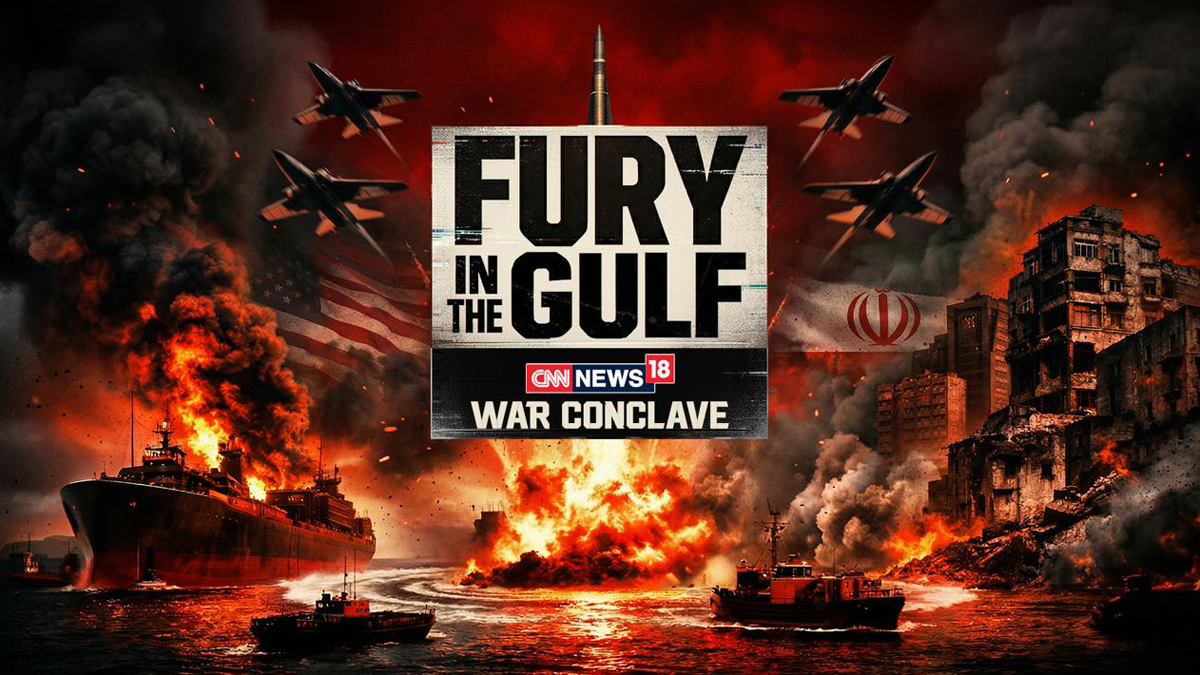
MUMBAI: CNN-News18 is set to host a special three-hour broadcast, Fury in the Gulf – War Conclave, on April 7, aiming to decode the escalating West Asia crisis and its far-reaching implications for India.
Scheduled from 4:00 PM to 7:00 PM, the conclave comes at a time when tensions between Iran and the United States are reshaping global geopolitics and triggering economic uncertainty. With India’s deep energy ties, trade links and large diaspora in the Gulf, the developments carry significant domestic relevance.
Built around the theme ‘Conflict, Consequences, and The Future,’ the programme will feature six curated sessions combining one-on-one interviews and panel discussions. The focus is to cut through the clutter and offer viewers a clearer understanding of the fast-evolving situation.

Key sessions include ‘Diplomacy in Times of War’ featuring Shashi Tharoor, and ‘World After the Iran Conflict’ with voices such as Ram Madhav, Reuven Azar, representatives from the European Union and the Iranian Deputy Envoy. Another session titled ‘Another Dunkirk?’ will bring together K. J. S. Dhillon and Jitin Prasada among others.
CNN-News18 editorial affairs director Rahul Shivshankar said, “In times of war, clarity becomes the most powerful tool. Fury in the Gulf – War Conclave brings together credible voices to address the questions and confusion that arise amid an overwhelming influx of information.”
He added that the initiative is aimed at delivering “facts, perspective, and insight” at a time when misinformation can easily cloud public understanding.
Echoing the sentiment, CNN-News18 CEO– English and business news Smriti Mehra said the conflict marks a defining global moment, with consequences that extend well beyond the region. She noted that the conclave seeks to present the crisis with “depth, nuance and responsibility” so audiences can better grasp its real-world impact.
As geopolitical tensions continue to dominate headlines, the conclave positions itself as an attempt to bring order to the noise, offering viewers a structured, insight-led look at a complex and rapidly shifting global situation.






