News Broadcasting
BBC World’s Nisha Pillai buoyant about covering Indian elections


NEW DELHI: She has interviewed Rupert Murdoch in her capacity as a business reporter and loved doing so. Doesn’t have any immediate plans to switch organisations from her present stint at Beebs. And she is pretty excited to cover the Indian elections, live that is, for BBC World, which is having a special coverage session for the great democratic ‘tamasha’, er, process, that would culminate with the results being declared on 13 May and the unfolding of new political arithmetic.
But for Nisha Pillai it is all part of the game even if she has “to do some quick calculations” that Indian politics could throw up as emerging trends throughout Thursday unravel “various possible permutations and combinations.” After all, she went on air in a certain year on 11 September on BBC World “without a script trying to make sense of everything” as very few had early clues of what was happening and would happen.
Compared to that, probably, Indian politics could be slightly more predictable.

“When the election coverage was planned in January-February, the plan was to bring extensive routine coverage, but as things are unfolding, it has turned out to be a nail biter (of an election),” Pillai says, sitting relaxed in an all-white chic cotton outfit in Beebs Delhi bureau. The traces of long distance traveling, from London to Delhi, if any, have evaporated.
After having touched down in Delhi, Pillai has been busy preparing for the live coverage over the next two days by interacting with the local bureau and journalists who have traveled the length and breadth of the country covering the general elections, spread over two months, from all possible sides, including BBC World’s global perspective of having Americans speak on the Indian elections.
“With the type of rumours swirling around in Delhi at the moment (the meeting with indiantelevision.com happened on 12 May), it is really fascinating,” Pillai says, pointing out that her interaction with the local bureau would prove helpful when she goes on air trying to make some sense of the unfolding scenario.
Though it may not be a situation similar to the 9/11 coverage, but Pillai wants to be as much prepared as possible.
Does she find any similarity between the Indian elections and those back home in the UK? Years of being on television (Pillai joined BBC World in 1995), some of which has been live broadcast, has taught Pillai to be a bit tactful. She avoids a direct reply to the query, but helpfully adds that the relationship between British prime minister Tony Blair and his colleague Brown has “uncanny parallels” to the relationship between Indian PM Atal Bihari Vajpayee and his colleague and deputy prime minister, LK Advani.
Even if the references to the future of Advani are oblique, the political astuteness of Pillai cannot go amiss.
However, Pillai finds that the dance of democracy in India and the way it has been conducted this time round is a lesson for other developed nations, especially the other big democracy, the United States.
“The use of EVMs (electronic voting machines) is fascinating and a lesson for the US,” Pillai says, adding, “A Third World country (dubbing India a developing nation would have been more politically correct, may be) is conducting elections through electronic machines, while the US doesn’t even have an election regulator.”
Would Pillai hazard a guess on the outcome of the polls held recently? “No way,” she laughs aloud, “I am not making any statements on the outcome.” But, Pillai thinks that her arithmetic is “pretty good”, which would help her do quick mental calculations on air as election results come in thick and fast. May be, Pillai’s first job as a graduate trainee at Schroders Investment Bank has helped in honing this talent with vital stats.
On broader issues, Pillai feels that the Indian broadcasting scenario is “very competitive.” She adds, “I am not so sure whether the print medium has transformed so much, but the broadcasting scene is fantastic and very competitive by global standards as in most issues like graphics, the standard is very high.”
But ask Pillai, how would she describe the Indian elections and she comes up with an apt summation, “It’s a great ‘tamasha’, but is also fascinating as Indians, by and large, are obsessed with politics.”






News Broadcasting
Kamlesh Singh receives Haldi Ghati Award from MMCF
India Today Group editor honoured for three decades of journalism at Udaipur ceremony.
MUMBAI- Kamlesh Singh just turned a lifetime of sharp words into a shiny shield because when journalism wakes up a society, even the Maharana of Mewar wants to pin a medal on it.
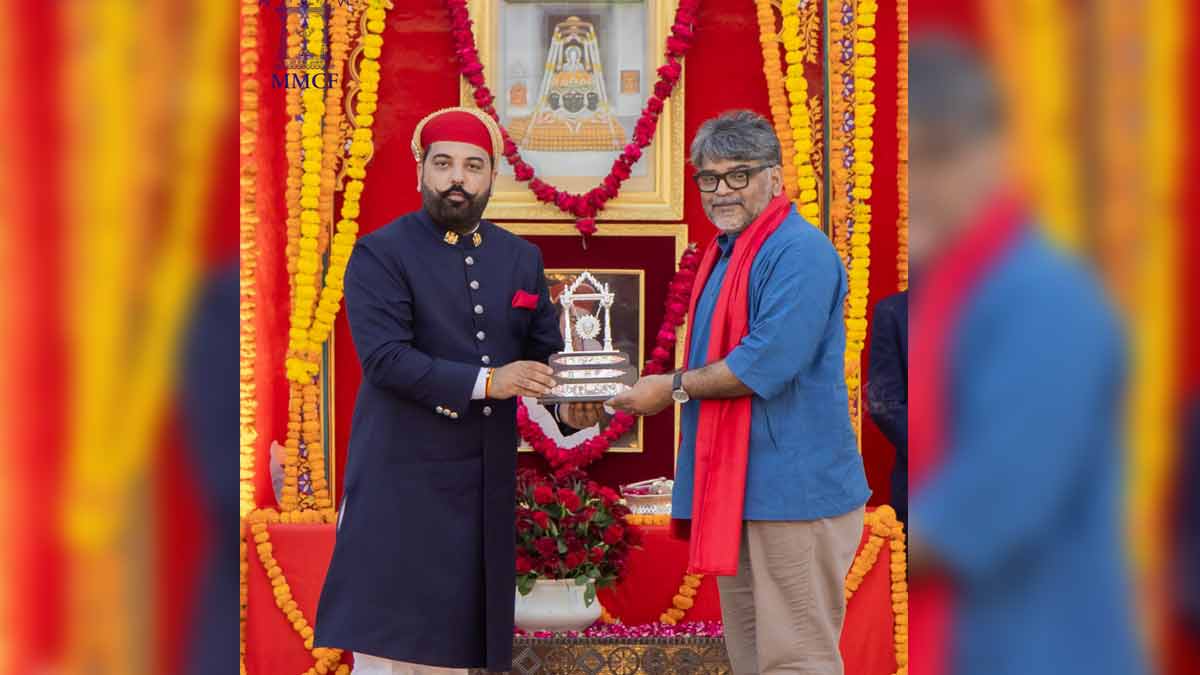
The Maharana of Mewar Charitable Foundation (MMCF) conferred its prestigious Haldi Ghati Award on Kamlesh Singh, a senior editor at the India Today Group, during a ceremony in Udaipur on 15 March 2026. The national award, instituted in 1981-82, recognises “work of permanent value that initiates an awakening in society through the medium of journalism.”
Singh, who leads several editorial initiatives including Aaj Tak Radio, the Teen Taal community and The Lallantop, was presented the honour by Lakshyaraj Singh Mewar, Managing Trustee of MMCF. The citation highlighted his three decades of contributions to Indian media, innovations in digital journalism, mentoring young reporters, and his popular podcast persona “Tau” on Teen Taal, which fosters thoughtful public discourse.
The Haldi Ghati Award, named after the historic Battle of Haldighati symbolising valour and resilience, is one of four national awards given annually by MMCF. Past recipients include Tavleen Singh, Piyush Pandey and Raj Chengappa.
Other honourees this year included Padma Vibhushan Pt Hari Prasad Chaurasia, Vedamurti Devvrat Rekhe, Treeman of India Marimuthu Yoganathan, Vir Chakra Capt Rizwan Malik, and US-based researcher Molly Emma Aitken, who received the Colonel James Tod Award for contributions to understanding Mewar’s spirit and values.
In an era where headlines often shout louder than substance, the MMCF quietly reminded everyone that real journalism isn’t about noise, it’s about the quiet, persistent work that stirs society awake, one thoughtful story at a time.







