News Broadcasting
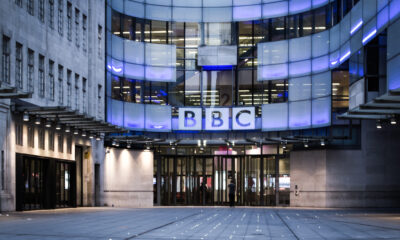
BBC Hindi’s radio documentary wins ABU award
MUMBAI: BBC Hindi has won an award at the Asia-Pacific Broadcasting Union (ABU).
Its radio documentary – Rising Mercury, Deepening Crisis – won the Best Radio Documentary Award at the 44th ABU General Assembly in Tehran, Iran, on 3 November.
It was produced by BBC Hindi Radio editor Shivkant Sharma and presented by Mukesh Sharma. Shivkant Sharma said, “The objective of Rising Mercury, Deepening Crisis was to report how climate change is impacting lives of millions of people in north India, how economic development and changing lifestyle are speeding up climate change and what people could do individually and collectively to tackle climate change.
“We had a very encouraging feedback from our audience, and now the ABU Award proves that we have been quite successful in our mission.”
India accounts for just 4.5 per cent of the global emission of green-house gases but the picture is likely to change dramatically within a generation. India’s share of global emission is likely to soar as urbanisation accelerates, fuelled by the rapidly growing economy.
In Rising Mercury, Deepening Crisis, BBC Hindi examines the effect of human activity on climate change, and the affect of climate change on the lives of millions of people in India. The documentary takes listeners to places where the impact of climate change is already visible and looks at the evidence on the ground.
Starting in a busy street of Kanpur, one of the most polluted cities of India, the programme moves on to Gangotri, the largest glacier in the Himalayas, and Sunderbans, the largest mangroves in the world, tracing the natural path of the carbon-cycle.
Along with explaining and highlighting the imminent and visible dangers of climate change, the BBC Hindi documentary examines the practical steps that governments and individuals can take to address the issue.

News Broadcasting
Times Network to air JVC Exit Poll across 5 regions on April 29
Four-hour broadcast spans states and Puducherry with data-led analysis
MUMBAI: Times Network is set to roll out what it calls one of its most expansive election programming efforts yet, culminating in the JVC Exit Poll on 29 April, with a multi-hour broadcast spanning key poll-bound regions.
The exit poll will air across Times Now and Times Now Navbharat, beginning at 5pm and 4pm respectively. Co-powered by Vedanta and Jindal Stainless, the programming aims to combine on-ground reportage with data-driven projections across West Bengal, Tamil Nadu, Kerala, Assam and Puducherry.
The network has deployed over 50 journalists across these regions, gathering voter sentiment and local insights in the run-up to polling. The effort builds on its ongoing election formats such as Election Yatra and Election Premier League, which have tracked campaign narratives and community-level issues.
In parallel, Times Now Navbharat has focused on constituency-level reporting in West Bengal through its Jan Gan ka Mann series, capturing voter opinions across diverse segments.
The coverage has also featured interviews with prominent political leaders. Kerala chief minister Pinarayi Vijayan and Congress leaders Ramesh Chennithala and V D Satheesan have appeared on the network’s election specials. From Tamil Nadu, voices including deputy chief minister Udhayanidhi Stalin, DMK MP Dayanidhi Maran, BJP leader K Annamalai and NTK’s Seeman have also featured in discussions.
On the day of the exit poll, the network’s primetime anchors, including Navika Kumar, Zakka Jacob and Sumit Awasthi, will lead the coverage. They will be joined by a panel of political analysts, psephologists and senior journalists offering real-time insights and interpretation of trends.
The programming will integrate grassroots reportage with analytics from the JVC Exit Poll, aiming to give viewers an early sense of electoral outcomes ahead of the official results on 4 May.
With its combined English and Hindi broadcast reach, Times Network is positioning this effort as a comprehensive look at voter sentiment, blending field reporting, data and debate to decode what could lie ahead when the final mandate is revealed.