News Headline
BB Marathi is most talked about in Maharashtra after politics & cricket: Endemol Shine’s Ketan Mangaonkar

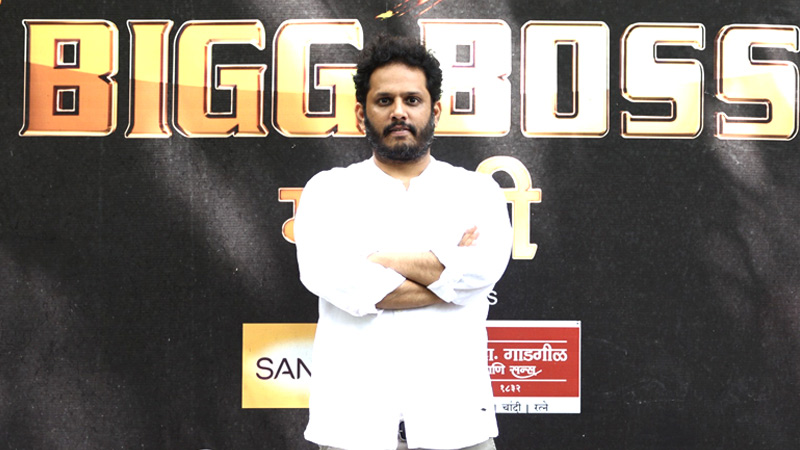
Mumbai: In the vibrant realm of Bigg Boss Marathi, where drama meets cultural resonance, the latest season has captivated audiences like never before. With a commitment to simplicity and relatability, the show’s creators have masterfully intertwined Marathi sentiments into every twist and turn, keeping viewers on the edge of their seats. This season introduces groundbreaking elements like the Dilemma Room and the game-changing Pay to Stay, pushing contestants to their limits and elevating the stakes. As social media buzz amplifies viewer engagement, the innovative hosting of Riteish Deshmukh added a refreshing energy that connects deeply with audiences.
Indiantelevision’s Suman Baidh caught up with EndemolShine India project head and creative director Ketan Mangaonkar to discuss the innovative strategies behind the latest season of Bigg Boss Marathi, exploring how they’ve enhanced viewer engagement, integrated cultural elements, and introduced exciting twists that keep audiences eagerly anticipating each episode.
On specific strategies that you use to maintain viewer engagement and excitement throughout each episode of the season

We try to maintain simplicity and relatability in every task or activity keeping in mind Marathi sentiments and culture. Also, what gives each episode the extra edge is the twists and turns that we bring into the mix. In short, it’s the unpredictable factor of “What is going to happen next?”, that has helped us get viewer engagement.
On some key surprises or unexpected elements that have been particularly well-received by the audience this season
This season we introduced a new room i.e. The Dilemma Room, where the contestant was put into a conundrum of choosing between a benefit for the house or gaining an advantage for themselves which not only kept the contestants second guessing our every move but also the viewers. Another factor that has had the biggest impact this season is the concept of ‘Pay to Stay’, wherein the contestants had to pay for basic essentials such as usage of beds, bathrooms and groceries as these had been taken for granted in the previous seasons. ‘Pay to Stay’ made the game tough for the contestants as they had to make compromises between the luxury of having a comfortable bed to sleep on or having a decent meal by being able to buy groceries.
On the role of digital platforms evolving in the promotion and interaction for this season compared to the previous season
We believe that in Maharashtra, after politics and cricket the most talked about topic is Bigg Boss Marathi. All thanks to the social media platforms like Facebook, X and Instagram. This season though has seen a growth in the fan pages, be it the personal fan pages of the contestants or public fan pages about Bigg Boss Marathi. Due to the discussions and polls held on these pages, Bigg Boss Marathi has become a top trending topic not only on social media but a vast number of households across India. Also, the huge number of memes and reels posted by the fans of the show has been a driving factor in promoting the show further.
On specific feedback from viewers led to significant changes or enhancements in the show’s content this season
A lot of viewers in the past felt that the contestants were having an easy time because they were living a lavish life, with access to all the luxuries in the house. Some even went far enough to state that the contestants seemed like they were on a picnic. Hence, we decided to change direction moving away from the classic format and introducing new elements that would be seen as obstacles for the contestants making the show more exciting.
On integrating Marathi cultural elements into the show’s format and storytelling to make it resonate more with local audiences
We design our tasks and activities based on a lot of Marathi folklore, children’s stories, songs and culture which makes the show relatable to the Marathi audience. Also, themes from our day-to-day routine like using the ‘Chul’, and trying to get a ticket for the ST bus during the Ganapati festival to reach their home town are just a few examples of the themes that we have used that have resonated with the viewers.
On most challenging tasks or activities designed for the contestants, this season and these challenges influence the show
This season we reduced tasks and activities that involved endurance and physical activity and focused more on tasks that tested the contestant’s mental fortitude. Activities like ‘The Dilemma Room’ and tasks like ‘Lie Detector’ and ‘Guess the Animal’ are just a few examples that tested the contestant’s patience and intelligence. This shift broke the monotony and brought on board a lot more viewers in comparison to the previous seasons.
On Riteish Deshmukh’s approach to hosting differed from past hosts and new elements that he brought to the show
Working with Mahesh Manjrekar for the previous four seasons was a humbling experience but this year we decided to change the host as we were moving away from the classic format to a new format. Having Riteish Deshmukh as the current host has brought in new energy and freshness to the show. He not only understands the essence of the show but also the pulse of the audience. Riteish maintains sophistication and elegance while hosting the show and has been brilliantly addressing critical situations and mistakes of the contestants on ‘Bhaucha Dhakka’ (Weekend Episodes).
On innovative concepts or themes are being explored to ensure the show remains fresh and engaging for future seasons
This year we introduced a new theme ‘Chakravyuh’ with the tagline “If you know the game, you don’t”. We not only incorporated the theme in our tasks and activities but also in the house design which made the house look different from the previous seasons giving it a more modern look and feel. This season we have set a benchmark wherein we delivered content that exceeds our audience’s expectations which has set a tone for future seasons.
On selecting contestants and this selection process’ evolution over the seasons
This show showcases different personalities and searching for the right mix of people is the biggest task while making the show. There is a tremendous amount of research and interview processes that a single celebrity must go through to become a contestant on the show.
On methods that you employ to keep the production smooth and efficient while adapting to the continuous demands of a daily show
More than three hundred people working in shifts over a period of a hundred days, making it possible to ensure the smooth running of the show. We are lucky to have a skilled and technically proficient team which makes it easy to meet the continuous demands of this daily reality show. But all this has been possible due to the continuous support and backing of the group leaders Deepak Dhar and Rishi Negi.






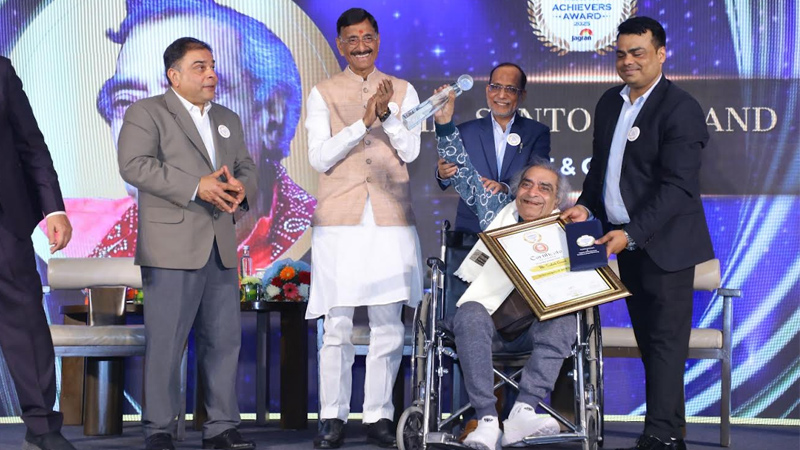
NEW DELHI: Hamdard Laboratories gathered a cross-section of India’s achievers in New Delhi on Friday, handing out the Hakeem Abdul Hameed Excellence Awards to figures who have left their mark across healthcare, education, sport, public service and the arts.
The ceremony, attended by minister of state for defence Sanjay Seth and senior officials from the ministry of Ayush, celebrated individuals whose work blends professional success with a sense of public purpose. It was as much a roll call of achievement as it was a reminder that influence is not measured only in profits or podiums, but in people reached and lives improved.
Among the headline awardees was Alakh Pandey, founder and chief executive of PhysicsWallah, recognised for turning affordable digital learning into a mass movement. On the sporting front, Arjuna Awardee and kabaddi player Sakshi Puniya was honoured for her contribution to the game and for pushing women’s participation onto bigger stages.
The cultural spotlight fell on veteran lyricist and poet Santosh Anand, whose songs have echoed across generations of Hindi cinema. At 97, Anand accepted the honour with characteristic humility, reflecting on a life shaped by perseverance and hope.
Healthcare honours spanned both modern and traditional systems. Manoj N. Nesari was recognised for strengthening Ayurveda’s place in national and global health frameworks. Padma shri Mohammed Abdul Waheed was honoured for his research-backed work in Unani medicine, while padma shri Mohsin Wali received recognition for his long-standing contribution to patient-centred care.
Education and social development also featured prominently. Padma shri Zahir Ishaq Kazi was honoured for decades of work in education, while former Meghalaya superintendent of Police T. C. Chacko was recognised for public service. Goonj founder Anshu Gupta received an award for his dignity-centred rural development initiatives, and the Hunar Shakti Foundation was honoured for empowering women and young girls through skill development.
The Lifetime Achievement Award went to former IAS officer Shailaja Chandra for her long career in public healthcare and governance, particularly in the traditional systems under Ayush.
Speaking at the event, Hamdard chairman Abdul Majeed said the awards were a tribute to those who combine excellence with empathy. “These awardees reflect Hakeem Sahib’s belief that healthcare, education and public service must ultimately serve humanity,” he said.
Minister Seth struck a forward-looking note, saying India’s young population gives the country a unique opportunity to become a global destination for learning, health and wellness by 2047.
The ceremony also featured the trailer launch of Unani Ki Kahaani, an upcoming documentary starring actor Jim Sarbh, set to premiere on Discovery on 11 February.
Instituted in memory of Unani scholar and educationist Hakeem Abdul Hameed, the awards have grown into a national platform that celebrates those building a more inclusive and resilient India. For one evening at least, the spotlight was not just on success, but on service with substance.






