News Broadcasting
Ban on surrogate ads on DD to stay, government says


Information and Broadcasting minister Sushma Swaraj has ruled out any change in the prevailing policy of pubcaster Doordarshan being barred from airing surrogate liquor and tobacco advertising.
The status quo situation does not augur well for the producers, affiliated to Doordarshan, who have been hard pressed to find sponsors in a shrinking advertising market in the face of increased competition from the private satellite channels.
Clarifying a point raised in the Rajya Sabha by Rajeev Shukla, a member of the Parliament elected from Uttar Pradesh on the ABLC ticket, Swaraj said, “The government cannot allow DD to air surrogate advertisements at any cost. Even if that means loss of revenue, as has been pointed out .”

According to Swaraj, the existing programming code doesn’t permit TV channels, including DD, to air surrogate liquor or tobacco ads. She added that a panel which was looking into this issue had been sending “notices to various channels” and had managed to curb the menace of surrogate ads on TV channels substantially.
“DD cannot be allowed to air such ads and if other satellite channels are still doing so, we’ll bring them in line with our programming code,” the minister said.
Shukla, a former print medium journalist and a TV anchor for serials like Zee’s Ru-ba-ru, had mentioned during the CAS debate that there was no justification for not allowing DD to air surrogate liquor ads, after putting in a statutory warning, when the satellite channels were doing so.
“Why should DD suffer on revenue front if the law is not uniform?” he had argued. But Swaraj would have nothing of that.
When Shukla raised the issue of channels vying for the huge advertising pie based on TRPs, Swaraj quipped that the implementation of CAS would solve such problems.
“After CAS is implemented, broadcasters will know exactly how many homes are receiving which channels (if the channels are pay-per-view) and it would be a sure indicator of a channel’s or a programme’s popularity,” Swaraj explained.
She also added that the CAS figures would also help advertisers who would get authentic figures instead of those bandied around by broadcasters.
So it looks like DD will have to live with Dry Days at least for a while.






News Broadcasting
CNN-News18 to host Fury in the Gulf conclave on West Asia crisis
Three-hour summit to unpack geopolitical fallout and impact on India
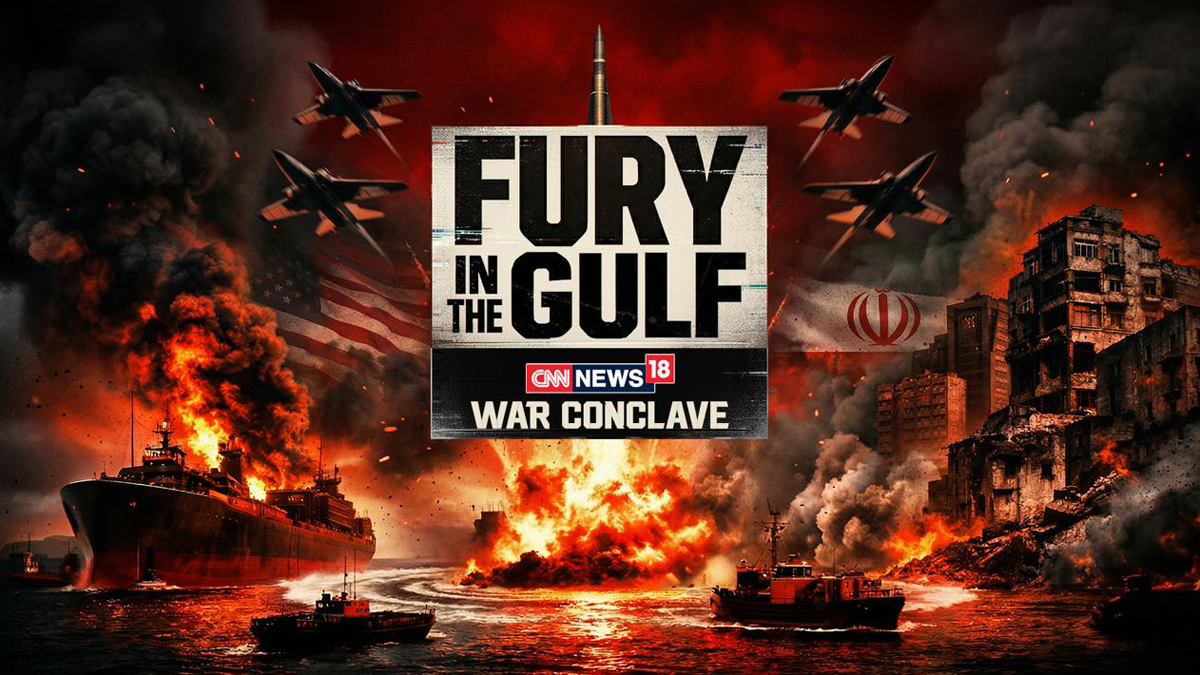
MUMBAI: CNN-News18 is set to host a special three-hour broadcast, Fury in the Gulf – War Conclave, on April 7, aiming to decode the escalating West Asia crisis and its far-reaching implications for India.
Scheduled from 4:00 PM to 7:00 PM, the conclave comes at a time when tensions between Iran and the United States are reshaping global geopolitics and triggering economic uncertainty. With India’s deep energy ties, trade links and large diaspora in the Gulf, the developments carry significant domestic relevance.
Built around the theme ‘Conflict, Consequences, and The Future,’ the programme will feature six curated sessions combining one-on-one interviews and panel discussions. The focus is to cut through the clutter and offer viewers a clearer understanding of the fast-evolving situation.
Key sessions include ‘Diplomacy in Times of War’ featuring Shashi Tharoor, and ‘World After the Iran Conflict’ with voices such as Ram Madhav, Reuven Azar, representatives from the European Union and the Iranian Deputy Envoy. Another session titled ‘Another Dunkirk?’ will bring together K. J. S. Dhillon and Jitin Prasada among others.
CNN-News18 editorial affairs director Rahul Shivshankar said, “In times of war, clarity becomes the most powerful tool. Fury in the Gulf – War Conclave brings together credible voices to address the questions and confusion that arise amid an overwhelming influx of information.”
He added that the initiative is aimed at delivering “facts, perspective, and insight” at a time when misinformation can easily cloud public understanding.
Echoing the sentiment, CNN-News18 CEO– English and business news Smriti Mehra said the conflict marks a defining global moment, with consequences that extend well beyond the region. She noted that the conclave seeks to present the crisis with “depth, nuance and responsibility” so audiences can better grasp its real-world impact.
As geopolitical tensions continue to dominate headlines, the conclave positions itself as an attempt to bring order to the noise, offering viewers a structured, insight-led look at a complex and rapidly shifting global situation.






