News Broadcasting
Balaji’s latest gives DD audiences a big thrill

MUMBAI: The good times continue to roll for Balaji. The soap factory’s latest show on pubcaster Doordarshan, Kyamaat – Jab bhi waqt aata hai, has started off on a great note and continues to maintain its position in the third week.
On the day of its launch the show ranked number two, with rating 9.7 TVR, next to DD’s top runner – the supernatural thriller Aap Beti, which continues as DD’s top show, with 12 TVR’s.
Kyamaat , the show about love, deceit and revenge debut on 19 December 2003 on DD1.

Conceptualised by Ekta Kapoor, the new show, airing on Fridays and Saturdays at 9 pm, has Ali Hasan, Amita Chanekar, Kishwar, Neelam Mehra, Lily Patel and Ashish in its main cast.
Speaking to indiantelevision.com, the show’s creative director Sandiip Sikcand said, “The show had to do well. We never cut corners in the production. Although it is shown on the national broadcaster, the treatment was like a satellite show, complete with gloss and glamour”
The freelance creative director, who is also looking at the creative aspects of Kahaani Ghar Ghar Kii, offered that the script is ready for 22 episodes and that DD had commissioned Balaji to do the show for a year to begin with..
The actors roped in are Balaji’s actors and therefore the connect with the audience was instant. But the major plus of the story according to Sikcand is the story flow. “It is a thriller saga and right from the first episode we have introduced the thrill element. Despite it being the first episode, the pace of the show wasn’t slack and we intend to keep it pacy.”
“We will be introducing a lot of tracks, besides the main one between the three protagonists. One interesting track has to do with an evil spirit and another one is about skeletons from the past,” he offered.






News Broadcasting
CNN-News18 to host Fury in the Gulf conclave on West Asia crisis
Three-hour summit to unpack geopolitical fallout and impact on India
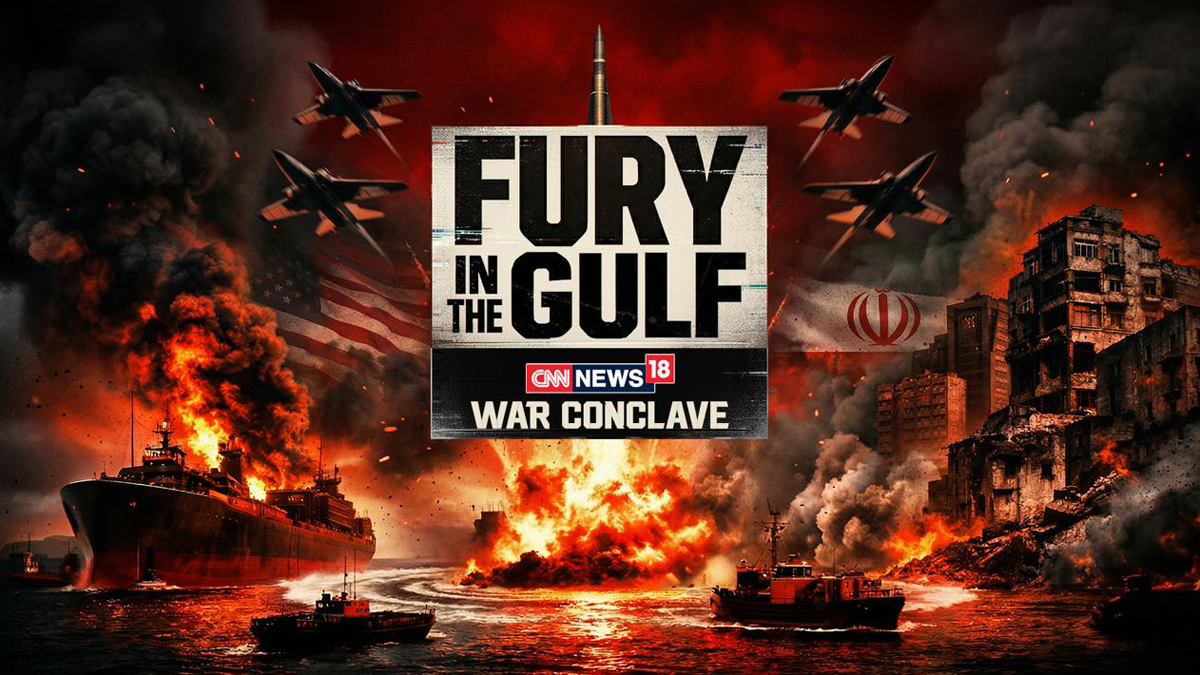
MUMBAI: CNN-News18 is set to host a special three-hour broadcast, Fury in the Gulf – War Conclave, on April 7, aiming to decode the escalating West Asia crisis and its far-reaching implications for India.
Scheduled from 4:00 PM to 7:00 PM, the conclave comes at a time when tensions between Iran and the United States are reshaping global geopolitics and triggering economic uncertainty. With India’s deep energy ties, trade links and large diaspora in the Gulf, the developments carry significant domestic relevance.
Built around the theme ‘Conflict, Consequences, and The Future,’ the programme will feature six curated sessions combining one-on-one interviews and panel discussions. The focus is to cut through the clutter and offer viewers a clearer understanding of the fast-evolving situation.
Key sessions include ‘Diplomacy in Times of War’ featuring Shashi Tharoor, and ‘World After the Iran Conflict’ with voices such as Ram Madhav, Reuven Azar, representatives from the European Union and the Iranian Deputy Envoy. Another session titled ‘Another Dunkirk?’ will bring together K. J. S. Dhillon and Jitin Prasada among others.
CNN-News18 editorial affairs director Rahul Shivshankar said, “In times of war, clarity becomes the most powerful tool. Fury in the Gulf – War Conclave brings together credible voices to address the questions and confusion that arise amid an overwhelming influx of information.”
He added that the initiative is aimed at delivering “facts, perspective, and insight” at a time when misinformation can easily cloud public understanding.
Echoing the sentiment, CNN-News18 CEO– English and business news Smriti Mehra said the conflict marks a defining global moment, with consequences that extend well beyond the region. She noted that the conclave seeks to present the crisis with “depth, nuance and responsibility” so audiences can better grasp its real-world impact.
As geopolitical tensions continue to dominate headlines, the conclave positions itself as an attempt to bring order to the noise, offering viewers a structured, insight-led look at a complex and rapidly shifting global situation.






