iWorld
Awkward silence as Awkward Goat’s X account gets pulled down

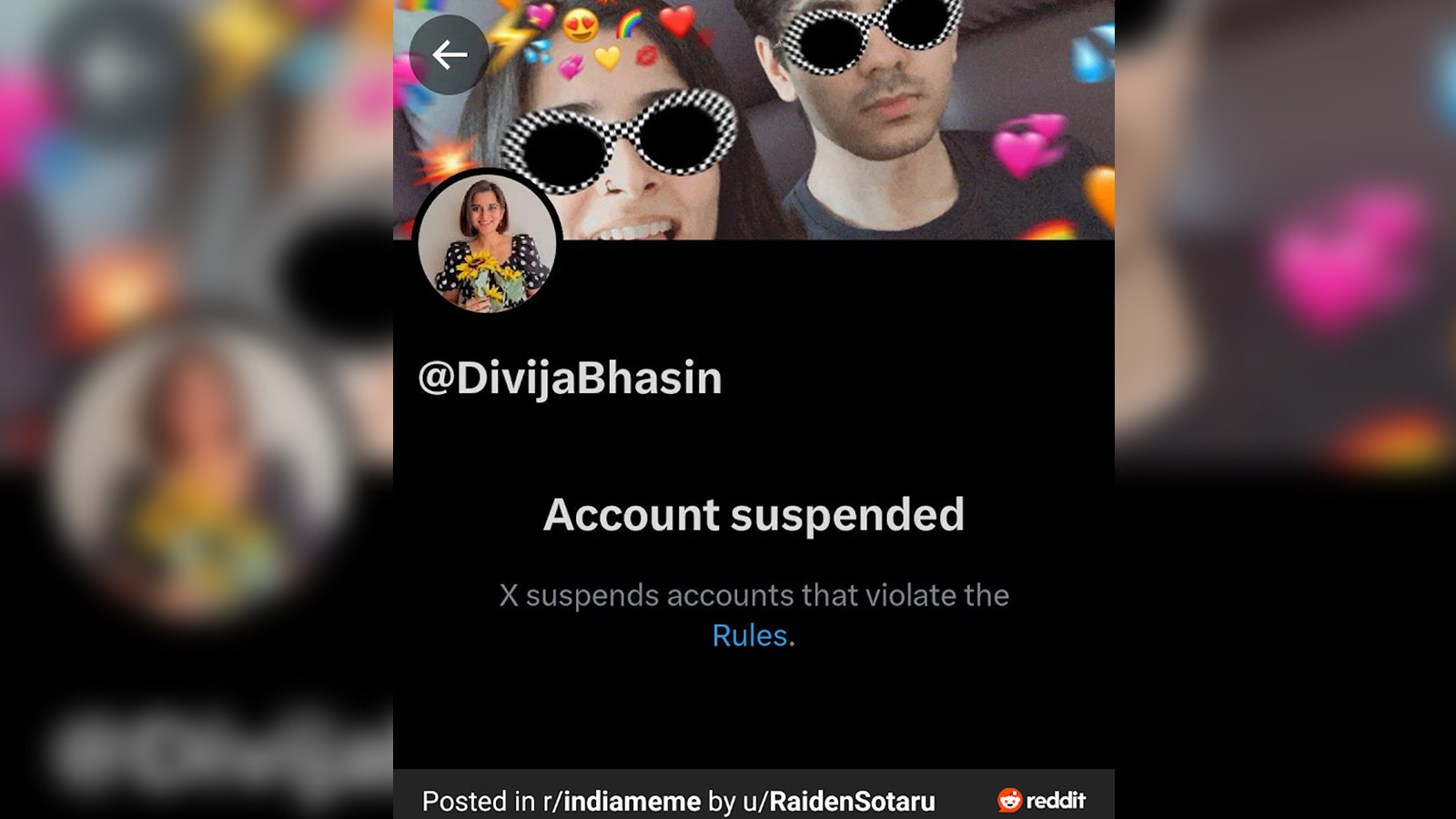
MUMBAI: When the influencer known as Awkward Goat disappeared from X this week, it set off a storm of speculation. Her real name is Divija Bhasin, a counselling psychologist-turned-content creator and while the exact reason for her suspension remains unconfirmed, the timing coincides with a heated controversy around her recent “Proud R-word” campaign.
Bhasin’s campaign sought to reclaim the slur “randi” (a word historically used to degrade women, including sex workers) by calling herself “a proud randi,” a move that sparked widespread backlash. Critics argued that her reclamation effort trivialises the word’s painful history.
At least one complainant has filed a First Information Report (FIR), alleging that Bhasin’s campaign influenced minors to adopt the slur in their social media bios.

Bhasin responded defiantly: “If I go to jail … I’ll happily go if it means people will finally start taking verbal abuse against women seriously.”
Though she’s built a significant following as a mental health advocate Forbes India ranked her among its top digital creators. Bhasin has also drawn criticism over whether she is sufficiently qualified. Some social media users have challenged her use of the title “psychologist,” alleging she misrepresents her credentials.
She’s also been accused of blocking critics, including those who say she spreads “inaccuracy and misinformation” in her psychology-related content.
This isn’t Bhasin’s first run-in with public outrage. Earlier, she floated unconventional views on marriage refusing to wear sindoor or mangalsutra, not taking her husband’s surname, and describing her relationship on her own terms.
That video too drew both praise and criticism, with some lauding her modern take and others rebuking her for what they saw as an intentional provocation.
While X (formerly Twitter) has not confirmed the reason behind the suspension, some observers link it to the backlash surrounding her “Proud R-word” activism. The legal complaints, especially relating to minors and a sensitive slur, align with a volatile moment in her public journey. Others speculate it could be a content moderation move, or even linked to mass reporting campaigns.
Why It Matters
. Influencer accountability: Bhasin’s story raises bigger questions about influencers reclaiming controversial language, and where the line lies between empowerment and harm.
. Platform responsibility: Whether the suspension is for policy violations or reputational damage, it highlights how platforms like X handle creator conduct amid public outcry.
. Mental health discourse: As a self-identified psychologist, Bhasin’s run-ins reflect the tension between influencer content and professional responsibility. Critics argue that her provocative style undermines trust in mental health advice.
. Social activism vs. backlash: The episode demonstrates how social movements can erupt but also combust when rooted in reclaimed words that carry deep historical trauma.
For now, Divija Bhasin has not publicly confirmed why her X account was suspended. Whether the “Proud R-word” controversy is directly linked remains unverified, but the convergence of backlash, legal pressure, and platform penalties has made this one of the most widely watched influencer controversies in recent months.






iWorld
MS Dhoni invests in Kuku, joins Kuku TV as brand ambassador
Cricket icon backs AI storytelling platform, fronts Kuku TV campaign
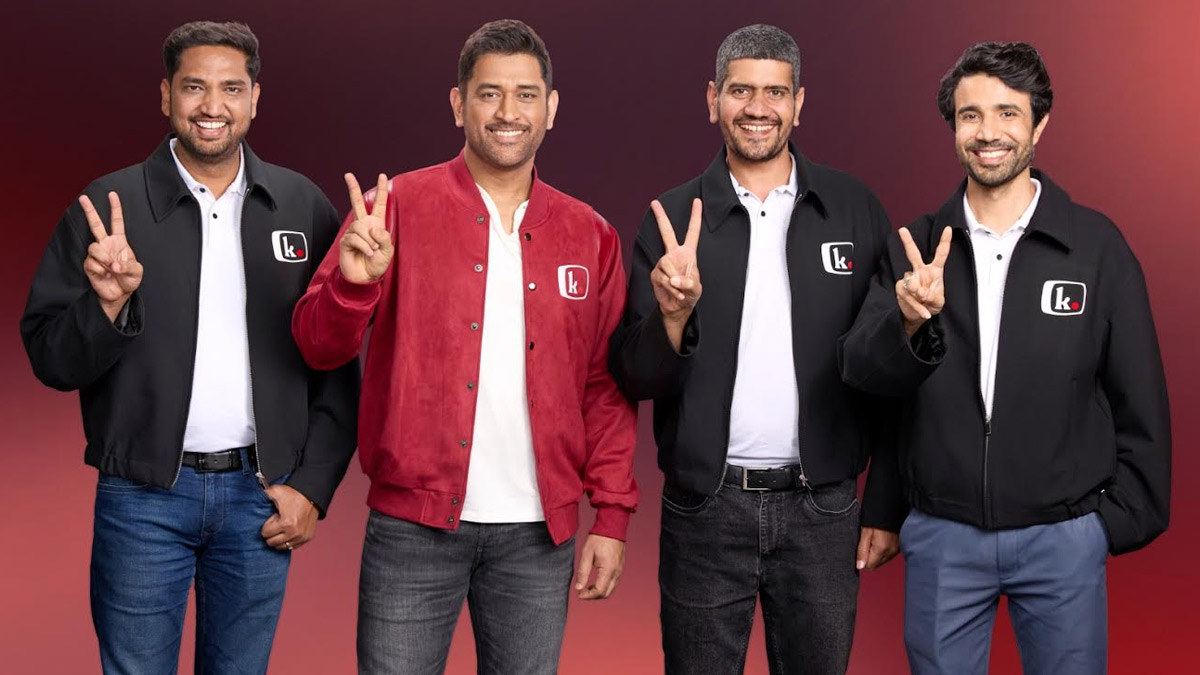
MUMBAI: MS Dhoni has invested in Kuku and joined its short-form drama app Kuku TV as brand ambassador, signalling a high-profile bet on India’s fast-growing AI-led content space.
Kuku, a mobile-first storytelling platform, operates across formats with apps such as Kuku TV for micro-dramas, Kuku FM for audio content and Guru for learning-led entertainment. Founded in 2018, the company has scaled rapidly, crossing 350 million installs and building a catalogue of over 20,000 titles across multiple Indian languages.
Dhoni said his decision to invest and partner with the platform was driven by its distinct approach to storytelling and its strong growth trajectory. MS Dhoni said, “I chose to invest in Kuku, and also come on board as the ambassador for Kuku TV, because the platform really stood out to me. It has built a differentiated entertainment experience for audiences across India, spanning multiple languages and formats. The growth has been impressive, and I connect strongly with the founders, who come from small towns like mine and have built something of this scale. I believe in their vision of building an AI-driven storytelling platform from Bharat, for Bharat, and for the world.”
Founded by Lal Chand Bisu, Vinod Kumar Meena and Vikas Goyal, the platform positions itself at the intersection of technology and storytelling, using AI to create and distribute bite-sized content tailored to mobile audiences.
Sharing his perspective, Kuku co-founder and CEO Lal Chand Bisu said, “MS Dhoni is known for backing bold decisions that others might hesitate to take. At Kuku, we are also taking bold bets. That spirit of unconventional thinking resonates deeply with us.”
Adding to this, Kuku co-founder and COO Vinod Kumar Meena said, “Our beloved Thala is one of the rare personalities with truly nationwide appeal. As we build Kuku for all of India, that connection makes him a natural fit for us.”
Further, Kuku co-founder and CTO Vikas Goyal said, “MSD has a unique understanding of people. As we build for both creators and consumers, that perspective will be incredibly valuable, especially as we continue strengthening our AI-driven storytelling stack.”
Backing the momentum, Panthera Peak Capital managing director Nikhil Bhandarkar said, “Kuku’s vision, execution, and clarity of thought are exceptional, qualities that closely mirror MS Dhoni’s approach. We are excited to partner with the team as they build Kuku into a global entertainment platform.”
To mark the association, Kuku TV has rolled out the campaign Dhoni Watches Kuku TV, anchored by a brand film that plays on Dhoni’s instinctive decision-making. Built around short, engaging stories delivered in minutes, the campaign highlights the platform’s promise of quick, compelling entertainment.
With Dhoni stepping in as both investor and face of the brand, Kuku appears to be doubling down on its ambition to take AI-driven storytelling from India to a global audience, one short story at a time.