Cable TV
Assam cable ops face pole problems

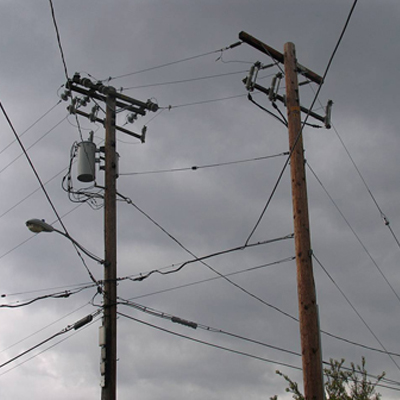
MUMBAI: As many as 40,000 cable operators in Assam await a final decision on the issue of monthly payment for using electric poles to lay cable wires.
It was in September that the Assam Power Distribution Company Limited (APDCL) sent out its first circular, making it mandatory for cable operators in the state to pay Rs 25 per electric pole per month, with the deadline being 7 October.

The APDCL notice stated that all cable wires should be removed from electric poles. It further said: “Those using poles (will have to) pay Rs 25 per pole per month for services and also comply with safety measures as notified by the board,” according to Greater Guwahati Cable TV Operators’ Association (GGCTOA) general secretary Md Iquebal Ahmed.
Significantly, while 80 per cent of the electric poles are used by cable operators, the remaining 20 per cent are used by telecom and broadband operators as well as the Assam police. Close to 31,000 electricity poles are being used by cable operators in Guwahati alone.
Says Ahmed: “When we received the notice, even APDCL authorities were not aware of the safety guidelines that needed to be followed. Also, we were not too happy with the amount we were asked to pay. So we requested for an extension in the deadline for complying with the notice,” and added that the GGCTOA proposed holding a meeting with the APDCL chairman to present its viewpoint.
Accordingly, a meeting was held on 22 October with 12 cable operators from across Assam, the APDCL chairman and other state heads.
“Through the meeting, we communicated our concern over paying the Rs 25 per pole per month to APDCL. Considering that APDCL will earn revenue from many other service providers who are using the electric poles, we requested them to lower the rate. We also proposed licensing for cable operators, which will allow only those cable operators with proper documents to be given licenses to lay down cables on electric poles,” Ahmed reveals.
It is learnt the Assam-based cable operators have suggested three options for payment: one – Re 1 per pole per month; two – slab system, where a cable operator will pay Rs 500 for 50 poles with an increase of Rs 300 per additional 50 poles used and three – the Meghalaya model which uses the slab system.
“The process is already in place in Meghalaya for the past six years. There was an agreement between the board and cable operators to use the pole. The agreement has been so worked out that on an average – every operator pays Rs 5-6 per pole per month. Moreover, they are also being provided electricity for Rs 50,” said Ahmed.
On APDCL’s part, a committee has been constituted to decide the rate. “Though we had fixed it at Rs 25 per pole per month, after the cable operators’ association applied for a revision in rate, we are now working on the final fee that they have to pay for using the electric pole,” expresses APDCL public relations officer Chandra Mudoi.
Asked about the criteria that are to be used to decide the final rate, Mudoi highlighted that the effort was on to “compare the electric pole fee from other states, like Meghalaya.”
But what led to the decision levying this fee on cable operators in the first place? “The cable wires strung over electric poles can cause electrical accidents. So we asked the cable operators to remove these, which they didn’t and so we asked them to pay rent. Also, other states take money from cable operators for using electric poles. And so it makes sense for us to charge them for using electric poles without any permission or even without safety measures,” elucidates Mudoi.
With the committee expected to announce the new fee in the next few weeks, Mudoi is quick to point out that: “If the operators do not agree to the new rate, we will ask them to remove the cable wires from the poles.”
Meanwhile, Ahmed says: “We have tried to explain to the committee that there are smaller operators whose area of business is smaller with lesser number of subscribers. And there are the bigger operators as well. The committee cannot have equal policies for both. Though currently we are in the status quo mode, we are using the electric poles like before and await the final decision.”
Will their pleas be heard or will Assam Power short circuit them?







Cable TV
Hathway Cable appoints Gurjeev Singh Kapoor as CEO
Leadership change comes as cable TV faces shrinking subscriber base and modest earnings pressure
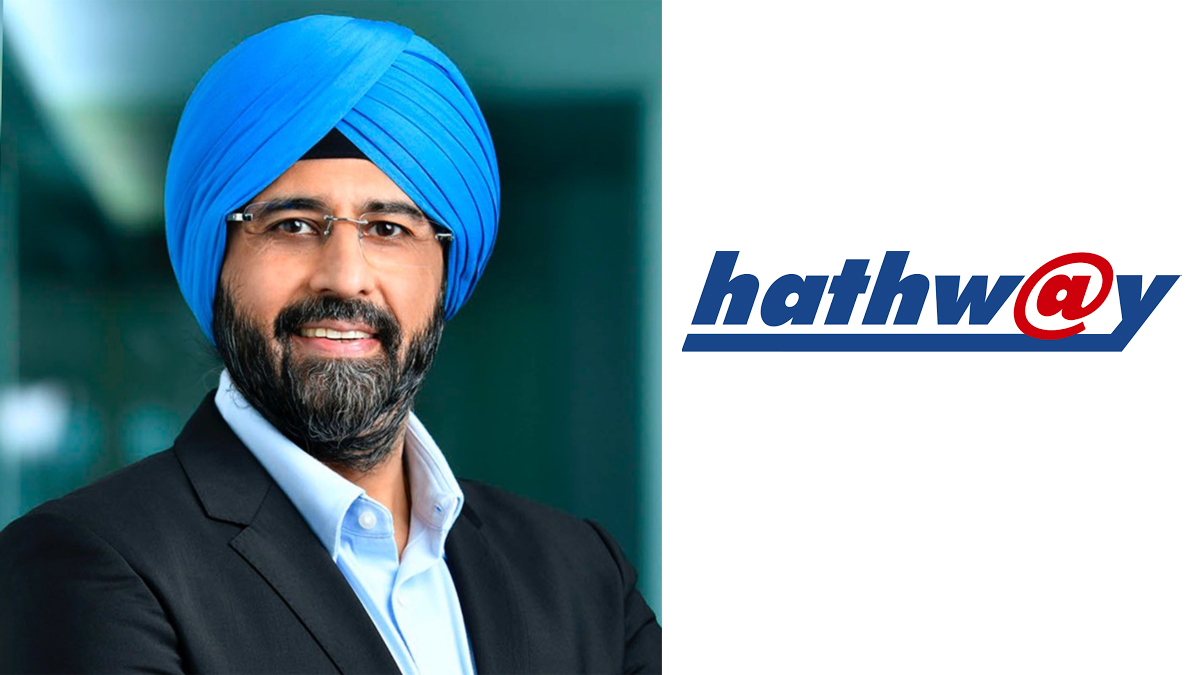
MUMBAI: Hathway Cable and Datacom has tapped industry veteran Gurjeev Singh Kapoor as chief executive officer, marking a leadership pivot at a time when India’s cable television business is under mounting strain.
Kapoor will take over from Tavinderjit Singh Panesar, who is set to retire in August after a long innings with the company. Panesar, chief executive since 2023, has held multiple leadership roles at Hathway, including his latest stint beginning in 2022.
Kapoor brings more than three decades of experience in media and entertainment. He most recently led distribution at The Walt Disney Company’s Star India business, now part of JioStar. His career spans television distribution and affiliate partnerships, with stints at Sony Pictures Networks India, Discovery Communications and Zee Entertainment.
Panesar, with over three decades in the industry, has worked across strategic planning, distribution and business development in media, broadcasting and manufacturing. His past associations include ESPN Star Sports, Star India, Apollo Tyres and JK Industries.
The transition lands as the cable sector grapples with structural disruption. Traditional operators are losing ground to streaming platforms, while telecom and broadband players tighten the squeeze with bundled offerings.
An EY report estimates India’s pay-TV base could shrink by a further 30 to 40 million households by 2030, taking the total down to 71 to 81 million. The slide follows a loss of nearly 40 million homes between 2018 and 2024, a contraction that has already wiped out more than 37,000 jobs in the local cable operator ecosystem.
Hathway’s numbers reflect the strain. The company reported a consolidated net profit of Rs 93 crore for FY25, down from Rs 99 crore a year earlier. Revenue inched up to Rs 2,040 crore from Rs 1,981 crore. As of December 2025, it had about 4.7 million cable TV subscribers and roughly 1.02 million broadband users.
Kapoor steps in with a familiar brief but a shrinking playbook. In a market where viewers are cutting cords faster than companies can reinvent them, the new chief executive inherits a business fighting to stay plugged in.






