GECs
Asianet rules Malayali hearts with 64 per cent prime-time viewership share

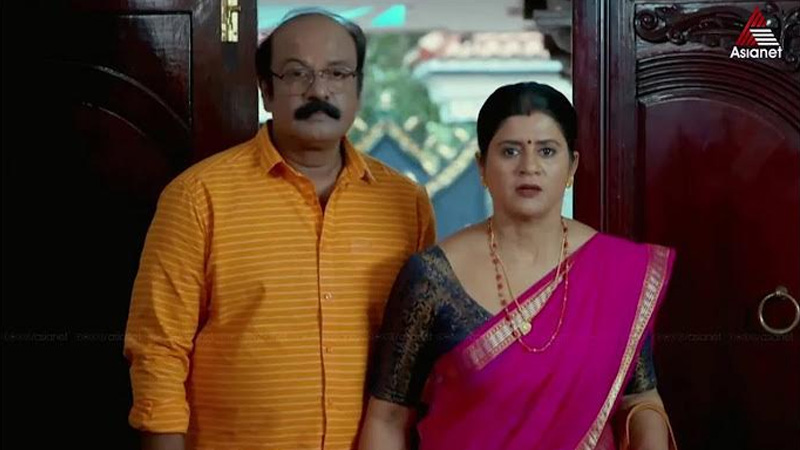
MUMBAI: When it comes to Malayali entertainment, Asianet isn’t just leading the pack, it’s setting the rhythm of prime time itself. With a commanding 64 per cent share of urban prime-time viewership, nearly two out of every three urban Malayalis now reach for the remote only to land on Asianet. That’s not just a number, it’s a cultural footprint proof that Asianet has cracked the code of storytelling that entertains, inspires, and reflects everyday Kerala life.
Front and centre in this success story is the juggernaut that is Bigg Boss Season 7. The show alone drives 24 per cent of Asianet’s total viewership, making it the single-largest prime-time engine across Malayalam television. Compared to last season, the current edition has levelled up dramatically weekday audiences are up 14 per cent, while weekends have surged a whopping 23 per cent.
What explains this pull? A volatile mix of drama, emotional storytelling, and a cast that sparks conversations from dining tables to office chai breaks. Bigg Boss has transformed into more than a TV format, it’s a social ritual that spills into memes, reels, and debates in every Malayali Whatsapp group.

Reality may be booming, but fiction is hardly lagging behind. Asianet’s weekday line-up continues to hold families glued with stories that echo Malayali life. Chempaneer Poovu, Patharamattu, Pavithram, and Teacheramma remain household favourites, weaving tales of dilemmas, resilience and small triumphs. Meanwhile, newer entrants like Mazhathorum Munpe are steadily winning loyalty, proving Asianet has mastered the delicate balance of nostalgia and novelty.
Asianet’s power doesn’t stop at serials and reality. The channel has carved a niche with its marquee cultural specials and premieres events that feel less like programming and more like festive gatherings. The nostalgia-packed Maveli Kottaram, the adrenaline-filled star singer special event, and the much-talked-about premiere of Thudarum have created moments that transcend living rooms and bind generations together.
Since its birth in 1993, Asianet has been more than just a channel. Over 32 years, it has mirrored Malayali aspirations, frustrations, and celebrations, standing by as a cultural companion through shifting eras of broadcast and format. Today, its reach goes beyond Kerala, stretching across the Middle East, Europe, North America, and Southeast Asia, ensuring the global Malayali diaspora feels connected to its roots.
Even as formats change and new platforms emerge, Asianet continues to feel contemporary while staying rooted in tradition. It remains the gold standard in Malayalam entertainment. a channel that’s less of a broadcaster, more of a family member.
Because in Kerala, prime time isn’t a slot, it’s Asianet time.






GECs
Sahara One reports financial results, notes director exit and business realignment
Muted revenues, steady expenses and strategic adjustments shape company’s current phase

MUMBAI: In a tale where the sands seem to be slipping faster than they can be gathered, Sahara One Media and Entertainment Limited has reported another quarter of wafer-thin income and widening losses, even as a boardroom exit adds to the unease.
The company informed the Bombay Stock Exchange that its board, in a meeting held on April 4, approved its unaudited financial results for the quarter ended September 30, 2025. The numbers paint a stark picture. Total income for the quarter stood at just Rs 0.13 lakh, unchanged sequentially and sharply down from Rs 0.26 lakh a year earlier.
Losses, meanwhile, deepened. The company posted a net loss of Rs 24.16 lakh for the quarter, compared to Rs 18.81 lakh in the June quarter and Rs 39.69 lakh in the same period last year. For the six months ended September 2025, the cumulative loss stood at Rs 39.69 lakh, while the full-year loss for FY25 was reported at Rs 60.72 lakh.
Expenses continued to outweigh income by a wide margin. Total expenses for the quarter came in at Rs 24.30 lakh, led by employee benefit costs of Rs 6.51 lakh and other expenses of Rs 17.78 lakh. Earnings per share remained in the red at Rs (0.11) for the quarter.
The balance sheet reflects a company with significant assets on paper but limited operational momentum. Total assets stood at Rs 23,065.57 lakh as of September 30, 2025, broadly unchanged from March 2025. Equity share capital remained steady at Rs 2,152.50 lakh, while total equity was reported at Rs 18,004.85 lakh.
Cash and cash equivalents saw a modest uptick to Rs 6.75 lakh from Rs 4.68 lakh earlier, supported by a positive operating cash flow of Rs 180.01 lakh for the period.
Yet, beneath these numbers lies a more complex narrative. The company’s auditors flagged their inability to obtain sufficient evidence to form a conclusion on the financial statements, citing lack of access to records. They also raised concerns over the company’s ability to continue as a going concern, pointing to insufficient funds, delayed recoveries, and stalled content investments.
Adding to the governance overhang, the company disclosed that Rana Zia has resigned as whole-time director, effective October 16, 2025, citing other professional commitments. The resignation, noted and accepted by the board, also brings an end to her role across company committees.
Regulatory pressures continue to loom large. The Securities and Exchange Board of India has already initiated penal actions for non-compliance with listing norms, with trading in the company’s shares remaining suspended. There is also a risk of promoter demat accounts being frozen.
Legacy legal issues remain unresolved. A substantial deposit of Rs 694,027.88 thousand linked to the long-running OFCD dispute involving Sahara group entities is still under the purview of the Supreme Court of India. Restrictions on asset disposal continue to weigh on the company’s financial flexibility.
Operationally, challenges persist across multiple fronts. Advances worth Rs 1,92,916 thousand given for film content remain stuck, with delays in project completion and uncertain recoverability. The company’s YouTube channel, despite being operational, has generated no revenue for over three years due to compliance lapses. In a further twist, management has indicated that revenues may have been fraudulently diverted through unauthorised changes to its AdSense account, with a police complaint in the works.
There are also missed revenue opportunities. Television content rights continue to be used by a related party despite the expiry of the licence agreement, with fresh negotiations still underway.
For now, Sahara One Media and Entertainment Limited appears caught between legacy disputes and present-day operational hurdles. As losses linger and governance questions mount, the road to recovery looks less like a sprint and more like a slow trudge through shifting sands.






