News Headline
Area-wise CAS rollout in Mumbai and Delhi on anvil; notification due in couple of days


NEW DELHI: A limited edition of conditional access in the four metros, especially in Delhi and Mumbai, is on its way.
The MSOs and cable operators in the four metros have more or less agreed to have zone-wise rollout of conditional access in the cities.
To facilitate the area-wise rollout, the government is reportedly readying to issue another notification in a day or two in continuation of a 14 January notification, which made pay channels passing through a set-top box mandatory from 14 July,

According to additonal secretary (broadcasting) in the I&B ministry Vijay Singh, “It (zone-wise rollout) is something that we are seriously considering.” He added that a notification would be necessary if the plan is to be activated formally.
The areas being suggested to the government for area-wise rollout of CAS by the MSOs, who poured over city maps of Delhi and Mumbai here at the information and broadcasting ministry, are South Delhi (covering areas stretching from the Delhi-Jaipur National Highway to almost Maharani Bagh and in between having South Extension, Ashram, Vasant Kunj, Dhaula Kuan, R.K. Puram, Saket, etc) and South Mumbai (covering most areas lying between Colaba and Mahim Creek with the Central railway track being the dividing line).
Because there are not much overlap of MSOs and their turfs in the cities of Kolkata (dominated by RPG with SitiCable being the younger sibling) and Chennai (where Sumangali and Hathway, in that order, have networks), service providers have conveyed to their counterparts sitting in Delhi that they would agree to any suggestion made by them here and abide by the subsequent decision taken by the government on the suggestions.
It is expected that the cities of Kolkata and Chennai may see the whole municipal areas having addressability, if not area-wise rollout.
If the government accepts the zone-wise rollout plan as a face saving measure to the vexed problem of CAS, the second phase would cover the areas of West Delhi and western suburbs of Mumbai, the third phase would cover North Delhi and central suburbs of Mumbai and the fourth phase covering the East Delhi area.
The final rollout time or transitory phase would encompass three months, MSOs pointed out.
The justification for this break-up — the broad suggestion came from India’s information and broadcasting ministry itself, it is learnt — being affluence and purchasing power of people residing in the South Delhi and South Mumbai areas and the likelihood of them being more open to invest in STBs, etc.
Pointing out that the differences have been sorted out, HTMT’s Ashok Mansukhani told indiantelevision.com, “The suggestions are with the government and we are awaiting a final word on it for area-wise rollout of CAS from 14 July, which will turn out to be in the interest of the consumer.”
Though Mansukhani, a former bureaucrat having done a stint at India’s pubcaster Doordarshan as a deputy director-general, was expecting a notification in this regard (zone-wise rollout of CAS), Hathway Datacom CEO K Jayaraman was more fatalistic when he exclaimed, “Everything depends on God.”
But there seems to be some confusion still prevailing on the rates that consumers would have to pay if they do not fall in the earmarked CAS zone. Of course, it all finally depends on whether the government accepts the suggestions from the MSOs, to which broadcasters’ concurrence would have an important bearing.
Will the consumers in the non-notified areas of the metros continue to pay the rates they are paying now for cable subscription? Will their monthly bill come down to that of the basic tier price level (logic says it should not)? Will such a limited rollout of CAS be called dual illumination or a dual service? Or, more importantly, what will happen if the broadcasters decide to charge the subscribers in the non-implemented areas prices decided for a CAS regime ?
According to Mansukhani, “We are not competent to answer some of the questions, but I am sure the government would take steps to safeguard the consumer’s interests.” He did try to suggest that the government ought to bring in some legislative measures to rein in broadcasters (in the absence of any law regulating broadcasting in India and the overarching Communication Bill still pending Parliament’s approval), but Hathway vice-president (operation) for North India SN Sharma was more emphatic when he said, “At this juncture we are not saying anything of that sort as it is up to the government to decide what it will do with the broadcasters.”
The cable fraternity is expecting that the broadcasters would fall in line and would not charge from them subscription money for pay channels for those homes that don’t fall within the would be notified areas in the event of a zone-wise rollout of CAS. The government, after discussion, is said to have rejected genre-wise rollout of CAS, a theory being backed by Hathway.
Zee Telefilms vice-chairman Jawahar Goel, who once again played the mediator between the MSOs and some independent cable operators, said optimistically, “Hopefully this plan would be accepted by all stakeholders.”
HOW MANY STBs WOULD BE NEEDED?
With various figures being bandied around of the cable and satellite homes in the four metros (6.1 million is indiantelevision.com’s figure), the number of C&S homes that would opt for the boxes in the notified areas is still a matter for debate.
“The demand for the boxes would depend largely on the schemes and their attractiveness that broadcasters come out with. More attractive the schemes and rates, more is likely to be the demand,” INCableNet CEO Rajiv Vyas said.
It is also expected that that the number of C&S homes in the South Mumbai area, carved out by the MSOs and the government, would be between 20-25 per cent of the total C&S homes in Mumbai, reportedly 1.8 million. The South Delhi area is likely to have 480,000 C&S homes.
So, how many boxes would be needed? According to Roop Sharma, head of Cable Operators Federation of India, “The initial demand as per our feedback is likely to be 25 per cent and that is what we are conveying to the government.”
How many boxes are already in the country? The MSOs and the government won’t tell, though the MSOs say the government has the figures, which have been obtained from the customs department. Information available with indiantelevision.com indicates that the big MSOs on an average have only around 10,000 boxes ready for delivery. The MSOs however, qualify, that orders have been placed for much more and should the demand arise they can be bought in at short notice.
As the CAS saga takes another turn — 11 days from the D-day — the cable fraternity is keeping its fingers crossed for the broadcasters to play ball.






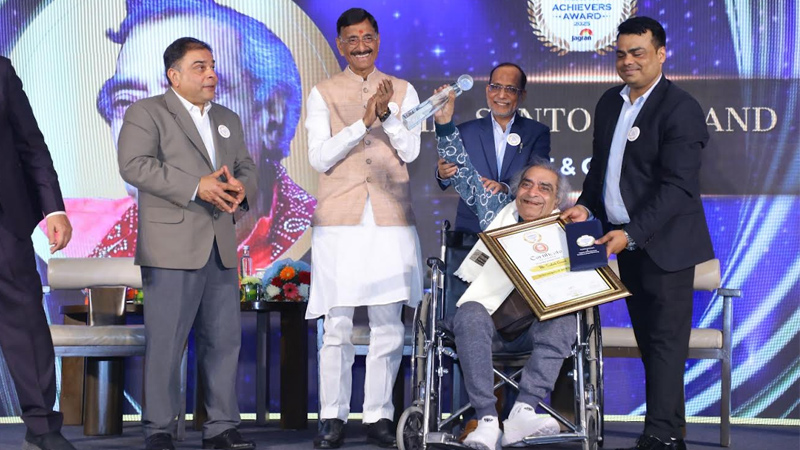
NEW DELHI: Hamdard Laboratories gathered a cross-section of India’s achievers in New Delhi on Friday, handing out the Hakeem Abdul Hameed Excellence Awards to figures who have left their mark across healthcare, education, sport, public service and the arts.
The ceremony, attended by minister of state for defence Sanjay Seth and senior officials from the ministry of Ayush, celebrated individuals whose work blends professional success with a sense of public purpose. It was as much a roll call of achievement as it was a reminder that influence is not measured only in profits or podiums, but in people reached and lives improved.
Among the headline awardees was Alakh Pandey, founder and chief executive of PhysicsWallah, recognised for turning affordable digital learning into a mass movement. On the sporting front, Arjuna Awardee and kabaddi player Sakshi Puniya was honoured for her contribution to the game and for pushing women’s participation onto bigger stages.
The cultural spotlight fell on veteran lyricist and poet Santosh Anand, whose songs have echoed across generations of Hindi cinema. At 97, Anand accepted the honour with characteristic humility, reflecting on a life shaped by perseverance and hope.
Healthcare honours spanned both modern and traditional systems. Manoj N. Nesari was recognised for strengthening Ayurveda’s place in national and global health frameworks. Padma shri Mohammed Abdul Waheed was honoured for his research-backed work in Unani medicine, while padma shri Mohsin Wali received recognition for his long-standing contribution to patient-centred care.
Education and social development also featured prominently. Padma shri Zahir Ishaq Kazi was honoured for decades of work in education, while former Meghalaya superintendent of Police T. C. Chacko was recognised for public service. Goonj founder Anshu Gupta received an award for his dignity-centred rural development initiatives, and the Hunar Shakti Foundation was honoured for empowering women and young girls through skill development.
The Lifetime Achievement Award went to former IAS officer Shailaja Chandra for her long career in public healthcare and governance, particularly in the traditional systems under Ayush.
Speaking at the event, Hamdard chairman Abdul Majeed said the awards were a tribute to those who combine excellence with empathy. “These awardees reflect Hakeem Sahib’s belief that healthcare, education and public service must ultimately serve humanity,” he said.
Minister Seth struck a forward-looking note, saying India’s young population gives the country a unique opportunity to become a global destination for learning, health and wellness by 2047.
The ceremony also featured the trailer launch of Unani Ki Kahaani, an upcoming documentary starring actor Jim Sarbh, set to premiere on Discovery on 11 February.
Instituted in memory of Unani scholar and educationist Hakeem Abdul Hameed, the awards have grown into a national platform that celebrates those building a more inclusive and resilient India. For one evening at least, the spotlight was not just on success, but on service with substance.







