News Broadcasting
AOL TW, Microsoft to collaborate on digital media initiatives


NEW YORK: Bill Gates software major Microsoft and media conglomerate AOL Time Warner have announced an agreement to collaborate on long-term digital media initiatives that will accelerate the adoption of digital content. They have also agreed to settle the pending litigation between their companies.
The two companies have agreed to a new royalty-free, seven-year license of Microsoft’s browsing technology and steps designed to ensure that their products work better with each other.
An official release informs that under the digital media agreement, the companies will work together on a series of initiatives to support the more rapid deployment of digital media for consumers and support new business models for content owners through digital rights management technology.

The companies aim to help develop a successful digital media environment that is secure from piracy, open to all companies across multiple industries, and offers consumers access to broad content in a compelling manner that is easy to use.
As part of this agreement, the two companies have entered into a long-term, non-exclusive license agreement allowing AOL Time Warner to use Microsoft’s Windows Media 9 Series and future software for creating, distributing and playing back high-quality digital media.
The legal settlement resolves the private antitrust lawsuit filed against Microsoft in January, 2002 by AOL Time Warner’s America Online on behalf of its subsidiary, Netscape Communications.
As part of the settlement, Microsoft will pay $750 million to AOL Time Warner. Microsoft has agreed to provide AOL Time Warner’s AOL online service with a new distribution channel for its software to certain PC users worldwide.
In addition, the two companies will cooperate to ensure the best possible AOL member experience on current and future Microsoft operating systems, including commitments by Microsoft for technical cooperation and information disclosures.
Microsoft’s chairman and chief software architect Bill Gates has been quoted in the release saying: “With Microsoft’s media technology expertise and AOL Time Warner’s content expertise, we believe we can accelerate the adoption of digital media for the Internet and help content providers across the entire industry. While our companies will continue to compete, I’m pleased that we’ve been able to resolve our prior dispute and I’m excited about the opportunity to work together collaboratively to make the digital decade a reality.”
The agreements announced include the following elements:
Digital Media Technology: As part of the companies’ agreement on digital rights management, they have established a long-term, non-exclusive license agreement allowing AOL Time Warner to use, if it so chooses, Microsoft’s entire Windows Media 9 Series digital media platform, as well as successor Microsoft digital rights management software.
This agreement gives AOL Time Warner access to Microsoft’s flagship digital media and DRM technologies, which provide an end-to-end solution for high-quality, secure online content distribution.
Windows Media addresses the entire value chain from the original digital encoding of content, through playback by a consumer, and offers options for advanced digital rights management that respects content business rules and security.
This agreement will help enable AOL Time Warner to expand its distribution of digital content with confidence as its business needs evolve, making it easy and profitable to provide consumers with convenient access to the vast selection of content that AOL Time Warner distributes.
Digital Media and Digital Rights Management Initiatives: The two companies have agreed to work together and in collaboration with others to develop solutions to issues that have been slowing the movement of high-quality digital content to consumers, including:
Increasing the available options for consumers legally to obtain high-quality content; technical protection measures emphasising interoperability and content rule compliance in a mixed analogue-digital environment; seeking areas where they can align on public policies and legal actions that will advance the interests of consumers and the relevant industries; and building consumer awareness around intellectual property and the need to respect copyrighted works.
The companies will work to broaden consumer access to high-quality digital content, in such areas as: online music services offering single downloads and/or monthly subscriptions; authorised Internet access to movies; and high-definition video content with more compelling interactive features all on a single optical disc.






News Broadcasting
CNN-News18 to host Fury in the Gulf conclave on West Asia crisis
Three-hour summit to unpack geopolitical fallout and impact on India
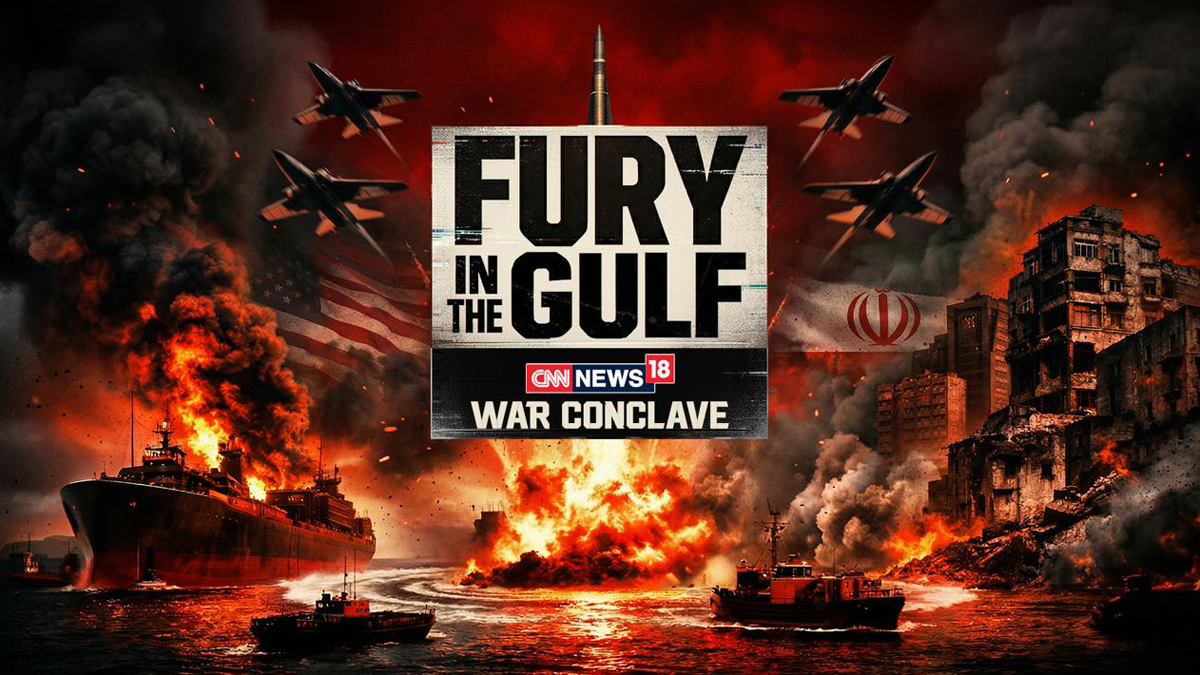
MUMBAI: CNN-News18 is set to host a special three-hour broadcast, Fury in the Gulf – War Conclave, on April 7, aiming to decode the escalating West Asia crisis and its far-reaching implications for India.
Scheduled from 4:00 PM to 7:00 PM, the conclave comes at a time when tensions between Iran and the United States are reshaping global geopolitics and triggering economic uncertainty. With India’s deep energy ties, trade links and large diaspora in the Gulf, the developments carry significant domestic relevance.
Built around the theme ‘Conflict, Consequences, and The Future,’ the programme will feature six curated sessions combining one-on-one interviews and panel discussions. The focus is to cut through the clutter and offer viewers a clearer understanding of the fast-evolving situation.
Key sessions include ‘Diplomacy in Times of War’ featuring Shashi Tharoor, and ‘World After the Iran Conflict’ with voices such as Ram Madhav, Reuven Azar, representatives from the European Union and the Iranian Deputy Envoy. Another session titled ‘Another Dunkirk?’ will bring together K. J. S. Dhillon and Jitin Prasada among others.
CNN-News18 editorial affairs director Rahul Shivshankar said, “In times of war, clarity becomes the most powerful tool. Fury in the Gulf – War Conclave brings together credible voices to address the questions and confusion that arise amid an overwhelming influx of information.”
He added that the initiative is aimed at delivering “facts, perspective, and insight” at a time when misinformation can easily cloud public understanding.
Echoing the sentiment, CNN-News18 CEO– English and business news Smriti Mehra said the conflict marks a defining global moment, with consequences that extend well beyond the region. She noted that the conclave seeks to present the crisis with “depth, nuance and responsibility” so audiences can better grasp its real-world impact.
As geopolitical tensions continue to dominate headlines, the conclave positions itself as an attempt to bring order to the noise, offering viewers a structured, insight-led look at a complex and rapidly shifting global situation.






