Kids
Animation sees an uptick despite expensive production


MUMBAI: When it comes to popular content on TV in India, general entertainment channels (GEC) lead the way. Primetime shows are most watched, most-earning and most talked about since the early years of the saas-bahu serials.
Animation as a genre is sidelined to the kids’ channels but producing it involves tons of cash, which may not necessarily be recoverable so easily. At first, India was content with syndicated content like Tom & Jerry, Mickey Mouse, etc and only in 2008 did we get our most pride-worthy IP Chhota Bheem.
A media professional quoted the price for producing 2D or 3D animated content to be Rs 10-20 lakh or above for one 11-22 minute show. Initial episodes entail an even higher spend at Rs 20 lakh. The cost depends on the number of characters, background, etc. Another professional estimated it to be between Rs 30-50 lakh for shows that top the chart. If we produce it with the intent of selling it to the overseas market, the investment could skyrocket to Rs 1 crore. Compare these staggering numbers with just Rs 7-8 lakh needed for a single GEC episode.

Green Gold Animation chief strategy officer Srinivas Chilakapudi said that GECs will raise the cost depending on the quality they wish to achieve. With Netflix and Amazon bringing in high value content, TV channels will be compelled to add visually appealing elements as well. He says that the case is similar with animation.
It took a while for producers to realise that owning IPs was more profitable than syndicating animation content. However, Green Gold has a balance of local and syndicated shows. By playing shows at different times and watching where the ratings come from, the production house does its budgeting. Older shows like Luv Kush or Arjun are syndicated at a lower price.
GEC ad rates are four times that of kids’ channels due to the viewership they command. Brand-building founder Ambi Parameswaran says, “It will be a much lower cost per thousand to reach kids through channels focussed on them. Obviously, GECs have huge barriers to entry and while they may deliver good number of kids, you are also reaching homes without kids.”
He says that as the penetration of TV grows, there will be a growth of sub genres like kids, sports, religion, travel etc. There has also been a growth of Indian language niche channels that will further lead fragmentation of audiences. “Surprisingly multiple TV homes are still a rarity. I expect this to change in the next five years. From the current low level of multiple TV homes (less than 5 per cent) we can expect this to go beyond 15 per cent in the coming decade,” says Parameswaran.
Viacom18 kids entertainment head content Anu Sikka says that kids love animation as it allows them to step into an imaginary world with their favourite characters. “Kids love stepping into Furfurinagar with Motu Patlu or riding a cycle in Vedas city with Shiva. Also, the repeat value of animation content is high, which increases the shelf value of the show. This, in turn, allows broadcasters to produce hours of original content that can be played on the channel for years bringing in a great success thereby reducing the cost average.”
She further added that connect of an original Indian show with Indian characters is higher given that there is better connect and relatability to the environment. “Also creating content locally and owning the IP’s gives us more control over the creative of the show, which then can incorporate the local sensibilities thus making the show more endearing to the audience.” She added that the turn-around time for local show is much faster compared to international shows, which is the need of the hour, especially in India, as today kids are always looking for refreshed and newer content. Today, there’s a dearth of international shows, which has a strong universal appeal and which can match the success of some of the earlier acquisitions like Ninja Hattori or Oggy and the Cockroaches. “If we own the IP, it opens up more streams of revenue for the broadcaster, especially in CP, digital platforms, licence products, etc.”
In an earlier interview, Shemaroo Entertainment head-animation business Smita Maroo and Green Gold Animation VP-content sales Bharath Laxmipati agreed that anything that is made for the own territory is far more expensive than syndicated content.
Sikka also agrees with Maroo and says that today there’s a strong potential as the content is being viewed on multiple platforms world over in various languages. “If the content and the characters are universal enough, the potential of them being acceptable in the international market goes up substantially.” She said that an Indian show, Pakdam Pakdai was renamed as Rat-a-Tat and was sold to 30 territories worldwide, the concept was developed by Nick and executed by Toonz animation.
Vaibhav More Films founder Vaibhav More takes a different view. He said that GECs are expensive than animation production. “In GECs the actors are charged high. Not only this, the equipment costs, editing, post-production activities, etc are also taken into consideration.” He feels that some stories live longer via animation.
When asked about the ways you keep the production cost low, Sikka said that today it’s increasingly becoming difficult to keep down the cost of animation series in India as there’s been a surge in demand for local animation content in India. This requirement for local content is coming not just from the broadcasters, but also from digital platforms as kids are consuming content from all these mediums. “There’s also a shortage of big animation studios which can deliver the product from scratch to the end while maintaining a certain benchmark in terms of quality,” she says. She further added that one way to control the cost is by commissioning and committing to a certain number of episodes, which allows the studios to re-use the assets which in turn keeps the cost in control. “The other option that can always be explored is to go with 2D animation, which is cheaper in comparison to 3D show, provided the concept allows you to do so.”
Though animation is a more intense and cost-expensive content, broadcasters and creators see potential in it, especially with the growth of digital and the global reach that popular ideas are likely to get.
Also Read :
Japanese kids’ content going strong despite home-grown onslaught
20 years later, ‘The Powerpuff Girls’ still breaking stereotypes




Kids
Mukta Arts and Green Gold ink MOU to animate iconic film IPs
Kalicharan, Karz, Hero, Karma, Ram Lakhan to spawn animated shows plus features.
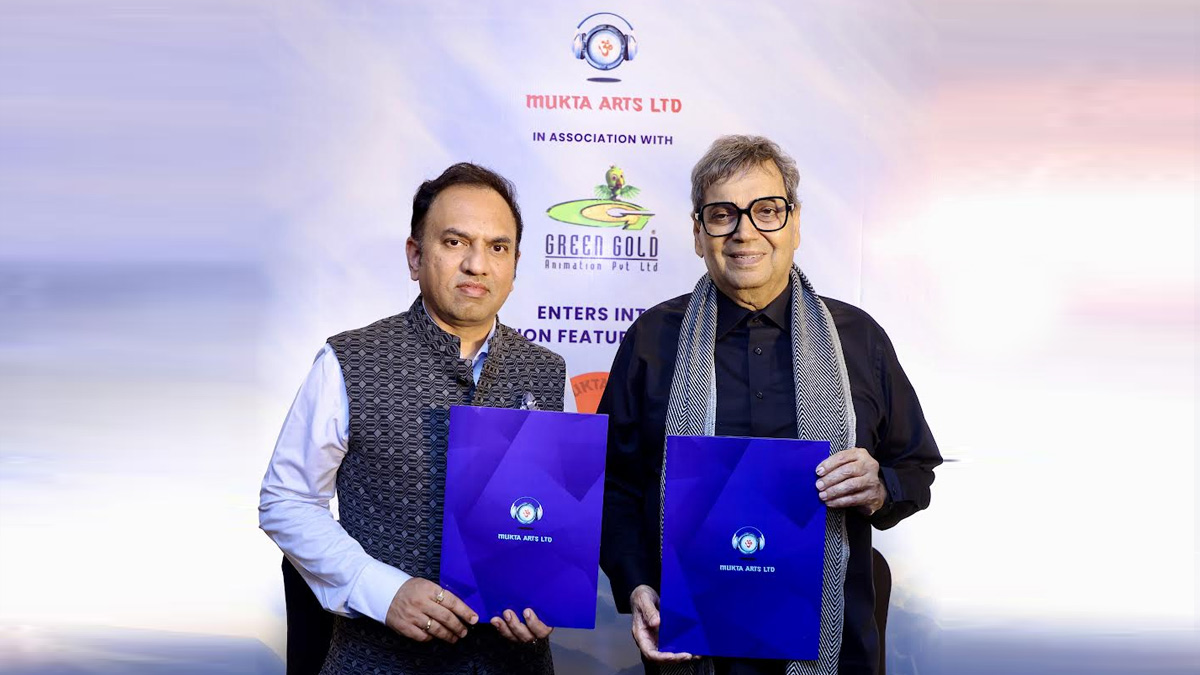
MUMBAI: When classic hindi movie meets animation, the result is a fresh reel of nostalgia with a cartoon twist. Mukta Arts Ltd. and Green Gold Animation have signed a Memorandum of Understanding (MOU) to collaborate on animated shows and feature films drawn from Mukta Arts’ four-decade treasure trove of iconic IPs. The partnership taps Mukta’s SGM Animation Studio launched in 2025 as its dedicated animation and games arm and Green Gold’s proven track record in building scalable, homegrown franchises. Creative teams from both sides have already kicked off discussions, with the first project currently in development.
The slate will draw inspiration from landmark Mukta films including Kalicharan, Karz, Hero, Karma, Ram Lakhan, Khalnayak, Saudagar and Iqbal, plus character-led spin-offs from those universes. The aim is to reimagine these stories for today’s young, global audiences while preserving their emotional core.
Green Gold Animation (home of Chhota Bheem) founder and CEO Rajiv Chilaka said, “This partnership with SGM Studios allows us to apply our experience in building long-lasting animation IPs to a truly iconic film catalogue. Together, we aim to create animated worlds that are rooted in these legendary stories, yet designed to connect with today’s young, global audiences.”
Mukta Arts Ltd. filmmaker and founder Subhash Ghai added, “Mukta Arts has always believed in creating stories with lasting emotional value. Through animation, we are extending our IP into a new medium for the next generation.”
In an industry where timeless tales never go out of fashion, this collaboration promises to bring beloved characters back to life with a modern, animated glow proving that some stories are too good to stay in live-action. Stay tuned for the first animated frame to drop.








