News Headline
Analysis: Latest news television trends and consumption patterns


BENGALURU: The FICCI M&E 2019 report says that 43 percent of the 885 private TV channels in India are ‘news channels’. It further states that news, which commands a 7 percent share of viewership, garnered a disproportionately high share of advertising volumes.
The FICCI M&E2019 report quotes Zee Media Corporation MD Ashok Venkatramani : “I am bullish on News TV. With the elections round the corner, its consumption can only go up. TV is still the best bet for getting the least cost reach and impact. Regional and hyper local TV would lead growth.”
Further, according to a Broadcast Audience Research Council of India (BARC) report, after Hindi GEC and Hindi movies, Hindi news is the most watched genre in the country. The report also says that contrary to popular perception, TV viewership is high amongst youth (15-30 years) even in the digital age. Youth contribute 32 percent to total viewership with a 30 percent and 32 percent split between urban and rural India.

An earlier BARC report says that news events cannot escape the lure of drama. And drama includes elections and election results, deaths of celebrities, high court and supreme court verdicts on celebrities and sensitive issues, major changes such as demonetisation announced by the central government, major public holidays such as Independence and Republic days, terrorist attacks and counter-attacks, etc.
Until recently, (week 05 of 2019) BARC has been releasing weekly viewership data across a number of genres – in the public domain this has been limited to viewership data of the top 5 channels and programmes for the specific genre for channels that have its watermark. There are cases, such as Hindi GECs, performances across genres, etc., where BARC releases data across the top 10 channels, and there are genres such as Hindi business news which has only 2 channels, or the youth genre which age. BARC has gone dark subsequent to implementation of TRAI’s new tariff order and has stopped sharing viewership data in the public domain.
Further, until 2018, BARC released viewership data of the top 5 Hindi news channels in the overall or combined Hindi speaking market or HSM (U+R), rural HSM or HSM (R) and urban HSM or HSM (U) and the top 5 English news channels. Since the first week of 2018, BARC commenced releasing weekly data of the top 5 news channels in Kannada, Malayalam, Tamil and Telugu. Starting week 35 of 2018, BARC went a step further, it also started sharing data for the top 5 News channels in Assamese, Bangla, Marathi and Odisha languages in the public domain. Hence, it must be noted that the findings contained in this report are limited to viewership data of the top 5 news channels in a language or market.
This report has been created by an analysis of BARC data of top 5 news channels of the respective channel/market starting from week 35 of 2018 and ending with week 5 of 2019 – hence data across 23 weeks in all.
It must be further noted that the period under consideration was eventful – the assembly elections to five Indian states were held during this period, hence the average news consumption during the same is likely to be higher than an annual average.
So, how do Indians consume news across India? Granted that Hindi news genre is a large genre in its markets – more specifically the Hindi speaking market (HSM) across its rural (R) and urban (U) populations. But how much of it does each person in HSM watch? What is the breakup between HSM (R) and HSM (U) viewership of Hindi news? What about news in other languages? This paper looks at news watching trends across 10 languages and 12 markets. BARC has specified the following demographics of the news channels for the data that it releases in the public domain.
(a) Assamese News in Assam / North East / Sikkim(U+R): NCCS All: 2+ Individuals,
(b) Bangla News in West Bengal or WB (U+R): NCCS All : 2+ Individuals
(c) English News All India (U+R) : NCCS AB : Males 22+ Individuals
(d) Hindi News in HSM (U+R): NCCS All 15+ Individuals
(d.1) Hindi News in HSM (R): NCCS All 15+ Individuals
(d,2) Hindi News in HSM (U): NCCS All 15+ Individuals
(e) Kannada News: Karnataka (U+R): NCCS All: 2+ Individuals
(f) Malayalam News: Kerala (U+R): NCCS All: 2+ Individuals
(g) Marathi News in Maharashtra/ Goa (U+R) : NCCS All : 2+ Individuals
(h) Oriya News in Odisha (U+R) : NCCS All : 2+ Individuals
(i) Tamil News: Tamil Nadu/Puducherry (U+R): NCCS All: 2+ Individuals
(j) Telugu News: Andhra Pradesh or AP/Telangana (U+R): NCCS All: 2+ Individuals
To arrive at the per capita viewership or consumption, the author has considered the 23 week average number divided by the respective population of the respective market as per BARC India, households and individuals universe estimate – 2018 (BARC Population Estimates 2018). BARC considers HSM or Hindi speaking market as All India without the four South Indian markets. Hence, the author has subtracted the NCCS 15+ population of the four South Indian markets from the All India NCCS 15+ population to arrive at the HSM 15+ population numbers. BARC’s latest universe estimate 2018 was not adopted from week 01 of 2018, hence there could be a variance in the figures calculated in this report.
In the case of per capita consumption for South India, the author has taken the sum of average weekly impressions of the top 5 channels for each language and then added the four sums to arrive at the total average weekly impressions for South India, this total average has then been divided by the combined 2+ population figures for each of the four languages/six states as per BARC Population Estimates 2018. In the case of English News, the author has calculated the NCCS 22+ Males population by extrapolating the overall male and female ratio and the ratio of the 22+ individuals with the all India population as per BARC individual numbers for NCCS A 22+ and NCCS B 22+. To arrive at the per capita consumption of news on the top 5 channels for the country, the 23 week average viewership of the 10languages has been divided by the 2+ population of India as per the above mentioned BARC Universe estimates. Individual HSM (R) and HSM (U) viewership numbers have not been considered to arrive at the per capita consumption of news on the top 5 channels for the country.
Overall, Indians consumed a little more than 2.53(2.5339) weekly impressions of top 5 news channels across languages per person across the country during the 23 weeks under consideration. Comparative numbers for calendar year 2018 have not been indicated because of limitations of BARC data for the four of the languages which, as mentioned above were made available only week 35 of 2018 onward.
Within individual markets, Malayalam news on the top 5 Malayalam news channels in Kerala had the highest per capita weekly consumption at slightly over 3.89 impressions during the 23 week period under consideration. The 52 week per capita average consumption of Malayalam news on the top 5 Malayalam news channels during calendar year 2018 was 3.34, which also was the highest in 8 markets across 5 languages – these were Hindi, the four South Indian languages and English.
Assamese per capita news consumption on top 5 News channels in Assam / North East / Sikkim was next – at 3.84 weekly impressions during the 23 week period under consideration.
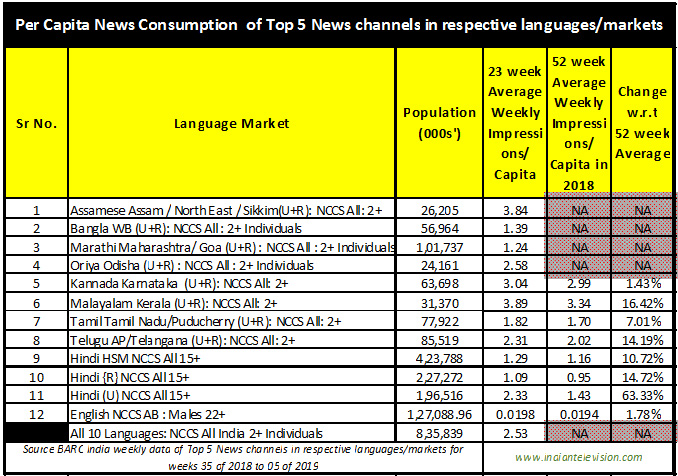
From the chart above it is quite obvious that normally Indians consume more of regional news of top 5 news channels per capita in their respective regional markets as compared to Hindi news consumption per capita of Top 5 Hindi news channels in HSM.
In terms of absolute numbers, though more Hindi news is consumed than in any other language due to its larger population, the per capita consumption is lower than news consumption in regional markets, the exceptions being Marathi news in Maharashtra/Goa and Bengali news in West Bengal.
Events such as elections result in a spike in news television viewership – as per the chart above, Hindi news viewership in HSM urban markets had a much bigger spike in viewership than other languages during election results week.
Hindi, English and South Indian news channels performances during 2018 have already been reported by us.
Here below are the details of performances of the top 5 news channels in the four languages based on analysis of BARC’S weekly lists released since week 35 of 2018 until week 05 of 2019.
Assamese News in Assam/North East/Sikkim (Assamese region)
As mentioned above, Assamese per capita news consumption on top 5 news channels in the Assamese region was just behind Malayalam news consumption on top 5 Malayalam news channels in Kerala.
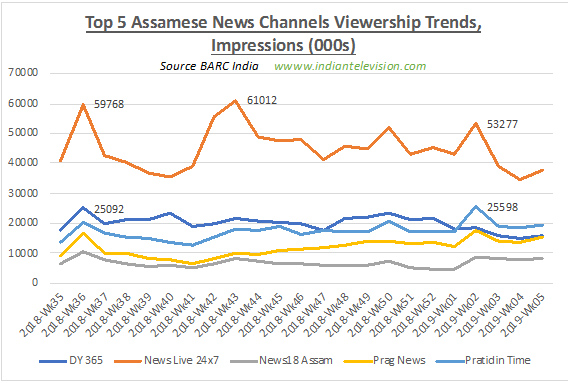
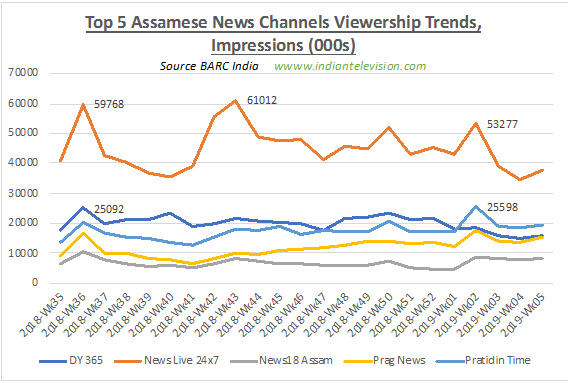
As in the case of the other regional channels, there was one Assamese news channel – News Live 24×7 whose viewership far exceeded the viewership of other Assamese news channels. There were 5 channels that appeared in all the 23 BARC weekly lists of top 5 Assamese news channels. Please refer to the chart below:
Bangla News in West Bengal
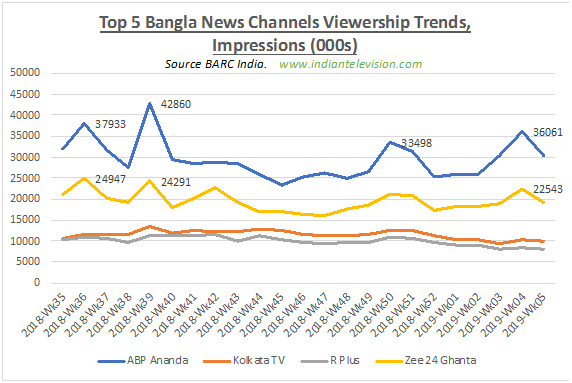
Bangla News per capita consumption in West Bengal of Top 5 Bangla news channels was the lowest in East India – at just 1.39 impressions per week during the period under consideration. One Bangla news channel from the homegrown Bengali Media group Ananda Bazaar Patrika (ABP) – ABP News topped ratings during all the 23 weeks under consideration in this paper. Four channels were present in BARC’s weekly lists of top 5 Bangla news channels during the 23 weeks under consideration in this paper. ABP News was followed by Zee Media Corporation’s Zee Bangla. Kolkata TV and R Plus were the other two channels that were present in BARC’s weekly lists.
Besides the above mentioned four channels, two other channels – Bangla Time (15 weeks) and News 18 Bangla (8 weeks) also appeared in BARC’s weekly lists of top 5 Bangla News channels during the period under consideration.
Oriya News channels in Orissa
Ten Oriya News channels appeared in BARC’s weekly lists of top 5 Oriya News channels during the 23 weeks under consideration. They were-DY 365,Kanak News, News Live 24×7, News World Odisha, News18 Assam, News18 Odia News7, Odisha TV, Prag News Pratidin Time, Zee Kalinga News, Zee Odisha. None of the ten channels appeared in all the 23 weeks under consideration.
Marathi News channels in Maharashtra/Goa
As mentioned above, Marathi. News per capita consumption of the top 5 Marathi News channels in the Marathi market (Maharashtra and Goa) was the lowest among the languages/markets during the 23 weeks under consideration at just 1.24 impressions. Further, in the case of Marathi News also, all the 5 channels were present in BARC’s list of top 5 Marathi News channels during all the 23 weeks under consideration.
ABP’s ABP Majha led viewership in the Marathi News space also. Saam TV was next, and was closely followed by Zee Media Corporation’s Zee 24 Taas. Please refer to the chart below for the performance of top 5 Marathi News channels during the 23 week period.







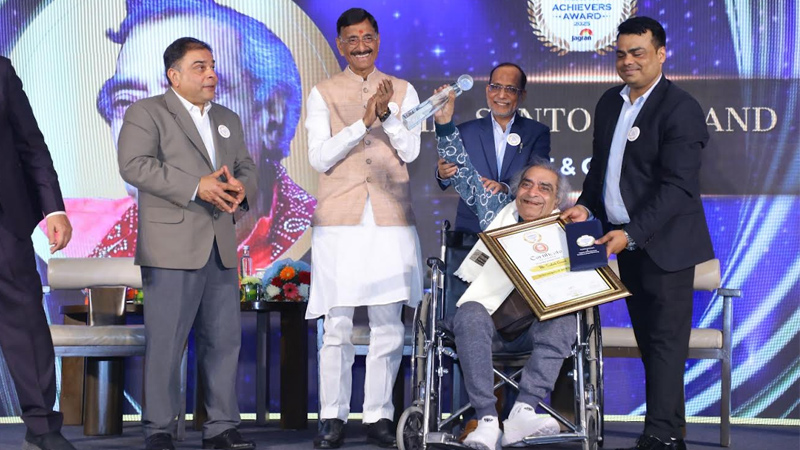
NEW DELHI: Hamdard Laboratories gathered a cross-section of India’s achievers in New Delhi on Friday, handing out the Hakeem Abdul Hameed Excellence Awards to figures who have left their mark across healthcare, education, sport, public service and the arts.
The ceremony, attended by minister of state for defence Sanjay Seth and senior officials from the ministry of Ayush, celebrated individuals whose work blends professional success with a sense of public purpose. It was as much a roll call of achievement as it was a reminder that influence is not measured only in profits or podiums, but in people reached and lives improved.
Among the headline awardees was Alakh Pandey, founder and chief executive of PhysicsWallah, recognised for turning affordable digital learning into a mass movement. On the sporting front, Arjuna Awardee and kabaddi player Sakshi Puniya was honoured for her contribution to the game and for pushing women’s participation onto bigger stages.
The cultural spotlight fell on veteran lyricist and poet Santosh Anand, whose songs have echoed across generations of Hindi cinema. At 97, Anand accepted the honour with characteristic humility, reflecting on a life shaped by perseverance and hope.
Healthcare honours spanned both modern and traditional systems. Manoj N. Nesari was recognised for strengthening Ayurveda’s place in national and global health frameworks. Padma shri Mohammed Abdul Waheed was honoured for his research-backed work in Unani medicine, while padma shri Mohsin Wali received recognition for his long-standing contribution to patient-centred care.
Education and social development also featured prominently. Padma shri Zahir Ishaq Kazi was honoured for decades of work in education, while former Meghalaya superintendent of Police T. C. Chacko was recognised for public service. Goonj founder Anshu Gupta received an award for his dignity-centred rural development initiatives, and the Hunar Shakti Foundation was honoured for empowering women and young girls through skill development.
The Lifetime Achievement Award went to former IAS officer Shailaja Chandra for her long career in public healthcare and governance, particularly in the traditional systems under Ayush.
Speaking at the event, Hamdard chairman Abdul Majeed said the awards were a tribute to those who combine excellence with empathy. “These awardees reflect Hakeem Sahib’s belief that healthcare, education and public service must ultimately serve humanity,” he said.
Minister Seth struck a forward-looking note, saying India’s young population gives the country a unique opportunity to become a global destination for learning, health and wellness by 2047.
The ceremony also featured the trailer launch of Unani Ki Kahaani, an upcoming documentary starring actor Jim Sarbh, set to premiere on Discovery on 11 February.
Instituted in memory of Unani scholar and educationist Hakeem Abdul Hameed, the awards have grown into a national platform that celebrates those building a more inclusive and resilient India. For one evening at least, the spotlight was not just on success, but on service with substance.