Content Hub
Amazon Prime Video India’s Vijay Subramaniam on content strategy, audience response, product proposition


MUMBAI: India’s burgeoning over-the-top (OTT) space is witnessing an explosion what with aggressive competition brewing between home-grown and international players fighting for eyeballs and time spent. Amazon Prime Video, one of the leading global contenders, is aggressively expanding its Indian original library since its launch in 2016. Starting with critically acclaimed Inside Edge, the OTT platform has upped its game significantly with shows in different genres. After its recent blockbuster Mirzapur, Amazon Prime Video has started streaming its sixth original show Four More Shots Please.
Amazon Prime Video India content director and head Vijay Subramaniam, the media veteran whose experience pans across brands like Walt Disney and Star India, heads the content segment of the platform. Indiantelevision.com’s Gargi Sarkar caught up with Subramaniam for an understanding of Amazon Prime Video India’s strategy. In a short freewheeling chat, he spoke about the content plan this year, response to its flagship show Mirzapur, regional originals and more.
Edited excerpts:

What will be your content strategy in 2019?
We will try to focus on more variety, more authentic stories and open up more genres because we are just getting started. We have expanded our library from one in 2017 to five in 2018 which will reach to eight, hopefully, this year. You are going to see us crack open many new genres like we have Four More Shots Please. You can expect returning seasons of successful shows like Comicstaan and Inside Edge as well.
How has been the response to Amazon Prime Video in India compared to other international markets?
We are very happy with the growth and India is a very important market for us in the long term. Frankly, we are just getting started. As the service has been there for around two years, I think it is just dawn of day one for Prime Video. Customers seem to really like the variety we are providing and so we are seeing impressive growth and we remain committed to providing diversity of content. We added Kannada in November. We are going to add three more languages in the first six months of this year. So, we just want to make sure that something is there for every one of our customers; current as well as future customers. Within that, we are seeing how to balance gender diversity, age, right kind of content for kids, right kind of content for young adults, etc. It’s a blend of all of that. I think all these factors have been instrumental in helping us.
Which factors help Amazon Prime Video to differentiate itself?
Great content, being able to reflect the taste and preferences of customers and being able to serve them consistently help us to differentiate our service. We are providing a great product, user experience and value. The kind of content selection we have, if you look at our movies, is big Hollywood blockbusters and great US TV shows. Our US originals have been breakout hits like Jack Ryan, Homecoming, The Marvelous Mrs. Maisel and then Indian originals. If you look at our regional selection, we have latest and great films. I think this blend of content, great user experience and proprietary technology that allows you to choose your own data streaming limits and choose the quality you want to see, giving you the control of the amount of data you use. Prime benefit programs include shipping, shopping, music, video, and now reading. Moreover, all that is available in Rs 129 per month and Rs 999 per year.
Which type of content is getting more traction?
All of it. There are a couple of reasons. For the first time customers are becoming their own programmers; you can decide what to watch and when to watch. You have truly flexible opportunity to surf in and out of content, come back to our shows or finish watching movies, depending on the kind of story you want to watch. So, our customers are enjoying all of these.
In addition to that, movies are always popular. We are Indians, we love movies. Our originals are fantastic drivers. So, I think at this stage, customers are coming in for two things. One is for the things they are familiar with like Thugs of Hindostan. Then they are discovering all the great content. They are navigating through all sorts of content. At this stage, people love everything equally.
How has been the response to Mirzapur in international markets?
Well, it’s been a very successful show for us. We are both honoured and humbled by the love we got from customers for this. It has become a buzz-worthy show now. I think the love that has come from customers in India and outside is because of the authenticity. It is truly authentic to its roots and speaks the language of that land. It is set in that milieu. What we have learnt from this show is making our stories authentic. Four More Shots Please is a very authentic story. It’s unapologetic and looks at the friendship between four women without any pretends.
What is the biggest challenge when it comes to business expansion in India?
I am really excited about the opportunities that we have in front of us. As I said it’s a mobile-first country, data charges have decreased making it easy for folks to access. Mobile infrastructure has grown and phone has become primary screen for young adults. There is no dearth of great stories in this country, which has a rich culture of storytelling. We are super excited about all the opportunities we have to expand. If you look at our catalogue when we started versus today, you will see how we have ramped up, especially in additional languages.
What’s your plan of launching original in regional languages?
We constantly evaluate what customers want in every language and learn from that. If you recall we launched our first Telugu show to test and learn what exactly customers prefer. Recently we launched one in Tamil; it’s definitely part of our content strategy to expand into regional language original in the near future.





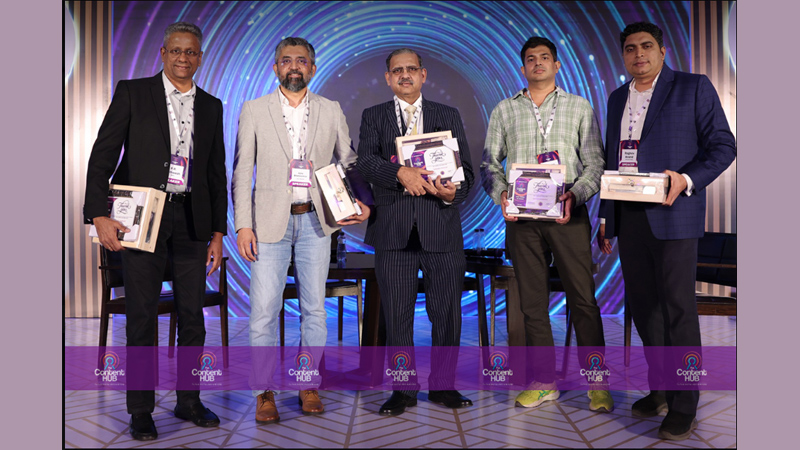
Mumbai: Exploring the shift from regional to national content, this synopsis delves into the trends and challenges. It navigates the transformation, analyzing industry dynamics, emerging trends, and the hurdles faced. From preserving regional variation to adapting to a broader audience, it examines the multifaceted journey of regional content evolving into a national narrative. In what ways do the emerging trends and challenges influence the dynamics of the entertainment industry during this transition? How can creators navigate these changes effectively? What strategic approaches can content creators adopt to strike a balance between maintaining regional identity and fostering a cohesive national narrative in their work? How can the transition from ‘regional’ to ‘national content’ impact cultural diversity within the entertainment industry, and what measures can be taken to ensure the preservation of regional variation?
In a rapidly evolving media landscape, seasoned industry professionals have offered valuable insights into the transformation of content consumption and production. The session was chaired by Ernst and Young partner Raghav Anand, MMTV chief executive officer P.R. Satheesh, Sony Marathi business head Ajay Bhalwankar, PTC Network chairman & MD Rabindra Narayan, Shemaroo Entertainment COO, Digital, Saurabh Srivastava esteemed voices in the field, have articulated their perspectives on the burgeoning shift towards globalised content.
Rabindra Narayan emphasised the dissolution of regional boundaries in content consumption, attributing it to the accessibility facilitated by global platforms and connectivity options. He predicts a future where language barriers will fade, citing the potential of technology to clone and adapt voices, thus enabling seamless localization across languages.
Saurabh highlighted the democratisation of content creation in the digital era, underscoring its empowerment and revenue potential, particularly in linguistically diverse markets like India. He emphasizes the value of culturally rooted storytelling in filling gaps in content supply, with technology enabling effective monetization, especially through OTT platforms.
Ajay Bhalwan sheds light on the evolving landscape of Hindi and regional language content, noting a significant shift where a substantial portion of content on Hindi film channels originates from regional languages. He accentuates the importance of language in enhancing authenticity and audience engagement, exemplified by the strong resonance of Marathi content in Maharashtra.
PR Satheesh underscored the paramount importance of content quality in driving viewership and transcending language barriers. Drawing parallels with the global popularity of Korean dramas, he advocates for leveraging technology, including AI and real-time translations, to enhance content creation and distribution.
These insightful perspectives collectively echoed the industry’s adaptation to a globalised content landscape, where technology catalyzes innovation and accessibility. As content continues to evolve, these experts offered valuable guidance on navigating the dynamic media landscape and maximizing the impact of storytelling in diverse markets worldwide.







