iWorld
Alike.io collabs with TVF for ‘Arranged Couple’ season two

Mumbai: Alike.io, the premier social travel platform, is delighted to collaborate with TVF for the highly anticipated season two of the web series “Arranged Couple”. With all three episodes of the new season now available to watch on Girliyapa, TVF’s women-centric YouTube channel, the latest series has already garnered more than two million views in a short period.
The Arranged Couple is a powerful narrative that depicts the story of Rishi and Anu as they explore the nuances of arranged marriage. The series crafts a relatable narrative that navigates through the emotional complexities encountered by couples on their journey towards love and mutual understanding. Alike.io seamlessly weaves into the storyline by helping Rishi and Anu plan their honeymoon trip to Bali, using Alike’s simple and completely online booking platform for customised holiday packages.
Expressing his excitement about the collaboration, Alike co-founder Ashish Sidhra said, “We are thrilled to partner with TVF for the second season of Arranged Couple. The series accurately brings to life the challenges faced by newly married couples. The storyline has allowed us to showcase Alike’s unique capability of booking hassle-free personalised travel packages, helping Anu and Rishi in effectively manage the stress of planning a memorable honeymoon.

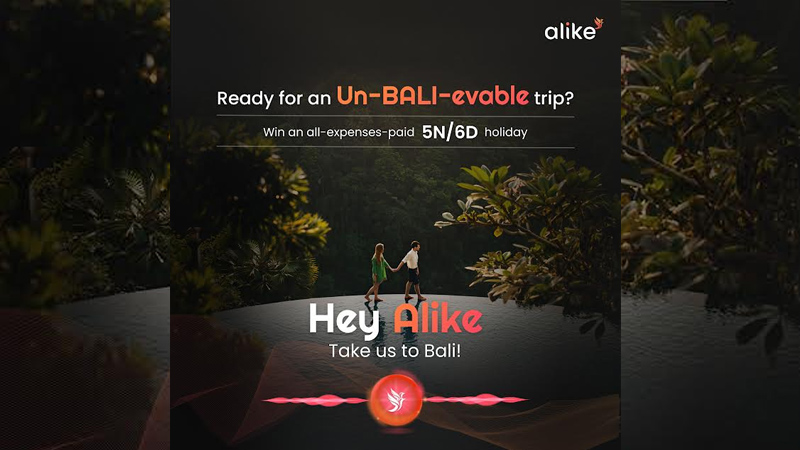
Building upon the excitement of the web series launch, Alike.io has revealed their “Hey Alike, Take us to Bali” campaign. This initiative invites newlyweds to share their unique stories, drawing inspiration from Arranged Couple’s storyline. The winning couple will get an all-expenses-paid luxury honeymoon in Bali for 6 days and 5 nights, along with travel vouchers for the first ten runners-up. The campaign, open for entries from 5 to 23 August 2024. The winning couple will be announced on 1 September 2024. Details of how to participate in this campaign can be found at www.alike.io/free-bali-trip.
TVF president Vijay Koshy sharing his enthusiasm commented, “Creating this show has been an incredible journey, as we have crafted a story that reflects the real-life emotional challenges of married life. Partnering with Alike has provided us with the opportunity to add greater authenticity to the narrative, as Alike’s travel offerings cater to the needs of both Rishi and Anu. We are looking forward to fostering this collaboration further.”
This partnership is a testament to Alike’s ability to build user interaction and engagement through aspirational and promising collaborations that fetch impactful results.



Gaming
India’s broadcasters say no to Fifa World Cup 2026
Fifa has slashed its asking price by 65 per cent but India’s broadcasters are still not buying
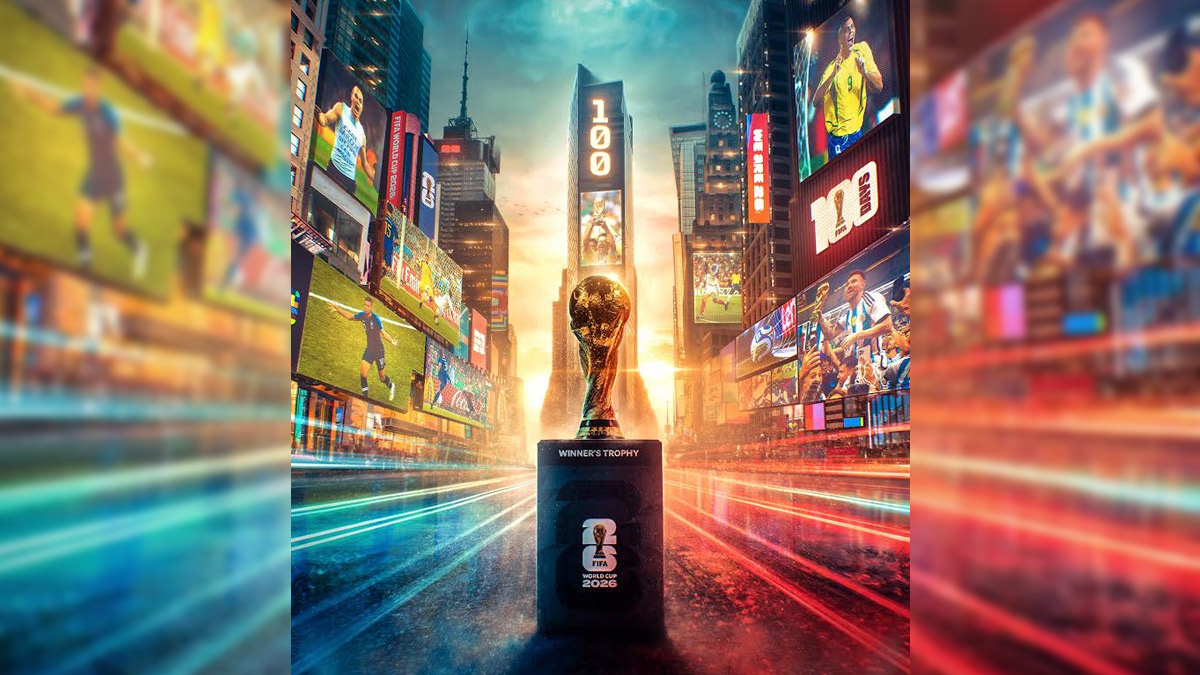
MUMBAI: The world’s biggest sporting event cannot find a single taker in the world’s most sports-mad nation. Fifa’s television rights for the 2026 World Cup remain unsold in India, and the clock is ticking loudly.
To shift the property, world football’s governing body has already swallowed hard and cut its asking price from $100m to $35m, bundling in the 2030 edition as a sweetener. It has not worked. Indian broadcasters have looked at the offer, done the sums and quietly walked away.
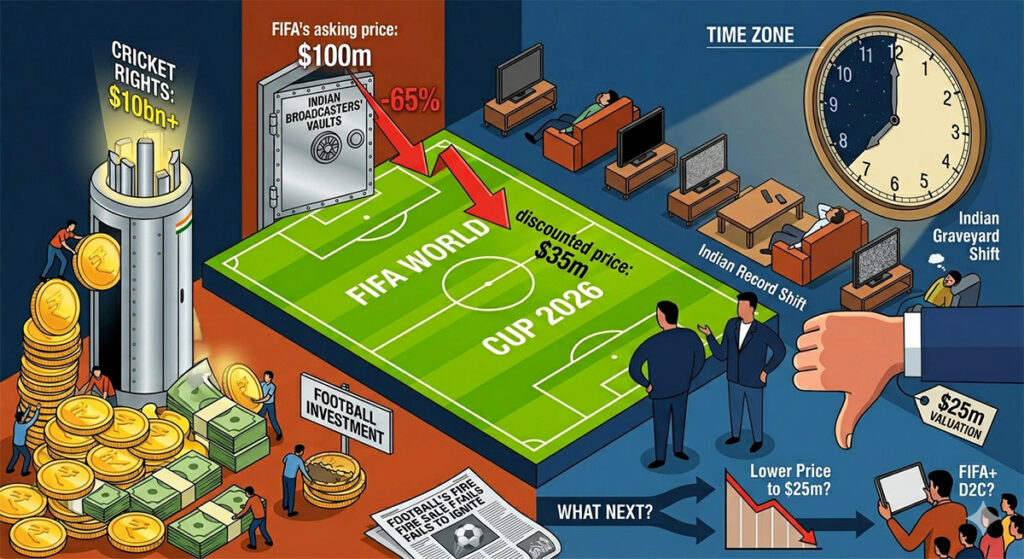
The reasons are brutally simple. The 2026 tournament, co-hosted by the United States, Canada and Mexico, kicks off in a time zone that turns India’s primetime into a graveyard shift. Most matches will air between midnight and 7am IST, a scheduling catastrophe for advertisers chasing mass reach. The 2022 Qatar edition was a gift by comparison, with matches dropping neatly into Indian evenings. North America offers no such luxury.
The market itself has also changed beyond recognition. The merger of Star India and Viacom18 into JioStar has gutted the competitive tension that once sent sports rights prices soaring. Where rival bidders once slugged it out, there is now a single dominant buyer, and it is in no hurry. JioStar has valued the rights at roughly $25m, a full $10m below Fifa’s already-discounted floor price. That gap has so far proved unbridgeable.
Broadcasters are also nursing a ferocious cricket hangover. Between 2022 and 2023, Indian media houses committed well over $10bn to cricket rights alone, covering IPL, ICC events and BCCI domestic fixtures combined. After a binge of that scale, appetite for a football package that delivers a fraction of the ratings, in the dead of night, is close to zero.
The economics of football broadcasting make the maths even harder. Cricket, with its natural breaks every few overs, is an advertiser’s paradise. Football offers a 15-minute halftime and precious little else. Recovering a nine-figure rights fee from a single half-hour ad window is a stretch at the best of times. These are not the best of times: the Indian government’s tightening grip on real-money gaming and gambling advertising has vaporised a category that once underwrote the economics of big sporting events.
Nor is the World Cup an anomaly. Indian Super League valuations have cratered. English Premier League rights have softened across successive cycles. The cooling of football as a broadcast commodity in India is structural, not cyclical.
With the tournament opening on 11th June, Fifa is running out of road. It may yet blink and meet JioStar at $25m. Or it may go direct, streaming the entire tournament on its own platform, Fifa+, or cutting a digital deal with YouTube, and hoping that a generation of Indian football fans finds its way there without a broadcaster to guide them.
Either way, the beautiful game’s Indian chapter is looking decidedly ugly.







