News Broadcasting
Al Jazeera ups its ante for general elections


MUMBAI: We are three days away from the big fight. And as India goes into general elections, one of the international news channels, broadcasting in the country, is strengthening its election coverage that began from 1 April.
Six Al Jazeera correspondents have been roped in to highlight crucial issues bothering the country- economy, food, health, corruption and security. The coverage will be in two phases- from now till the results are announced the focus will be on what the election means to India and the ground realities. The second phase, once the government is formed, will discuss on how the new government’s policies will impact the world.

“In the first phase we will tell the people’s story through our news pieces. The issues they face, the reason they are choosing a certain party and whether the problems they are facing have been addressed by these parties. In the second phase we will show the impact of the new government on world affairs,” says Al Jazeera India bureau chief Anmol Saxena.
The Al Jazeera correspondents will cover different issues from different regions of the country. So while Nidhi Dutt will explore the issue of food inflation and impact of rice farmers in West Bengal, Sohail Rahman will look at the maoist rebel attacks in Chattisgarh as well as internal security issues. Karishma Vyas will investigate the rise of Hindu nationalism from Gujarat, Faiz Jamil will look into the separatist issues affecting Assam. Baba Umar and Kamal Kumar will also assist the team. Apart from this, seven other freelancers have been roped in to help in both reporting as well as production.
Special programmes include: One hour special show that analysis the measures taken by main political parties regarding healthcare facilities; ‘101 East’ that asks people if BJP Prime Ministerial candidate Narendra Modi is the right person for India and ‘Inside Story’ that debates crucial points before and after voting.
The news packages will be interspersed throughout the day with at least one news piece from one part of the country in a day.
Not to forget that the channel will also indulge in live coverage on some of the polling days and specifically on the verdict day -16 May. Live output will be provided from three locations on 16 May- BJP headquarters, Congress headquarters and an Al Jazeera set up from a location for which one OB van, one fly away dish and one AVI vest have been hired. The first day of polling (7 April) will see live broadcasting from Assam and south India.
Marketing plans to promote visibility of the shows as well as the channel will begin soon. Social media will be used extensively to lock in people using hashtags #AJIndia and #IndiaElections that will be tracked by its online team and the programme ‘The Stream.’
Speaking about the coverage, Al Jazeera managing director Al Anstey said in a release, “India is the world’s biggest democracy and the country is diverse in opinion and sentiment. Al Jazeera will attempt to reflect the voices of people ranging from the metropolitan hubs of Delhi, Mumbai and Ahmedabad; to the rural landscapes of Rajasthan and Kerala. Al Jazeera’s coverage will encompass TV, online and social media which will ensure real opinion, thought and voices that will be heard.”





News Broadcasting
Rising Bharat Summit 2026 spotlights India’s global ascent
PM Modi keynotes two-day event with ministers, diplomats and icons in New Delhi.
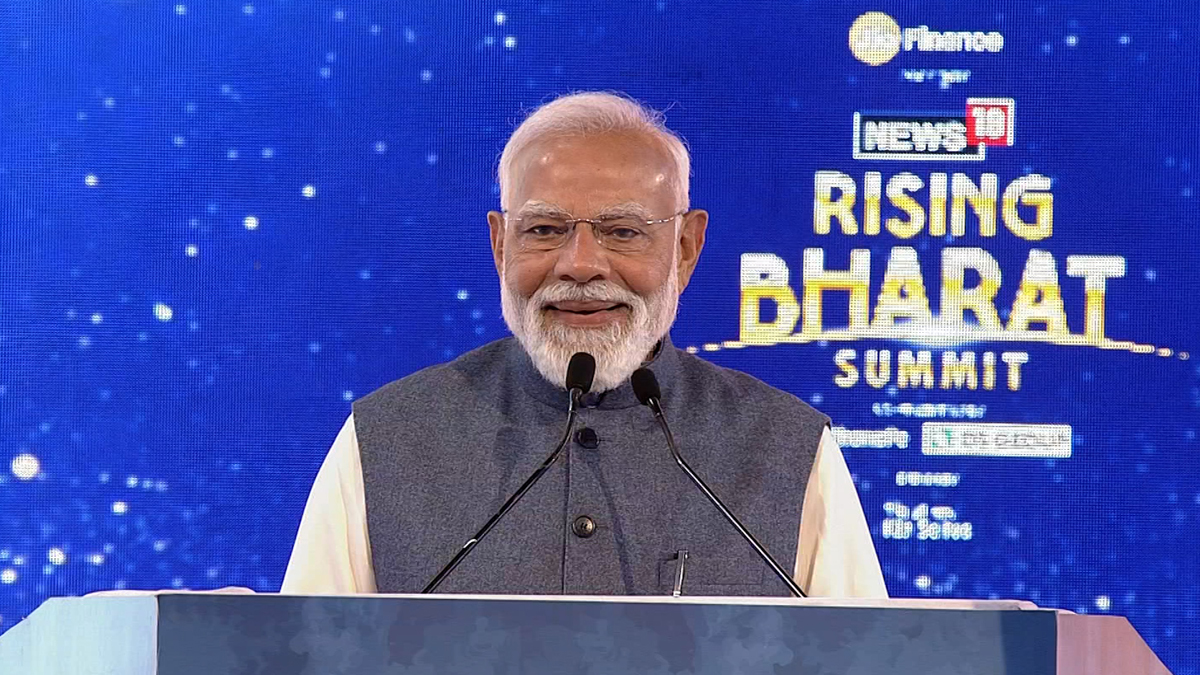
MUMBAI: India didn’t just host a summit, it threw a coming-out party for a nation ready to own the global stage. The News18 Rising Bharat Summit 2026, held on 27–28 February in New Delhi, emerged as a high-octane platform for ideas, vision and strategic dialogue, uniting national leadership, global policymakers, industry titans, defence strategists and cultural icons under the theme “Strength Within”.
Prime minister Narendra Modi set the tone with a keynote that framed India’s resurgence as a reclaiming of lost potential built over generations. “In previous industrial revolutions, India and the Global South were merely followers,” he said. “But in the era of Artificial Intelligence, India is a partner in decisions and shaping them.” He highlighted the country’s thriving AI startup ecosystem and the recent AI Impact Summit attended by over 100 nations.
Union minister Piyush Goyal (Commerce & Industry) stressed India’s readiness to scale exports and deepen manufacturing, while Ashwini Vaishnaw (Railways, I&B, Electronics & IT) positioned technology and infrastructure as twin engines of growth, especially in AI and digital trust. Jyotiraditya Scindia (Communications & North East Development) revealed India’s ambition to lead in 6G through the Bharat 6G Alliance and partnerships with over 30 countries.
Global voices added depth: former Singapore Foreign Minister George Yeo called India’s development “self-sustaining” and strategically vital; ex-UK Chief of Defence Staff General Sir Nick Carter asserted India deserves a seat at the great powers’ table; and former US Commerce Secretary Carlos M. Gutierrez joined ambassadors from Norway, Germany and Sweden in discussions on geopolitical realignment, sustainability and defence preparedness.
Other speakers included veteran investor Ramesh Damani, World Gold Council CEO David Tait, Vianai Systems founder Dr Vishal Sikka, DeepTech Bharat Foundation co-founder Shashi Shekhar Vempati, defence experts Rajesh Kumar Singh, Sunil Ambekar, Patrick McGee, Tom Cooper and Adrian Fontanellaz, plus cultural and sporting icons Kangana Ranaut, Saina Nehwal, PR Sreejesh, Mohammed Shami, Yuzvendra Chahal, Mithali Raj, Anil Kapoor and Yami Gautam.
The summit was supported by Jio Financial Services (Presenting Partner), Phonepe and DS Group (Co-Presenting Partners), Pernod Ricard India and Kia Seltos (Powered By & Driven By), state governments of Uttar Pradesh, Chhattisgarh and Uttarakhand (State Partners), and associate partners including NSE, M3M Foundation and Reliance Industries.
Broadcast live across News18 Network, CNBC-TV18 and CNBC Awaaz, the event reinforced India’s image as a confident democracy and emerging global power proving that when strength comes from within, the world can’t help but watch.