Hindi
Al-Futtaim, PVR sign MoU to explore opportunities in MENA region

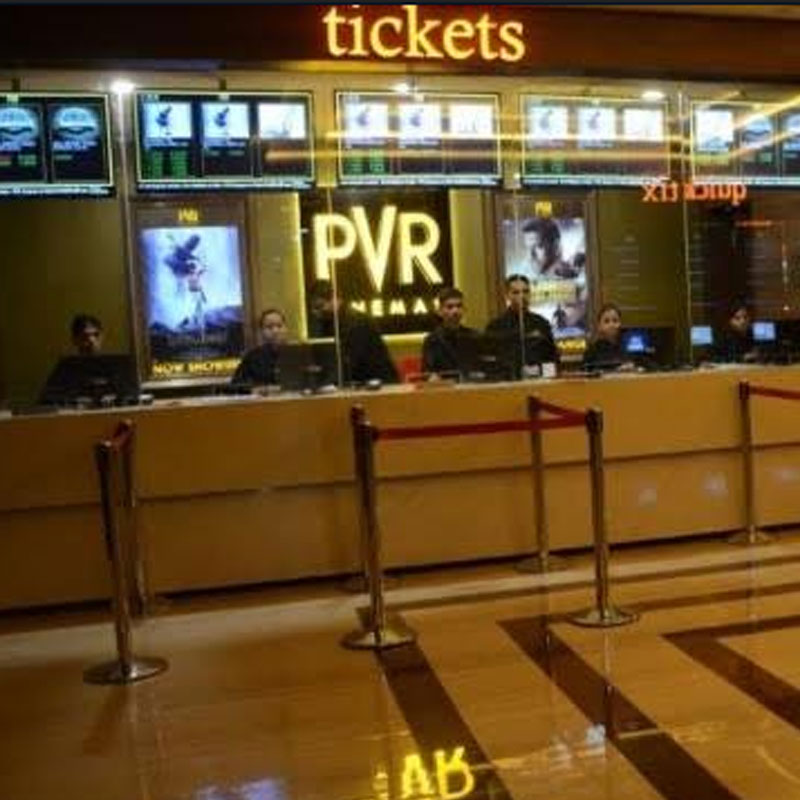
MUMBAI: Multiplex operator PVR signed a memorandum of understanding (MoU) with Dubai’s Al-Futtaim to explore opportunities to jointly develop cinema business in the Middle East and North Africa (MENA) region.
The joint venture will introduce a collection of unique experiential cinema formats to the region including PVR’s Director’s Cut, a format that blends the best in high-end hospitality and entertainment.
“We see great potential in the cinema business in the region, and particularly in Saudi Arabia, following the government’s decision to reopen the cinema industry,” said Al-Futtaim Group director corporate development Marwan Shehadeh.

“PVR is the perfect partner for Al-Futtaim, given its 20 years’ proven track record of operating and creating experiential cinema formats, catering to customers looking for best in class experiences. To begin with, we have already identified locations in Al-Futtaim real estate developments such as Dubai Festival City and Festival Plaza in Dubai and are in discussion with landlords to secure other locations in Dubai and the Kingdom of Saudi Arabia,” he added.
PVR in a regulatory filing said both parties will work together over the next few months to undertake a feasibility study and convert the MoU into a formal joint venture arrangement.
In December last year, PVR had said it was scouting overseas destinations for expansion and planned to open its first project in Sri Lanka in next two years.
Commenting on the partnership, PVR Ltd chairman and managing director Ajay Bijli said “We see a great opportunity in taking the PVR brand to the MENA region, particularly expansion in UAE and entry into the Saudi Arabian market which has recently decided to open up the cinema industry. We are delighted to partner with Al-Futtaim, which is one of the most diversified and progressive privately held businesses in the region.”
At present, PVR operates over 600 screens in 52 cities in India.







Hindi
India’s telecom subscribers cross 1.32 billion in February 2026
Broadband base swells past 1.06 billion as Jio and Airtel tighten grip on the market.

MUMBAI: India’s telecom sector is ringing in steady growth once again adding millions of new connections every month while the race for broadband supremacy continues to heat up like a fiercely contested cricket match. According to the latest data released by the Telecom Regulatory Authority of India (TRAI) on 1 April 2026, the total telephone subscriber base in the country reached 1,321.31 million at the end of February 2026. This marked a net addition of 7.31 million subscribers during the month, translating into a monthly growth rate of 0.56 per cent.
Wireless subscribers (including mobile and Fixed Wireless Access) stood at 1,273.31 million, registering a net addition of 6.97 million and a growth rate of 0.55 per cent. Within this, urban wireless connections grew to 730.75 million (growth 0.70 per cent), while rural wireless subscribers reached 542.56 million (growth 0.35 per cent).
Wireline subscribers, though much smaller in scale, showed slightly faster growth. The total wireline base increased to 47.99 million, with a net addition of 0.34 million and a monthly growth rate of 0.70 per cent. Urban areas continued to dominate wireline connections with a share of 89.41 per cent.
Overall tele-density in India improved to 92.66 per cent. Urban tele-density stood at 150.68 per cent, while rural tele-density edged up to 60.02 per cent.
The broadband subscriber base crossed a significant milestone, reaching 1,059.05 million at the end of February 2026. This reflected a healthy net addition of 6.33 million subscribers and a monthly growth rate of 0.60 per cent from January’s figure of 1,052.72 million.
Segment-wise, mobile wireless access continued to drive the majority of growth with 996.52 million subscribers. Fixed Wireless Access (including 5G FWA) added 16.51 million, while wired broadband stood at 46.02 million.
Reliance Jio Infocomm Ltd. maintained its commanding lead with 519.64 million broadband subscribers. Bharti Airtel Ltd. followed with 364.14 million, Vodafone Idea Ltd. with 129.36 million, Bharat Sanchar Nigam Ltd. with 28.70 million, and Atria Convergence Technologies Ltd. with 2.38 million.
Together, these top five players command a massive 98.60 per cent share of the total broadband market.
In the wireless (mobile) segment, private operators continued to dominate with 92.59 per cent market share, leaving public sector undertakings (BSNL and MTNL) with just 7.41 per cent.
Out of the total 1,257.29 million wireless (mobile) subscribers, 1,177.60 million were active on the peak Visitor Location Register (VLR) date, representing an impressive 93.66 per cent activity rate. Bharti Airtel led in this metric with 99.42 per cent of its subscribers active.
Meanwhile, 14.47 million subscribers submitted requests for Mobile Number Portability (MNP) in February, indicating healthy competition and customer churn across zones.
While urban areas still lead in absolute numbers, rural connectivity is slowly catching up. Rural wireless tele-density stood at 59.46 per cent, compared with the much higher urban figure of 142.32 per cent.
Fixed Wireless Access using 5G technology also showed promising traction, growing to 11.93 million subscribers. Reliance Jio and Bharti Airtel are the primary players driving this segment.
The data paints a picture of a maturing yet still rapidly expanding telecom ecosystem. With total telephone subscribers now well past the 1.32 billion mark and broadband users comfortably above 1.06 billion, India continues to solidify its position as one of the world’s largest and most dynamic digital markets.
From bustling city streets to remote villages, more Indians are staying connected than ever before proving that when it comes to telecom, the country’s appetite for growth shows no signs of hanging up anytime soon.






