Cable TV
Airtel has perfected the LCO model for home broadband, says Gopal Vittal

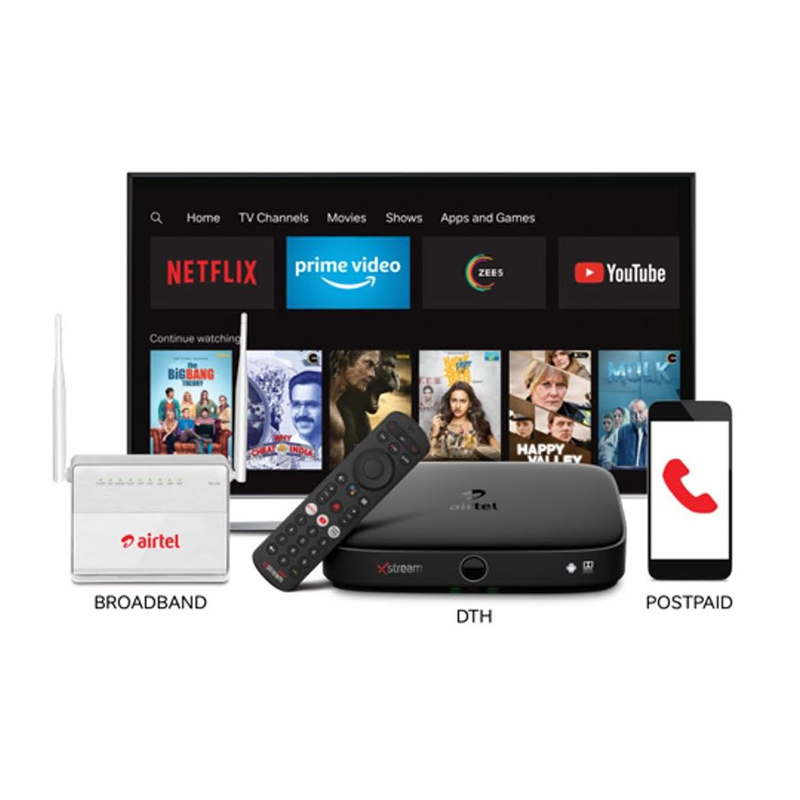
KOLKATA: Bharti Airtel (Airtel) is going head-to-head with archrival Jio in the home broadband segment by putting pedal to the metal on its expansion plans. While the company has seen record subscriber addition in September, it will keep focusing on LCO partnership model.
In an earnings call after Q2 results, Bharti Airtel India and South Asia MD & CEO Gopal Vittal declared the company has “perfected” the LCO model. Vittal said that the model has done well after being tested for seven-eight months using several different approaches in a handful of different cities. Hence, the company is scaling up the model now and has rolled it out in 29 more towns in Q2.
Under this model, the company has a standard toolkit where it is able to go out and actually work with the local cable operator in a particular town. Airtel gives them a revenue share for laying the last mile fibre and maintaining it. On the other hand, the router, the billing system, the plan and customer relationship is managed by Airtel.

Vittal has credited work from home, surge in streaming and online education for spurring growth in the home broadband sector. He also mentioned that the price reduction in wired broadband sector would also help in overall growth. However, the impact of the price correction would be noticeable in the next quarter.
In the quarter ended September 30, Airtel has added 129,000 new consumers along with a million homes passes, which is amongst the highest that it has seen in any quarter.
Other than its core telecom business, Airtel has registered a gradual growth in the DTH business as well. “We are pleased with the progress that we have made on DTH – adding more than half a million customers. Primarily that is because we are able to synergise our distribution systems of mobility and DTH. Mobility has a distribution system that’s almost 25 times that of DTH. In places like Bihar, UP, Rajasthan, we are getting significant synergistic effort by eventually finding the right model to synergise but yet keeping enough focus on DTH business,” Vittal commented.
Bharti Airtel India and South Asia chief financial officer Badal Bagri added that most of the acquisition in the DTH segment has come in the later part of July. While July, August are softer months in terms of recharges and addition, the company has seen the traction picking up in September. Bagri is optimistic that the trend will hold.
A recent Crisil report stated that DTH broadcasting, which accounts for 37 per cent of total television (TV) subscribers in India, is set to buck the economic downturn and log a revenue growth of 400-600 basis points (bps) to Rs 22,000 crore this fiscal, because of healthy subscriber additions.
Airtel has struck content partnerships with all major OTT platforms lately. Vittal acknowledged that content can be a differentiator for telecom players, while also mentioning that he has not seen any compelling evidence to suggest that general entertainment content is a strong differentiator. However, he added that topical events like sports work quite well.




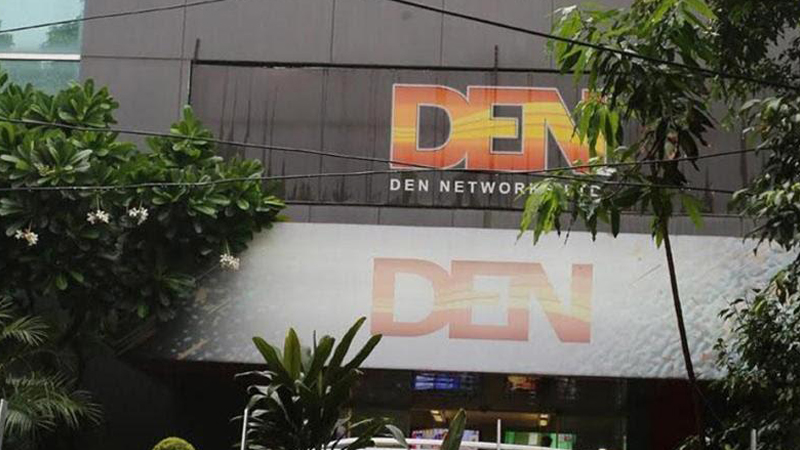
MUMBAI: When margins wobble, liquidity talks and in Q3 FY25-26, cash did most of the talking. Den Networks Limited closed the December quarter with consolidated revenue of Rs.251 crore, marginally higher than the previous quarter but down 4 per cent year-on-year, even as profitability stayed resilient on the back of strong cash reserves and disciplined cost control.
Subscription income softened to Rs.98 crore, slipping 3 per cent sequentially and 14 per cent from last year, while placement and marketing income offered some cheer, rising 15 per cent quarter-on-quarter to Rs.148 crore. Total costs climbed faster than revenue, up 7 per cent QoQ to Rs.238 crore, driven largely by higher content costs and operating expenses. As a result, EBITDA dropped sharply to Rs.13 crore from Rs.19 crore in Q2 and Rs.28 crore a year ago, pulling margins down to 5 per cent.
Yet, the bottom line refused to blink. Profit after tax stood at Rs.40 crore, up 15 per cent sequentially and only marginally lower than last year’s Rs.42 crore. A healthy Rs.57 crore in other income helped cushion operating pressure, keeping profit before tax at Rs.48 crore, broadly stable quarter-on-quarter despite the tougher cost environment.
The real headline-grabber, however, sits on the balance sheet. The company remains debt-free, with cash and cash equivalents swelling to Rs.3,279 crore as of December 31, 2025. Net worth rose to Rs.3,748 crore, while online collections accounted for 97 per cent of total receipts, underscoring strong cash discipline across operations, including subsidiaries.
In short, while Q3 showed signs of operating strain, the financial backbone remains solid. With zero gross debt, steady profits and a formidable cash war chest, the company enters the next quarter with flexibility firmly on its side proving that in uncertain markets, balance sheet strength can be the best growth strategy.






