Cable TV
AIDCF submits recommendations to I&B; asks for removal of 8% AGR on cable broadband


MUMBAI: Broadband is the way forward for multi system operators (MSOs) who are looking at improving their average revenue per user (ARPU). Understanding the pain areas of the operators who are looking at expanding their broadband base, the newly formed MSO association- All India Digital Cable Federation (AIDCF), recently met the Information and Broadcasting Ministry (I&B) on the issue of 8 per cent AGR being charged on MSOs offering broadband services.
During the meeting a five point recommendation was submitted to the Ministry, which later will be submitted to the Department of Telecommunications (DoT). The recommendation reads:

1) Remove the 8 per cent AGR applicable for MSOs who are offering broadband services.
2) It has requested the Government to support MSOs for right of way and protection of infrastructure laid on ground. MSOs offering broadband services feel that the pole charges levied by some states are huge. Also, to set up the broadband service, expensive equipment needs to be installed on streets and poles. According to AIDCF, as of now, there are no rules per se, to protect the equipment which costs anywhere between Rs 7000 to Rs 10,000. The association, through the recommendation, is asking the Government to protect the expensive equipment, so that the MSOs can start installing the infrastructure.
3) The association has asked the Government to rationalise import duties on network equipment. While the Government has plans for ‘Digital India’ and ‘Make in India’, there are still certain infrastructure related products which are not being manufactured in the country, and hence have to be imported. The association has thus asked the Government to rationalise the import duties being charged on these goods, until someone from the country starts manufacturing them.
4) It has requested the Government, like in the case of Telecom, to provide infrastructure status to the cable broadband network. With the infrastructure status, MSOs will become eligible for easy bank financing, in addition to overseas fund raising to expand their broadband base.
5) Allow use of Universal Service Obligation (USO) fund for wireline network rollout in the country.






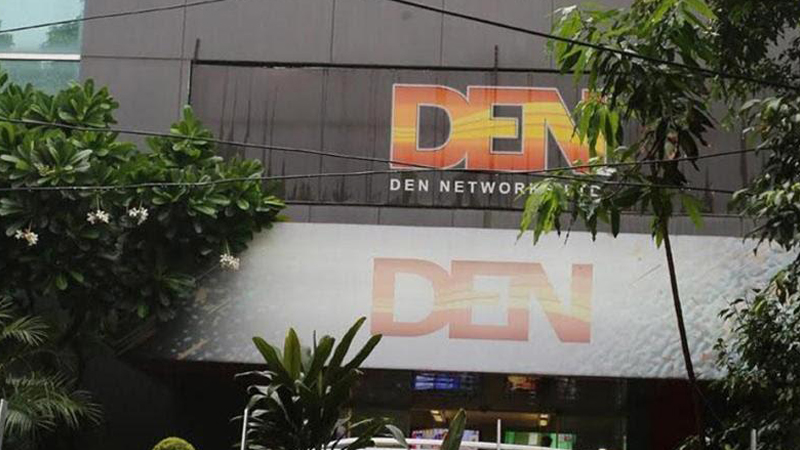
MUMBAI: When margins wobble, liquidity talks and in Q3 FY25-26, cash did most of the talking. Den Networks Limited closed the December quarter with consolidated revenue of Rs.251 crore, marginally higher than the previous quarter but down 4 per cent year-on-year, even as profitability stayed resilient on the back of strong cash reserves and disciplined cost control.
Subscription income softened to Rs.98 crore, slipping 3 per cent sequentially and 14 per cent from last year, while placement and marketing income offered some cheer, rising 15 per cent quarter-on-quarter to Rs.148 crore. Total costs climbed faster than revenue, up 7 per cent QoQ to Rs.238 crore, driven largely by higher content costs and operating expenses. As a result, EBITDA dropped sharply to Rs.13 crore from Rs.19 crore in Q2 and Rs.28 crore a year ago, pulling margins down to 5 per cent.
Yet, the bottom line refused to blink. Profit after tax stood at Rs.40 crore, up 15 per cent sequentially and only marginally lower than last year’s Rs.42 crore. A healthy Rs.57 crore in other income helped cushion operating pressure, keeping profit before tax at Rs.48 crore, broadly stable quarter-on-quarter despite the tougher cost environment.
The real headline-grabber, however, sits on the balance sheet. The company remains debt-free, with cash and cash equivalents swelling to Rs.3,279 crore as of December 31, 2025. Net worth rose to Rs.3,748 crore, while online collections accounted for 97 per cent of total receipts, underscoring strong cash discipline across operations, including subsidiaries.
In short, while Q3 showed signs of operating strain, the financial backbone remains solid. With zero gross debt, steady profits and a formidable cash war chest, the company enters the next quarter with flexibility firmly on its side proving that in uncertain markets, balance sheet strength can be the best growth strategy.







