Applications
AI career frontier: Mapping opportunities in the realm of artificial intelligence

Mumbai: Artificial intelligence knowingly or unknowingly is ingrained in every aspect of our lives, right from social media to healthcare to cybersecurity. Most businesses have understood its potential and are willing to invest in AI. Thus, they offer various job opportunities in this field to streamline and improve their business goals. Before we discuss the various job opportunities any further we must understand what is AI? AI is intelligence exhibited by machines that mimic the human thought process. This includes cognitive skills such as learning, problem-solving, communication, planning etc. The pervasive nature of AI has made it ubiquitous in our lives due to qualities such as:
● Efficiency – Businesses have started using AI to automate repetitive tasks to free up their human resource for more creative/innovative work generating higher returns.
● Data Analysis – AI can analyse massive data and uncover insights based on facts rather than intuition.

● 24/7 availability – AI is available round the clock and does not require frequent breaks or sleep.
● Personalisation – AI is capable of creating customised experiences based on the preferences of the user, leading to higher user satisfaction.
AI is a large umbrella term which encompasses fields such as:
● Deep Learning: A sub-field of AI that mimics the neurons in the brain and uses extremely large datasets to solve real-world problems.
● Computer Vision: It deals with making the computer understand the visual world around them. It is used in identifying objects, analysing videos/real-time camera feeds.,
● Machine Learning (ML): A sub-field of AI wherein the algorithms are trained on large datasets to do tasks such as make predictions and analyse patterns without explicitly programming them to do so.
● Natural Language Processing (NLP): A field of AI that deals with understanding human language. This is extensively used in chatbots, voice assistants and sentiment analysis.
● Robotics: It is a field integrating AI, mechanics and electronics. AI plays an important role in robotics by making them autonomous and improving efficiency.
These are just some of the fields within AI. The actual number of fields could be infinite depending on how AI evolves in the future. There are too many unforeseen applications of AI. However, currently, certain fields have a high requirement for AI professionals. These fields are as follows:
● Machine Learning Engineer: They usually work closely with data scientists to understand the problem, and then use their programming and ML algorithms to solve the problem. For that they usually collect the data, clean it, then choose the best-suited model to train it and finally deploy it to solve real-world problems.
● Deep Learning Engineer: They are involved in teaching machines to do tasks by mimicking the neurons of a brain. They have to work with massive amounts of data to solve problems.
● Computer Vision Engineer: These are AI engineers choosing to specialise in Computer vision. These engineers help machines understand the visual world around them by interpreting algorithms that understand digital images. They train computers to do tasks including object detection, image classification, and facial recognition. They work on specific tasks like object detection, image segmentation, and 3D reconstruction.
● Natural Language Processing Engineer: They specialise in natural language processing. They design. They design computer systems that enable computers to understand, interpret and generate language. They primarily work on chatbots and voice assistants. They work on a combined knowledge of computer science, artificial intelligence and linguistics that help humans and machines communicate.
● AI Researcher: They are at the forefront of AI, looking for new algorithms, models, use cases and even the ethical implications of AI on society. They love experimenting with their theoretical knowledge in mathematics and computer science and blending it with their practical programming skills to solve real-world problems.
● Data Scientist: Data scientists focus on creating algorithms and predictive models for data analysts, aiding organisations by developing tailored methods and tools for data extraction and task automation. Interns start by cleaning and preparing data and learning software like SQL, Excel, Python, and R. Those excelling may receive pre-placement offers and become junior data scientists, working closely with seniors and engineers. Progression from junior to senior data scientist involves managing teams and long-term project planning. Data scientists typically earn more than analysts, with analysts often advancing to data scientist roles.
● Robotics Engineer: For the robot to mimic human behaviour, robotics engineers tend to use AI algorithms for it to learn and adapt to the real world just like a human. They are also involved in the design, electronics and mechanical aspects of a robot.
AI projects tend to be multi-disciplinary and involve teamwork. People from varied fields work together to solve a common problem. Therefore, while technical skills in this field are paramount, skills such as good communication, and collaboration are essential. Although jobs in this field tend to be of a technical nature there are some non-technical jobs available. These jobs include those of an AI ethicist, AI soles consultant and AI product manager. Students interested in entering this field should pursue a multi-pronged approach to their study. Formal degrees such as computer science, data science, or related fields should be complemented by personal projects using open-source AI libraries and datasets. These projects will help them showcase their knowledge which they can present to professionals at various networking events such as conferences and hackathons. Such networking events will give them relevant exposure to the current status in the AI job market.
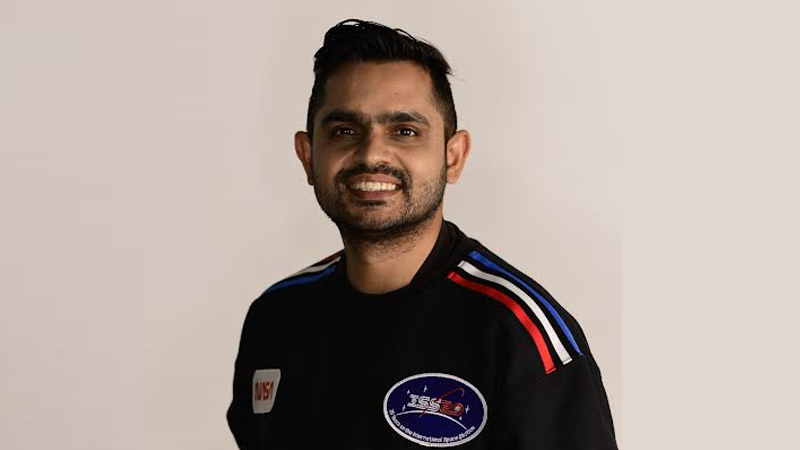
This article has been authored by Tagglabs founder Hariom Seth



Applications
With 57 per cent single new users, Ashley Madison rebrands as discreet dating platform
Platform says majority of new members now identify as single

INDIA: Ashley Madison is shedding the “married-dating” label that defined it for two decades, repositioning itself as a platform for discreet dating in what it calls the post-social media age.
The rebrand, unveiled in India on 27 February, 2026, marks a structural shift in business model and identity. Once synonymous with married dating, the company now describes itself as the “premier destination for discreet dating” under a new tagline: Where Desire Meets Discretion.
The pivot is data-driven. Internal figures show that 57 per cent of global sign-ups between 1 January and 31 December, 2025 identified as single: a notable departure from the platform’s married core. The company argues that its community has already evolved beyond its original positioning.
“In an age where our lives have been constantly put on public display, privacy has become the new luxury,” said Ashley Madison chief strategy officer Paul Keable. He framed the platform’s offering as “ethical discretion” for singles, separated, divorced and non-monogamous users seeking private connections.
The shift also taps into wider digital fatigue. A global survey conducted by YouGov for Ashley Madison, covering 13,071 adults across Australia, Brazil, Canada, Germany, India, Italy, Mexico, Spain, Switzerland, the UK and the US, found mounting discomfort with hyper-public online lives.
Among dating app users, 30 per cent cited constant swiping and messaging as a source of fatigue, while 24 per cent pointed to pressure to curate public-facing profiles and early personal disclosure. Some 27 per cent said fears of screenshots or information being shared contributed to exhaustion; an equal share cited unwanted attention.
The retreat from oversharing appears broader. According to the survey, 46 per cent of adults actively try to keep most aspects of their life private online. Only 8 per cent feel comfortable sharing most aspects publicly, while 35 per cent say they are becoming more selective about what they disclose.
Ashley Madison is betting that this cultural recalibration towards controlled visibility can be monetised. By doubling down on privacy infrastructure and reframing itself around discretion rather than infidelity, the company is attempting to convert reputational baggage into a premium proposition.







