News Broadcasting
After Odisha, UP and Tamil Nadu declare journalists as frontline workers

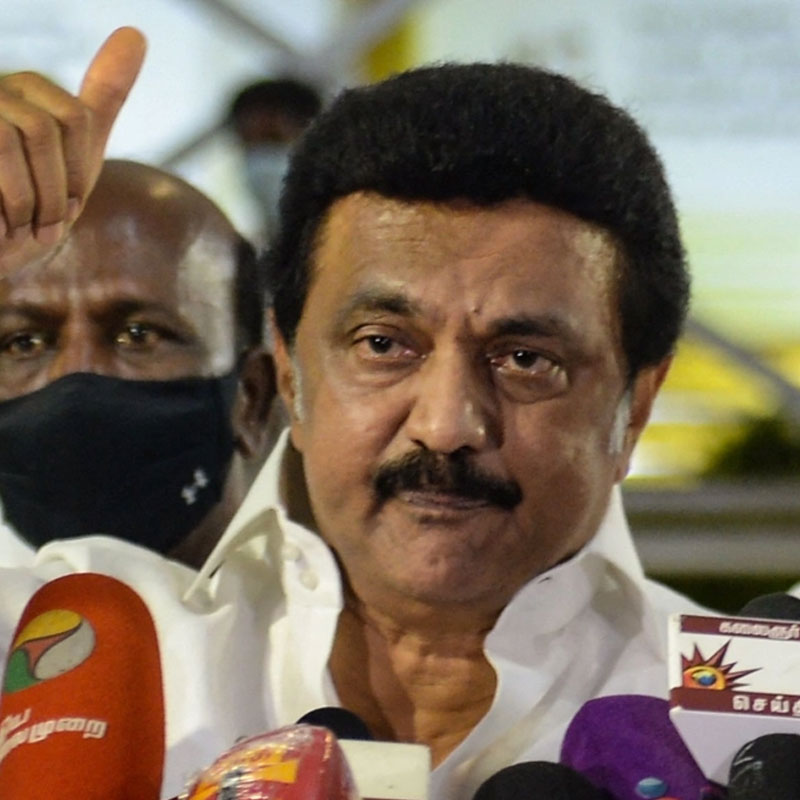
New Delhi: After Odisha, now Uttar Pradesh has declared journalists as frontline workers to be given priority in the ongoing vaccination drive and also directed authorities to allot separate centres for them where they can be inoculated.
The new government formed in Tamil Nadu and West Bengal has also classified journalists as frontline workers, a day after emerging victorious in the Assembly elections.
“All journalists working in newspapers and the visual media risk their lives and their work will be considered as frontline workers in Tamil Nadu,” said Tamil Nadu CM MK Stalin on Tuesday.

The devastating second wave of Covid2019 has taken a severe toll on news mediapersons, many of whom have been reporting from the ground. According to the Delhi-based Institute of Perception Studies, more than 100 journalists have died since 1 April 2020. Over 52 scribes from various parts of the country lost their lives in April alone.
The decision comes amid several appeals by the Editors Guild of India (EGI) to the central government to give journalists priority in vaccination along with frontline workers. While several states, including Uttrakhand, Odisha, Bihar, Madhya Pradesh, Punjab have already declared journalists as frontline workers, the Centre has not yet made any provision in this regard.
“Despite the support from various state governments and media organisations, the central government has not responded to this request. Now, even though vaccination has been technically opened for all above 18 years of age, there is an acute shortage of vaccines. Therefore, the Guild’s urgent demand that journalists be given priority along with other frontline workers,” said the Guild in a recent statement, while condoling the death of mediapersons.
Welcoming the UP government’s decision on Tuesday, News Broadcasters Association president Rajat Sharma said UP chief minister Yogi Adityanath has directed his officials to open special vaccination centres exclusively for media personnel.
Sharma had earlier written a letter to the UP CM to make the vaccines available to all media personnel and their family members on priority. “Noida has emerged as a big centre for national electronic media, and most of the TV journalists and camerapersons work and live here. In most of the cases, TV reporters and camera persons have to work in the midst of crowds, and meet Covid2019 patients, doctors and health care workers in hospitals. Hence, the need for vaccinating them and their family members on priority,” wrote the senior journalist.






News Broadcasting
Network18 channels lead YouTube news viewership in March 2026
CNN-News18, News18 India and CNBC channels top categories with record views
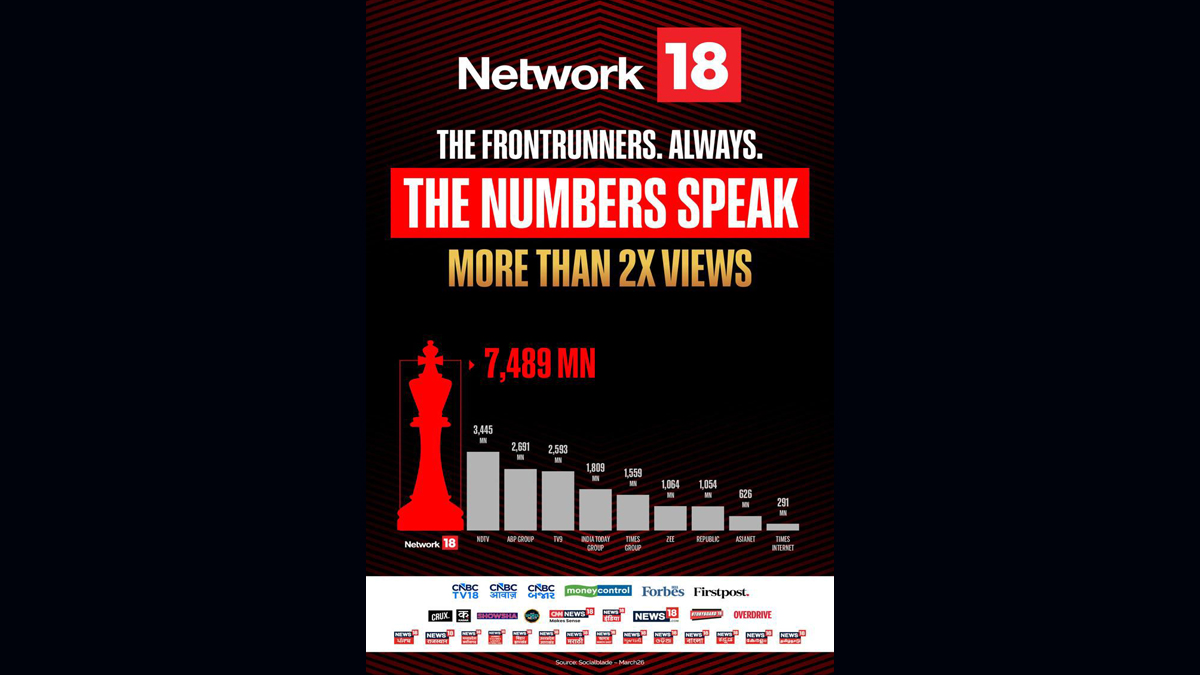
MUMBAI: When the world hit refresh on breaking news, Network18’s channels were already streaming ahead. As geopolitical tensions and war-driven headlines fuelled a surge in global news consumption, the network’s digital playbook delivered big clocking record Youtube viewership across English, Hindi and business news categories in March 2026.
At the forefront was CNN-News18, which emerged as the clear leader in the English news segment with 130 million live and video-on-demand views. The channel edged past competitors such as Times of India (126.5 million), Times Now (101.1 million), India Today (88.2 million) and NDTV (77.5 million), according to Databeings data for March.
In the Hindi news arena, News18 India delivered a commanding performance, racking up a staggering 3,297 million views on YouTube. The channel comfortably outpaced NDTV India, which recorded 3,119 million views, underlining its deep reach and consistent engagement with mass audiences, as per Playboard data.
The network’s dominance wasn’t confined to general news. In the Hindi business segment, CNBC Awaaz topped the charts with 92 million views, narrowly ahead of Zee Business (90 million) and well ahead of ET Now Swadesh (57 million). Meanwhile, its English counterpart CNBC-TV18 posted a strong 58 million views, reinforcing the network’s cross-category strength.
The spike in viewership reflects a broader shift in audience behaviour, with viewers increasingly turning to digital platforms particularly Youtube for real-time updates and in-depth coverage during high-intensity news cycles. For Network18, the numbers signal more than just scale; they underline the effectiveness of a multi-platform strategy that blends speed, credibility and continuous coverage.
In a month where the news never paused, it seems viewers chose to stay tuned where the stream never stopped.






