News Broadcasting
After corporate excellence awards, CNBC zeroes in on auto industry


CNBC India has instituted the equivalent of the Oscars for the Indian automotive industry.
The annual awards will reward excellence in car manufacturing in India and provide vital car buying information to the Indian consumer. The awards ceremony will be held in New Delhi on 14 January 2002. While the awards in the first year will focus on passenger cars, the scope will be widened in the coming years. The awards are being jointly given along with Autocar, the magazine for the auto industry.
A jury of 17 experts with a vast experience in the field of evaluating cars, including car designer Dilip Chhabria, leading auto historian Manvendra Singh, India’s leading female driver Navaz Bhathena, Indian National Rally champion N Leelakrishnan, Autocar editor Hormazd Sorabjee, associate editor Shapur Kotwal and Rajeev Khanna. The jury will be helped in its analysis by Autocar’s database on car performances aggregated from car tests through the year. They will then assess the vehicles and rank them in relation to their rivals. A Car of The Year award is also scheduled to be given away, among the different categories.

CNBC CEO Harish Chawla surmises the importance of the awards thus: “For CNBC, the launch of the auto awards has special significance. Historically, the fortunes of world economies have been closely intertwined with those of the automotive industry. This industry has served as the quintessential barometer of industrial production and consumption – two drivers of economic growth. These awards underline CNBC’s commitment to providing essential business insights and supporting the establishment of standards in leading industrial sectors.”
While the Mercedes Benz C Class, Opel Corsa Swing, Hyundai Sonata and Honda Accord figure among the list of eligibles, stringent criteria have been laid down for the awards. These include – fitness, relevance to Indian market, value for money, design and styling, space, comfort and practicality, engine and performance, and overall safety.
The chosen cars shortlisted for the awards will be driven over thousands of kilometers to evaluate these parameters, CNBC officials say.




News Broadcasting
CNN-News18 to host Fury in the Gulf conclave on West Asia crisis
Three-hour summit to unpack geopolitical fallout and impact on India
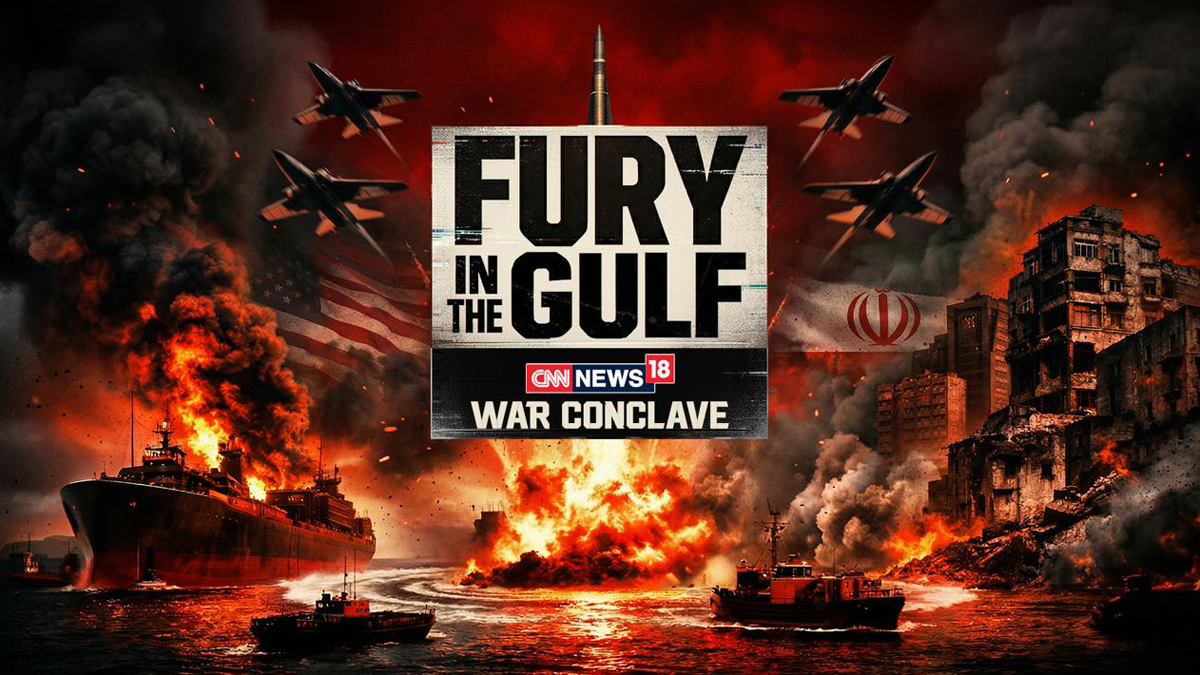
MUMBAI: CNN-News18 is set to host a special three-hour broadcast, Fury in the Gulf – War Conclave, on April 7, aiming to decode the escalating West Asia crisis and its far-reaching implications for India.
Scheduled from 4:00 PM to 7:00 PM, the conclave comes at a time when tensions between Iran and the United States are reshaping global geopolitics and triggering economic uncertainty. With India’s deep energy ties, trade links and large diaspora in the Gulf, the developments carry significant domestic relevance.
Built around the theme ‘Conflict, Consequences, and The Future,’ the programme will feature six curated sessions combining one-on-one interviews and panel discussions. The focus is to cut through the clutter and offer viewers a clearer understanding of the fast-evolving situation.
Key sessions include ‘Diplomacy in Times of War’ featuring Shashi Tharoor, and ‘World After the Iran Conflict’ with voices such as Ram Madhav, Reuven Azar, representatives from the European Union and the Iranian Deputy Envoy. Another session titled ‘Another Dunkirk?’ will bring together K. J. S. Dhillon and Jitin Prasada among others.
CNN-News18 editorial affairs director Rahul Shivshankar said, “In times of war, clarity becomes the most powerful tool. Fury in the Gulf – War Conclave brings together credible voices to address the questions and confusion that arise amid an overwhelming influx of information.”
He added that the initiative is aimed at delivering “facts, perspective, and insight” at a time when misinformation can easily cloud public understanding.
Echoing the sentiment, CNN-News18 CEO– English and business news Smriti Mehra said the conflict marks a defining global moment, with consequences that extend well beyond the region. She noted that the conclave seeks to present the crisis with “depth, nuance and responsibility” so audiences can better grasp its real-world impact.
As geopolitical tensions continue to dominate headlines, the conclave positions itself as an attempt to bring order to the noise, offering viewers a structured, insight-led look at a complex and rapidly shifting global situation.






