News Broadcasting
Advertising sets heart racing: CNN Study


MUMBAI: Brands who choose multimedia campaigns to communicate their advertising messages are more memorable to consumers and are likely to enhance perception of their brands, reveals a case study conducted by CNN International.
The results carry weight for brands that place their advertising in an engaging environment, prompting an emotional response from the audience.
The case study (Cross-platform Advertising Study on Effectiveness and Engagement) consisted of a two-stage approach. Stage one involved a multinational online study of cross-platform effectiveness in which consumers were exposed to diverse media experiences. Stage two measured attention and engagement through a variety of techniques including biometrics, eye tracking and in-depth interviews.

Turner International Asia Pacific VP reserach Duncan Morris says, “We wanted to show that by complementing advertising on CNN TV with ads on CNN.com and CNN mobile, an advertiser can markedly increase campaign recall leading to positive shifts in brand attitudes. The fact that these respondents were not primed for an advertising study makes these results even more poignant.”
Engagement and Biometrics : Body responses such as heart rate, motion, respiratory rate and galvanic skin response (sweating) were translated into measures of “attention” and “engagement” – the Holy Grail for advertisers. These were collected by using a lightweight ‘smart vest’ which respondents wore while watching CNN programming and advertising.
Contrary to popular belief that viewers disengage once scheduled programming ends, the study results showed that engagement actually can increase during ad breaks, as much as 10 per cent.
CNN International VP ad sales Asia Pacific William Hsu says, “This study shows it is content that provides the springboard for advertisers to secure meaningful connections with audiences. In conjunction with our recent PWC study, it provides valuable industry insight to help brands market smarter.”
The level of attention an advertisement receives impacts the ability of respondents to remember the brand. When respondents viewed advertising online and on mobile, they were more attentive, increasing the likelihood of advertising being noticed and adding to the re-call of the overall campaign.
The research also showed that despite the high cross-over between the audiences of all the CNN properties, the audience is in a different state of mind when online or using a mobile phone versus watching television. Generally audiences were more attentive (though not necessarily more engaged) when online or mobile than when watching television.






News Broadcasting
CNN-News18 rolls out Battle for the States ahead of key polls
Multi-format election coverage tracks voter mood across five battleground states
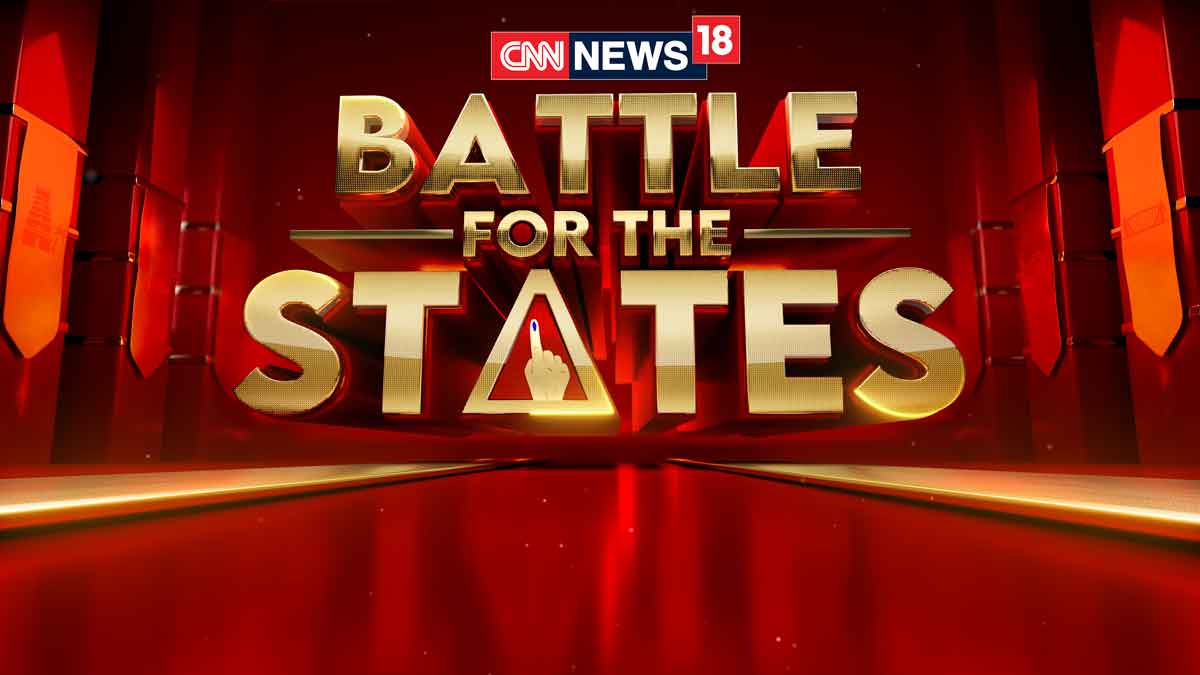
NEW DELHI: CNN-News18 has launched a special election programming initiative titled Battle for the States, as India gears up for high-stakes Assembly elections across West Bengal, Tamil Nadu, Kerala, Assam and Puducherry.
Built around the theme ‘Road to Power’, the multi-format coverage aims to follow the entire electoral journey, from campaigning and polling to results and government formation. The network is leaning into on-ground reportage and data-backed storytelling to decode voter sentiment across regions where local issues often shape the narrative.
The programming line-up includes ‘Vote Tracker’, a three-part series developed in collaboration with survey agency Vote Vibe. The show blends survey insights with expert commentary and field reporting, using augmented reality graphics to present complex electoral data such as vote share, seat projections and leadership preferences in a more accessible format. It will air every Monday evening until April 6.
Adding a cultural lens to political reporting is ‘So Saree!’, a ground-driven segment where women anchors travel across constituencies dressed in traditional handwoven sarees from each state. The format uses attire as a storytelling device, highlighting regional identity while capturing grassroots voices.
Meanwhile, ‘Unfiltered Kaapi’ and ‘Chai-Niti’ bring a more conversational tone, drawing inspiration from everyday political discussions in tea stalls and coffee corners. These segments aim to break down key issues through candid, fast-paced exchanges between anchors and reporters, tailored to regional sensibilities.
For viewers seeking deeper insights, the weekend docuseries ‘Reporters Project’ takes a longer view, with correspondents travelling across constituencies to map voter concerns and political shifts on the ground.
“Elections are about people, their aspirations, identities and the issues that matter to them, and every state tells a different story,” said CNN-News18 editorial affairs director Rahul Shivshankar. He added that the initiative focuses on understanding “the sentiment on the ground and what’s driving voter choices”.
Echoing the emphasis on credibility, Network18 CEO – English and business news Smriti Mehra said the network aims to combine on-ground reporting with data-led insights to deliver clear and timely coverage as the elections unfold.
With a mix of data, culture and grassroots reporting, CNN-News18 is positioning Battle for the States as a comprehensive window into one of India’s most closely watched electoral cycles, where every vote carries a story waiting to be told.