Cable TV
Addressability comes to the forefront


Cable TV addressability has been brought out into the open. Earlier this week, an Andhra Pradesh high court has said that all subscription channels should stop charging cable operators carriage fees for those channels which consumers do not want to subscribe to, according to a report in The Economic Times.
The short injunction was issued by a divisional bench consisting of chief justice Manmohan Singh Liberman and Justice G Raghuram on a public interest petition filed by a consumer S Subbarami Reddy against the I&B ministry, Prasar Bharti and Doordarshan. Reddy has made basic subscription networks such as Star TV, Zee TV, Sony and ESPN-Star TV a party to the case. The court has told subscription TV channels to back off and not collect any money from cable TV ops until the writ petition is settled in court.
The problem with the Indian cable TV industry is that it is mostly disorganised and MSOs have little control over the end subscriber as they have not placed a set top box in his/her home which allows him/her to choose the channels he/she wants and accordingly pay for them. Only in recent times have cable TV ops starting investing in upgrading their networks making their networks return-path ready.

An estimate is that close to Rs 5,000 per subscriber is needed to be invested in cable TV infrastructure to make it addressability-ready. Of course, the subscriber will pay for part of this investment. The key issue is whether he is interested enough to pay for set top box, especially when most of the time he is wary of paying even the Rs 100-200 that he has to pay every month to the cable TV op.
Zee TV has been mulling addressability for a year or so. It has a Rs 25 billion project to place addressible set top boxes in subscribers homes, but has not been able to raise funds for it. There have been few interested buyers for the 10 per cent stake in Siticable it has offered in exchange for the funds it needs.
The TV channels are expected tofight the interim order passed by the Andhra Pradesh High Court. But it’s quite possible it may be used as a landmark judgement – just like the “opening the air waves” order was in 1994 to force the government to be more liberal about broadcasting – to force a hesitant cable TV industry to change.







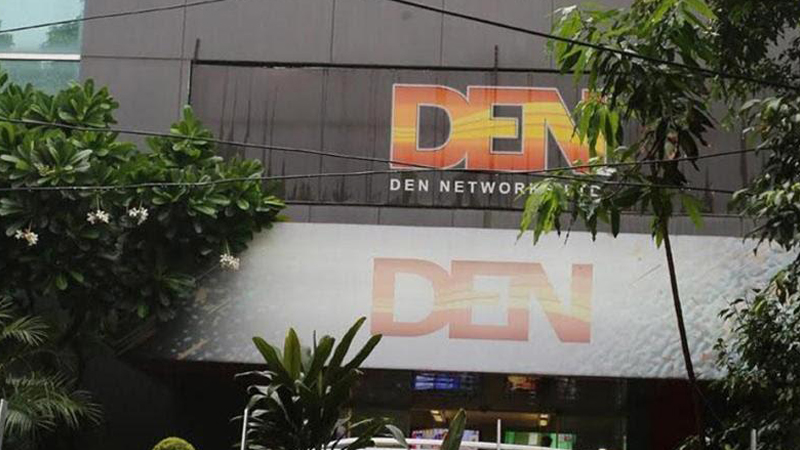
MUMBAI: When margins wobble, liquidity talks and in Q3 FY25-26, cash did most of the talking. Den Networks Limited closed the December quarter with consolidated revenue of Rs.251 crore, marginally higher than the previous quarter but down 4 per cent year-on-year, even as profitability stayed resilient on the back of strong cash reserves and disciplined cost control.
Subscription income softened to Rs.98 crore, slipping 3 per cent sequentially and 14 per cent from last year, while placement and marketing income offered some cheer, rising 15 per cent quarter-on-quarter to Rs.148 crore. Total costs climbed faster than revenue, up 7 per cent QoQ to Rs.238 crore, driven largely by higher content costs and operating expenses. As a result, EBITDA dropped sharply to Rs.13 crore from Rs.19 crore in Q2 and Rs.28 crore a year ago, pulling margins down to 5 per cent.
Yet, the bottom line refused to blink. Profit after tax stood at Rs.40 crore, up 15 per cent sequentially and only marginally lower than last year’s Rs.42 crore. A healthy Rs.57 crore in other income helped cushion operating pressure, keeping profit before tax at Rs.48 crore, broadly stable quarter-on-quarter despite the tougher cost environment.
The real headline-grabber, however, sits on the balance sheet. The company remains debt-free, with cash and cash equivalents swelling to Rs.3,279 crore as of December 31, 2025. Net worth rose to Rs.3,748 crore, while online collections accounted for 97 per cent of total receipts, underscoring strong cash discipline across operations, including subsidiaries.
In short, while Q3 showed signs of operating strain, the financial backbone remains solid. With zero gross debt, steady profits and a formidable cash war chest, the company enters the next quarter with flexibility firmly on its side proving that in uncertain markets, balance sheet strength can be the best growth strategy.








