Broadband
ACT to focus on broadband, cable ops acquisition

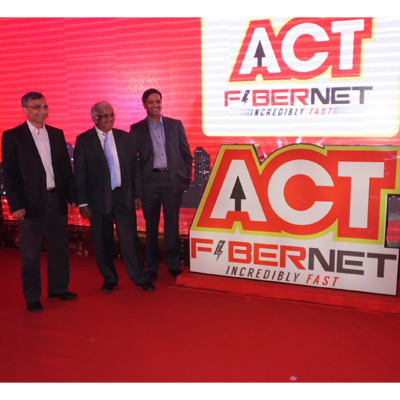
BENGALURU: Atria Convergent Technologies (ACT), one of the largest broadband players in India after the public sector BSNL, MTNL and the private sector Airtel will focus primarily on broadband, reveal company sources. ACT withdrew its application for permanent registration as an MSO in September 2014 according to the MIB ‘List as on 05.01.2015 of MSOs whose Registration by Ministry of Information & Broadcasting to operate in digital addressable system (DAS) has been cancelled or cases closed’.
“Our focus for our mother brand ACT will be broadband. We have MSO licenses in the states that we operate in under individual names. We will expand our cable footprint by acquiring only the operators that have permanent licenses,” revealed ACT CEO Bala Maladi to indiantelevision.com.

MSOs under the ACT umbrella operate in Karnataka and Andhra Pradesh (AP) through Kable First India in Bangalore, Kable First Davangere in Davangere, Mandapeta Digital Entertainment (Mandapeta, AP), Venkateshwara Digital Home Entertainment (Kutukuluru and Nakapalli in AP) and ACT Digital Home Entertainment (AP and Telangana), Raja Rajeshwari Entertainment (Notified areas of Nellore, AP), Sree Digital Home Entertainment (East Godavari District in the state of AP). Earlier, ACT was present in Indore (Madhya Pradesh) through SR Cable TV. In Tamil Nadu (TN), it provides broadband internet services.
ACT is a triple play service provider offering an ensemble of information, communication and entertainment through Fibernet, Digital TV, Analog TV and IPTV. Headquartered in Bengaluru, ACT is spread across the towns and cities of Karnataka, Andhra Pradesh (AP) and Tamil Nadu (TN). ACT says that it presently has 10 lakh (1 million) plus cable and broadband subscribers. ACT has been funded by IVFA (India Value Fund Advisor). Industry sources say that the company has crossed turnover of Rs 700 crore (Rs 7 billion).







Broadband
ACT Fibernet elevates Aditya Singh to chief customer experience officer
Former senior vp to drive service, retention and delivery revamp

BENGALURU: ACT Fibernet has elevated Aditya Singh to chief customer experience officer, effective 1 January, 2026, as the broadband provider seeks to tighten its grip on service quality in an increasingly competitive market.
Singh, who previously served as senior vice-president – customer experience and loyalty at group level, will now join the executive committee and lead the company’s end-to-end customer transformation agenda.
The move gives him oversight of customer service, customer retention and service delivery, alongside a broader mandate to strengthen network resilience and field operations. The company said the reshuffle underlines its intent to deliver a “consistent, seamless and superior” experience to its 2.3m subscribers across more than 30 cities.
Headquartered in Bengaluru, ACT Fibernet, the consumer-facing brand of Atria Convergence Technologies Limited, is one of India’s largest wired internet service providers. It has built its pitch on high-speed connectivity and responsive customer support, at a time when fibre roll-outs and price wars are redrawing the broadband map.
In a statement, Singh said he was “deeply honoured” to take on the expanded brief and join the executive committee as the company sharpens its focus on simplifying customer touchpoints and turning subscribers into brand advocates.
The elevation signals a clear priority: in a crowded fibre market, customer experience is fast becoming the decisive battleground.








