News Broadcasting
ACK plans to paint the town yellow on Nat Geo’s 125 years

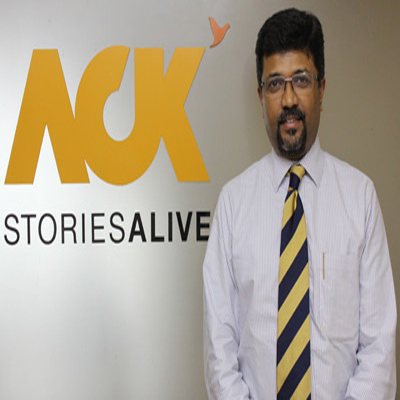
MUMBAI: Come October, and ACK Media will leave no stone unturned to celebrate the 125 years completion of National geographic magazine. Get ready to see the city vendors don the yellow colour of National Geographic with the umbrellas distributed amongst vendors. This isn’t all, the media house which has planned a host of activities to celebrate this landmark achievement, had earlier conducted a photography workshop along with an exhibition.
The main marketing campaign of ACK Media will be featured on the digital space. “Our online activation is massive where we will see a lot of communication about what National Geographic magazine gives to its customers. As of today, e-readers are evolving more and more. If we sell 90,000 copies to our readers, there are another 100,000 people reading content online. These readers are extremely important to us because that is where the action is. Considering our activity on social media, we are the second largest branded page globally with more than 14 million hits which is very important for National Geographic as a brand and also for us, we being their partners in India,” says the ACK Media COO and publishing director Manas Mohan.

Readers on the online space are extremely important to us because that is where the action is says Manas Mohan
The media house’s association with the magazine goes back 18 years for which it has been its license holder. “We have been selling the ad space locally for the magazine and also distributing it in a much larger way across India, thereby growing the subscription base. Unlike other magazines in India, National Geographic (the mother brand) is a subscription oriented magazine. So more than 50 per cent of our 90,000 circulation base is subscriptions and this is very unique for a magazine in India. There are very few magazines who concentrate on subscriptions in India. Over here, our primary focus is to grow the subscription for National Geographic magazine,” informs Mohan.
The publishers aren’t just proud of the numbers of copies they sell (subscription and retail) but also boast about the fact that they have managed to get Indian brands to advertise in the magazine. “From the past couple of months, we have been able to offer the magazine advertising sales by Indian brands. The first time we brought in 19 pages of advertisements for the National Geographic magazine and that to at a very high price considering the magazine’s exposure globally and the response has been very warm and welcoming,” proudly claims Mohan who further elaborates by adding that Tata Motors was the first advertiser for the magazine in India.
Talking about the scope of niche magazine in India, the publisher which took over IBH about three years ago feels that in the magazine business, the scope of existence and profit is only for the niche magazine. “I think general interest magazines face a huge competition as they are the biggest in the market. They would also face competition from television and internet. For example, a magazine would come to you once in a week but by that time television would have flashed the same news about 55 times in a span of two days and internet would have published everything to say on that topic in a span of three days,” says Mohan.
He adds, “In term of niche magazines people collect information. Now there are two ways to the term niche – demographic niche and psychographic niche. Demographic niche is something where a person reads something belonging to a profession, while a psychographic niche is where people read out of non-livelihood reasons. So instead of me reading something at the doctor’s clinic which does not interest me, I would prefer reading my own magazine.”
Feeling poignant about the recent shutting down of a few magazines, Mohan says, “Magazines start with a good idea but its survival depends on the way it is carried forward and executed. We have been hearing a lot about the readership of newspapers and magazines scaling down, but in my opinion, I think it is getting more fragmented. It is all about how well you manage your fragment. So if National Geographic Traveler India is the biggest travel magazine in the country, it is because it has done its job very well.”
Maybe he is right when he says that sometimes people have an idea, but it cannot be followed through. So, just as it is said, ‘one per cent aspiration, 99 per cent perspiration’, it holds true for every business.





News Broadcasting
News18 India launches Command Centre war explainer with Arya
New show shifts from debates to decoding global conflicts and impacts
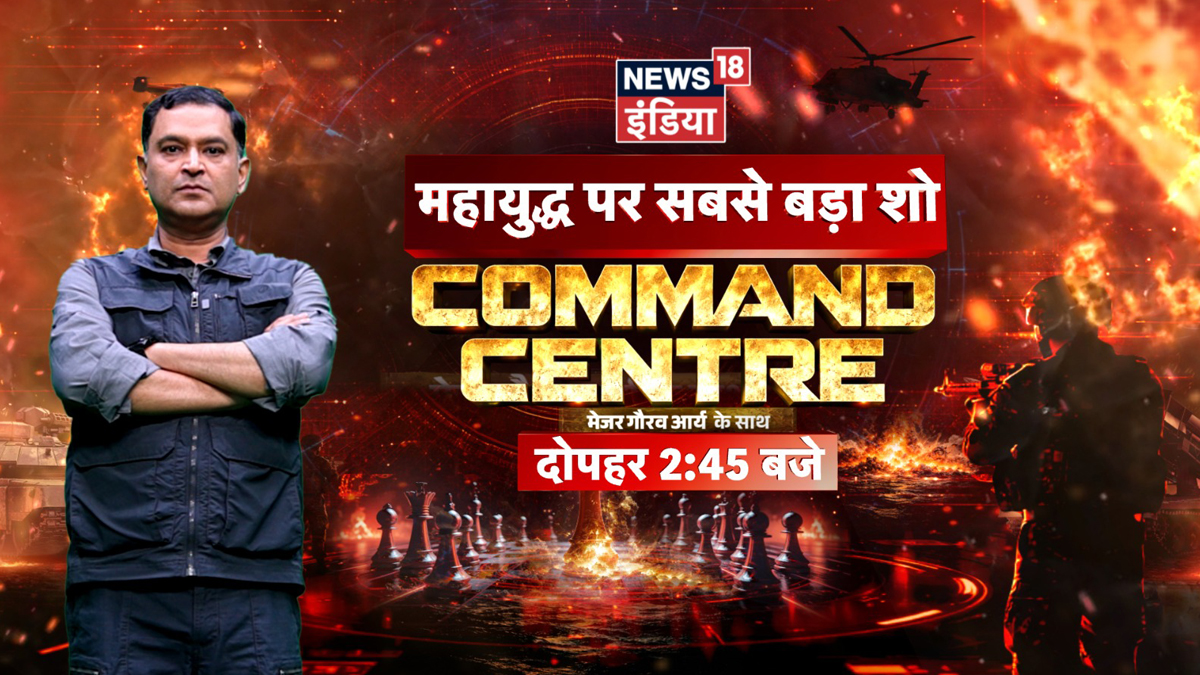
MUMBAI: News18 India has rolled out a new war-focused programme, Command Centre, featuring Gaurav Arya, as it looks to offer viewers a sharper, more grounded take on global conflicts amid rising tensions in West Asia.
Positioned as an “insider war room”, the show moves away from conventional panel debates and instead focuses on explaining military developments, decoding strategy and connecting global events to their everyday impact, from fuel prices to economic shifts.
The format leans heavily on visuals and data. The studio has been designed like a command hub, complete with large LED war maps, real-time graphics and an alert system to track developments as they unfold.
At the centre of it all is Arya, who brings his military background to simplify complex war strategies for viewers. His signature line, “Seedhi baat samjhiye”, anchors the show’s promise of clarity over noise.
News18 India managing editor Jyoti Kamal said, “Command Centre, featuring Major Gaurav Arya is designed to deliver accurate insights and a clear perspective on how evolving conflicts impact everyday life, from household budgets to national security. With expert voices analysing every development in real time, the show goes beyond headlines to decode what’s happening now, what it means, and what could come next.”
Echoing the intent, Gaurav Arya added, “In times of war, confusion is the biggest threat. With News18 India’s Command Centre, we are bringing viewers inside the war room, decoding strategies, tracking every escalation, and explaining, in the simplest terms, what it means for India and for every household. Seedhi baat samjhiye, this is where you understand not just what is happening, but what happens next.”
The weekday show will air in the afternoon slot and will also feature Gaurav Shukla, adding to its editorial depth.
With its mix of analysis, visuals and a clear focus on impact, the show reflects a broader shift in news consumption. Viewers are no longer just watching events unfold, they are looking to understand what those events mean for them.







