iWorld
Abundantia Entertainment, Crypt TV partner to drive Indian horror content in 2020

MUMBAI: If there is an unexplored genre in the Indian content space, it is definitely the horror genre. While movies like Stree and shows like Ghost Stories have attempted to change the space, there is room for more.
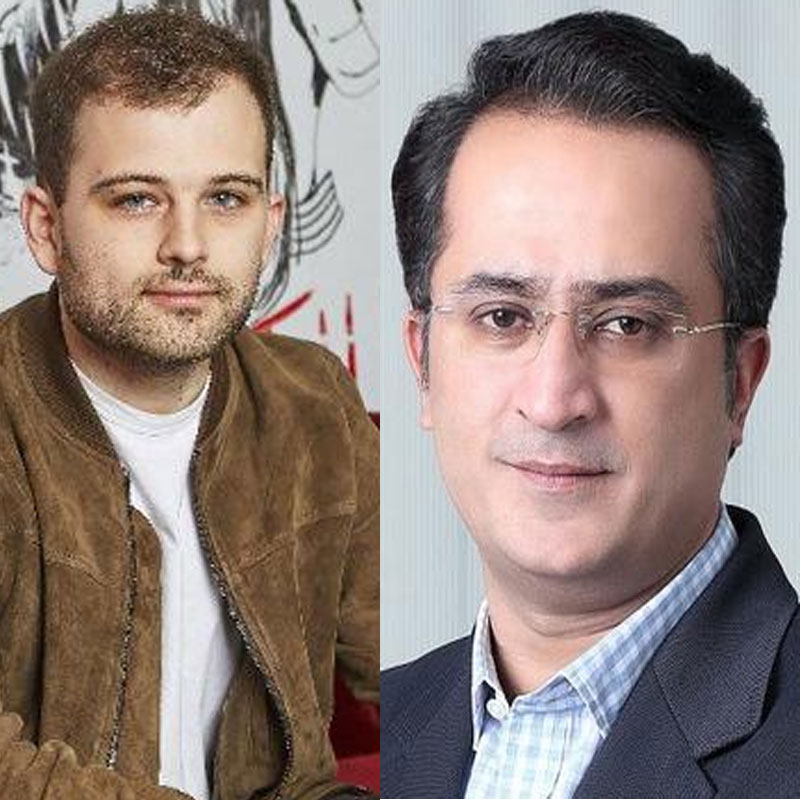
Vikram Malhotra-headed Abundantia Entertainment is now focusing on the gap by forging a partnership with US-based Crypt TV. Under the collaboration, the partners will focus on creating new intellectual properties (IP) in India along with exporting Crypt TV’s international shows to be remade in local languages.
Crypt TV CEO Jack Davis depicts the partnership as a goal to bring Crypt’s understanding of the genre in the country and mix it with Malhotra’s expertise of storytelling in different formats. For Abundantia, the partnership drives content strategy for 2020 and beyond.

There is an active pipeline of digital content creation at Abundantia. Malhotra said, “We have our main feature film business, we have our streaming TV business that we are already creating content in but now the strategy is to focus on our new vertical ‘Psych’ and our largest manifestation of that in terms of the alliance with Crypt is our big drive moving forward. There is work already under development for both under feature and TV. One of the things that both the companies are aligned on is for stories to find their ways and platforms. Rather than force-fitting their content we will go where our audience is.”
Crypt is known internationally for creating short-form horror videos such as SunnyFamily Cult, Ghosted, The Birch, and The Look-See for Facebook and YouTube. Crypt’s entry into the Indian market will be driven by creating feature films and long-form streaming content. Abundantia has made superhit movies like Airlift and Toilet: Ek Prem Katha and also web shows like Breathe in India.
“Abundantia has always been paramount to understanding the progressive evolving Indian audience. We identify this genre containing significant native demand where the young audience is considered. We reciprocate Crypt’s understanding of this genre, their expertise in it and their belief in India and its size. So, the whole idea is taking our local context, our experience in telling stories out of India and match and marry that with the expertise that Crypt TV brings in of telling scary stories and to create locally relevant and contextually heavy insight-driven stories,” says Abundantia Entertainment CEO Vikram Malhotra.
Davis who is ecstatic to partner with Abundantia hopes to create local stories and local versions of the characters and new stories that usually start local but end up becoming so successful that they become international themselves.
“In India, there is an unbelievably rich tradition and passion for telling stories and there is a long history of unbelievable respect for storytellers, fantastic actors and directors. Earlier there was a barrier in the media industry. It was fragmented. That has changed now because of the streamers. It means new opportunity here in India. Also, combine the internet connectivity with the rich history and there is ample space for scary,” states Davis.
While there is a surge of horror content in India, the challenge is to make it mainstream entertainment medium. Malhotra, who holds a track record of success and telling stories in TV and movies, believes that the best way to command the attention of potential and existing audience is to create stories that people relate to. They should able to see themselves or the people around them in that story. Today it’s not only about 2 hours or 10 minutes of consumption it’s also about what people take back and talk amongst themselves.
“Nothing is driving my interest in the region besides respect for the stories here and the fact that I have found the right partner in Vikram. I am sure more people would want to invest in Crypt by seeing what we are doing in India. Our decision to come here is not at all based in the investors but because of the stories we can create,” Davis sums up.
When asked about the change from creating content for movies to now creating it for web, Malhotra said, “Fundamentally what every Indian is looking for is entertainment that is intellectually stimulating. It could be scary entertainment or it could be a slice of life entertainment, but one of the things that we have seen consistently is that irrespective of the duration and manner of that story, what connects is the character and the emotion. When you are doing long format episodic content your ability to connect is that much higher. Therefore, the pressure to deliver is also higher.”






iWorld
Inside Studio Blo: Meet Joel James the boy who codes by day and composes by night
The 23-year-old co-founder rewriting India’s AI film story, one algorithm and arpeggio at a time
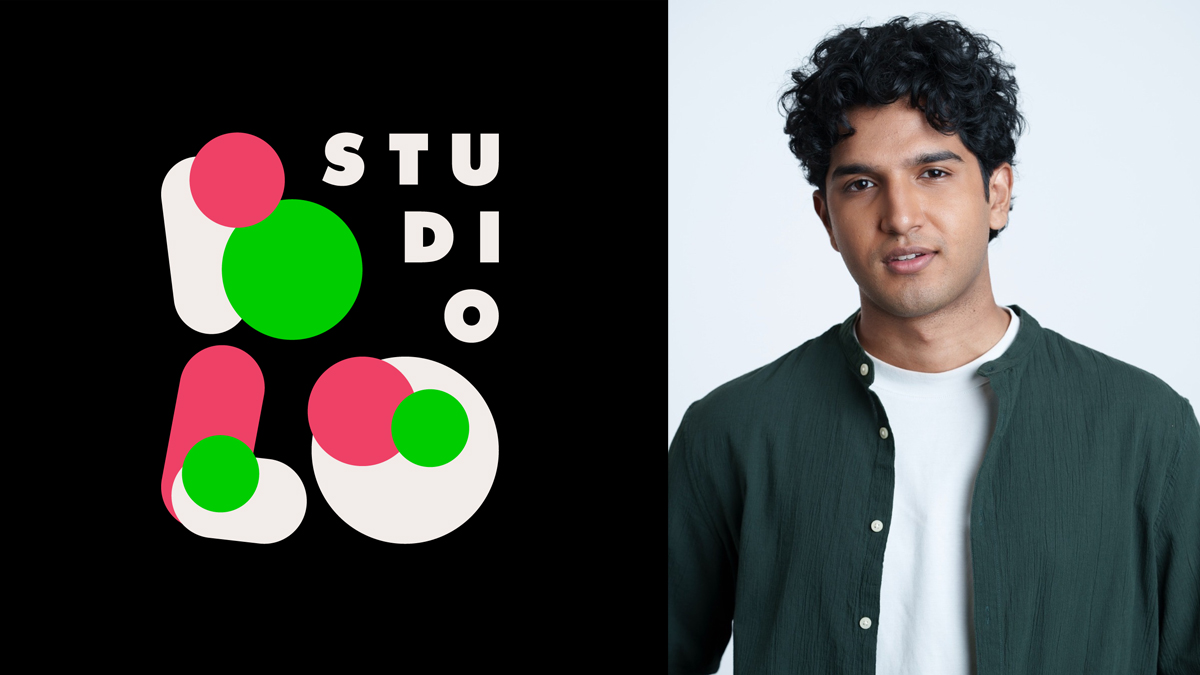
MUMBAI: Here is a fun riddle: What do you get when you cross a coder with a composer, hand him a film studio, and let him loose on Hindi cinema? The answer, apparently, is Joel James, co-founder and chief of innovation at Studio Blo, India’s pioneering AI film studio. At 23, he is only just warming up.
Ask him how his two worlds, music and technology, manage to coexist without one swallowing the other, and he barely pauses. “They’re more connected than they sound,” he says. “Music is essentially programming, it’s all about patterns. Since day one, I’ve been drawn to finding patterns. In music, it’s about discovering patterns that make people groove, and in tech, it’s about building efficient patterns that make things work. One is emotional, the other is functional, but both come from the same instinct.”
That instinct, it turns out, is rather a useful one to have when your job is to convince an entire creative industry that the robot is not coming for its lunch.
“AI doesn’t replace creativity, it reduces friction.”
The conversation around artificial intelligence and the arts has, for some years now, produced more heat than light. Artists worry. Labels panic. Op-ed writers have a field day. James finds it all slightly beside the point. “Every generation has had tools that were initially seen as shortcuts, synths, sampling, autotune, but they eventually became part of the creative language,” he says. “AI is no different.”
He has a case study to hand. While scoring a feature film, he used AI to explore four distinct choir styles from different regions of India before settling on recording an actual choir in the North East. “AI helped us get there faster,” he explains. “It let us test, iterate, and refine instead of guessing for weeks.” The point, he insists, is not that AI created something impossible. It is that it let him fail fast, test an idea, discard it, and try again, without the usual cost in time and money that makes experimentation a luxury most productions cannot afford.
The synth did not kill the guitarist. The loop pedal did not bury the drummer. AI, James argues, is simply the newest instrument in a very long orchestra, except this one occasionally surprises you.
“There have been moments where AI generates something slightly off, like a vocal texture that isn’t perfect but has character,” he says, with what sounds like genuine affection for the glitch. “Those imperfections can feel very human. I’ve used a few of those because they add unpredictability and texture that I might not have created intentionally.” The machine makes a mistake; the composer hears music. It is, in its way, a rather elegant partnership.
“Creators often lose momentum because production can be slow, expensive, or technically complex.”
This philosophy, that the best technology is the kind that gets out of your way, shapes everything Studio Blo is trying to do. “The biggest problem is friction between idea and execution,” James says. “At Studio Blo, we focus on fixing the boring parts, streamlining tools and workflows so that directors and creators can focus purely on creating.” It is the unglamorous mission statement of a generation that grew up watching brilliant ideas die in pre-production, not for lack of talent, but for lack of time and money.
It is also what brought him to the table with Shekhar Kapur, the legendary filmmaker whose credits span continents and decades. The collaboration, James describes, is less a mentorship and more a genuine exchange. “Experience is honestly the new currency,” he says. “Someone like Shekhar sir brings decades of storytelling instinct and a completely different worldview shaped over time. What I bring is new energy and the ability to enable that storytelling through technology, and sometimes even express those stories through sound in a new way. The intersection of experience and new-age tools is where the magic happens.” At 23, that is either a very wise observation or a very good line. Possibly both.
James has also worked with artists in the UK, and the difference in attitude, he says, is telling. “Interestingly, India is more open in many ways. We move at light speed when it comes to adopting new things. There is still some resistance, but that’s natural. Globally, there’s curiosity mixed with caution, but Indian creators tend to adapt very quickly once they see real value.” Given that India has historically adopted, adapted, and made entirely its own everything from the tabla to the synthesiser, this ought to surprise precisely no one.
“The hardest part is just trying to look serious all the time.”
Running an AI film studio at an age when most of one’s peers are navigating their first performance reviews comes with its own particular pressures. James is refreshingly candid about them. “It’s more psychological than anything else,” he says. “My role is to take on the stress but not let it affect me when it actually matters. I approach it a bit like athletes my age do, staying mentally sharp without burning out.” He pauses, then grins. “And sometimes, the hardest part is just trying to look serious all the time.” Fair enough. Keeping a straight face while building the future does sound like a full-time job in itself.
For all his enthusiasm about what AI can do, James is clear-eyed about what it cannot. A million generated songs a minute, he says, will never replace the thing that makes music matter. “Volume doesn’t replace identity. What makes music special is perspective, your story, your taste, your cultural context. AI can generate options, but it can’t replicate lived experience.” And then, with the confidence of someone who has actually thought this through, “I genuinely believe live music is about to rise more than ever. In India especially, audiences are shifting toward live experiences, and that’s where authenticity really stands out.” A concert ticket, in other words, will always carry more feeling than a playlist. AI can fill your headphones; it cannot fill a room.
Which brings him to perhaps the most paradoxical of his projects, FAIMOUS, a platform using AI to protect artists from AI. As deepfakes grow slicker and voice-cloning becomes trivially easy, the Indian music industry faces an identity crisis, quite literally. “With FAIMOUS, the focus is on identity protection and controlled usage,” James says. “As AI makes replication easier, it’s critical to build systems where artists have ownership over their voice, likeness, and creative output. It’s about enabling ethical, authorised use, not just preventing misuse.” Using the tools of disruption to defend against disruption is a very 21st century sort of paradox, and one James appears entirely unbothered by.
“Just do the hard part, it’s not that deep.”
At the end of all of it, the choir experiments and the AI glitches, the legendary collaborators and the deepfake battles, the composing and the coding and the effort to look serious, we ask him what he would tell a young artist who is afraid that AI will take their job. He thinks for approximately no time at all.
“Just do the hard part, it’s not that deep.”
Five words, delivered with the easy confidence of someone who has already stopped worrying and started building. Which, when you think about it, is the most useful piece of career advice that any algorithm, artificial or otherwise, could ever generate.







