iWorld
Aashram was viewed by users from 2500+ cities: MX Player’s Gautam Talwar

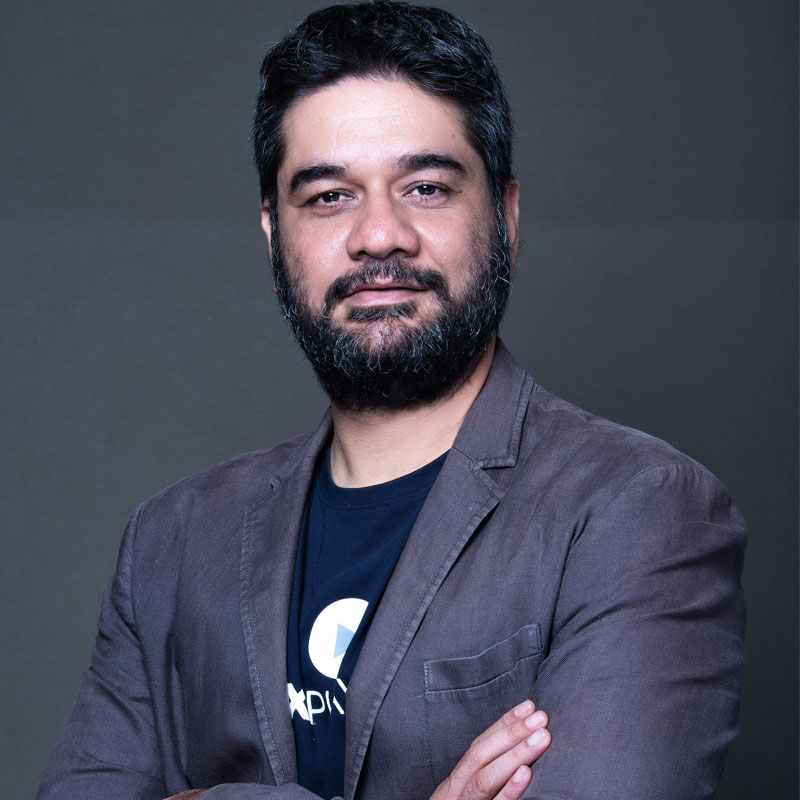
KOLKATA: How do you spend time when a virus has taken away all the usual options of outside home entertainment? The answer lies in screens. For most of the country, the television sets and the six-inch screens have served as source of entertainment since the onset of the pandemic. But at the beginning of the lockdown, there was a dearth of fresh television content as well. As a result, over-the-top (OTT) platforms in the country emerged as the alternative for a new wave of users along with the existing consumers.
Times Internet’s “bold bet” MX Player is one of them. It has witnessed a huge surge in user base during this period. As MX Player chief content officer Gautam Talwar says “it has been quite crazy”. While the platform has kept content flow usual with launch of around ten shows during this period, the user engagement has gone beyond expectation in all metrics, as Talwar shares without divulging the exact numbers. Thanks to a host of new releases, the consumers shifting from the linear mode of content consumption to watching on-demand content have exploded even after unlock.
According to Talwar, the platform has broken all the records after the launch of Aashram which was in production for more than two years. He claims the show has recorded 250 million + streams within 15-18 days of its launch. With this show, the platform has witnessed the number of screens growing exponentially as well as a dramatic upsurge in watch time. Some northern markets like Delhi NCR have responded very well to the show.

As per the data shared by him, Aashram was viewed by users from 2500+ cities ranging from metropolitan to rural cities. While it was liked by users across all the cities, however the affinity in tier I (Jaipur, Pune, Ahmedabad etc) and tier II (Agra. Ludhiana, Meerut, Chandigarh, Ranchi etc) was higher than the metropolitan cities, precisely 1.2 times more higher. Although he did not share exact number, he added that there are more than enough viewers that are binge watching Aashram.
“It was conceptualised two years ago by the MX content team and we were sure that this is a fascinating world and must be explored. So, we got Habib Faisal on board to write the story and the bible first and then Kuldeep Ruhil to write the screenplay and dialogues for the show. Thereafter, we took it to Prakash Jha who along with his team also added a whole lot to the writing process along with the MX team and that's how the show got conceptualised. The genre was chosen because data suggests that crime dramas are something that our core audience loves and consumes in quantity and hence it was a no brainer.” Talwar comments.
MX Player did not leave any stone unturned to promote the marquee content. While all the major OTT platforms halted outdoor campaigns during the lockdown, Aashram romanced with billboards. The platform went for a 360 degree campaign and the media mix included radio along with TV and digital.
Aashram is helping in overall engagement as well. The cohort of users who are coming to the platform to watch this particular show are sampling other content from the similar genre leading to a higher retention rate. However, it is not unique to this particular show only.
“Once a new user comes on the platform, they discover the content slate and then they cherry pick. All metrics of engagement have gone up because of this trend. They come for one show and sample other shows and the fact that they stay on is a testament to good content being on the platform,” Talwar opines.
Image
Hence, it is apprehensible why the parent company is not shying away from investing more in the platform. In the annual report of Times Internet, vice chairman Satyan Gajwani said: “Two years ago, we made our largest acquisition, and it was a bold bet: that we could build a video streaming platform atop a local video player, developing and licensing compelling content to build a new user habit on an existing app. I’m extremely pleased with our results… In less than 18 months, MX Player now engages over 200 million monthly users, making MX Player the largest premium video destination in India.”
While most of the major OTT players in India are now going for the subscription-based model, MX Player is the one which has not taken its content behind paywall yet. Thanks to the scale of users, the platform is attracting major brands.
Talwar says the appetite for good content has gone up as users are getting more aquatinted with premium content. “The pressure is now to deliver more,” he states. “All the data mining that we do basis how the shows are doing, the pressure is going to get even more accurate. The more you know, the pressure is to make sure to deliver to your particular audience. My audience may be slightly different from other OTT platform because we are a mass-market channel. Our core audience lies in tier II-tier III towns. Therefore, we are trying to understand what they like because they are also experiencing digital for the first time,” he adds.
Thanks to feedback on metrics like completion rate, watching pattern of users, the platform is fine-tuning its content strategy. It has also noticed that the sweet spot of an episode’s length ranges between 20-40 minutes.
Recently, MX Player also forayed into short form video with the launch of the new platform. But it is also experimenting with long-form content as well. “There is a show that we are looking at in terms of interactivity. Right now, we are at writing stages of it. We have to see how to build that level of functionality once we kind of get to that,” Talwar states.







eNews
Piyush Thakur steps down as Inshorts’ chief revenue officer
Former vice president and cro says exit marks a new chapter after close to a decade of building revenue and partnerships at Inshorts Group.

NOIDA: Piyush Thakur has stepped away from Inshorts Group after nearly 10 years with the company, marking the end of a long tenure that culminated in his role as chief revenue officer.
In a farewell note, Thakur said he was “turning a new page” after almost a decade at Inshorts, calling it one of the hardest professional decisions he has made. He added that his exit was not driven by uncertainty about the future, but by reflection on a long association with the company.
Thakur joined Inshorts in October 2016 as vice president and spent around seven years in the role before being elevated to chief revenue officer in April 2024, a position he held until April 2026.
He said his tenure was defined by “thousands of mornings, late nights, product debates and breakthrough moments”, as the company evolved into a large-scale digital news platform used by millions.
In his note, Thakur emphasised that Inshorts’ growth was a collective effort across teams, adding that engineers, designers, sales teams and customer support staff all contributed to building the platform. He said the company’s success was not the result of individuals but of “everyone who stayed, passed through, and left their mark”.
Before Inshorts, Thakur worked across several digital media and business development roles. At ESPN, he served as senior regional manager from October 2015 to October 2016, focusing on growth initiatives, strategic opportunities and video distribution.
At Times Internet, he worked for nearly three years, including as head of business development from April 2015 to September 2015 and chief manager from January 2013 to March 2015. His responsibilities included monetisation of mobile platforms, managing media and developer partnerships, and driving revenue across digital properties such as The Times of India and The Economic Times.
Earlier, he worked at Brandmovers as head of business development from June 2012 to June 2013, handling digital, mobile and social media marketing solutions, client development and strategic consulting. During this period, he also worked on advertising revenue, brand strategy and CRM-based solutions.
At Inshorts, Thakur’s role focused on revenue strategy, mobile and media partnerships, and growth initiatives across platforms. His profile highlights experience in mobile product management, digital business models, partner ecosystems and revenue expansion in high-growth environments.







