Hindi
Aashiqui 2: No love lost

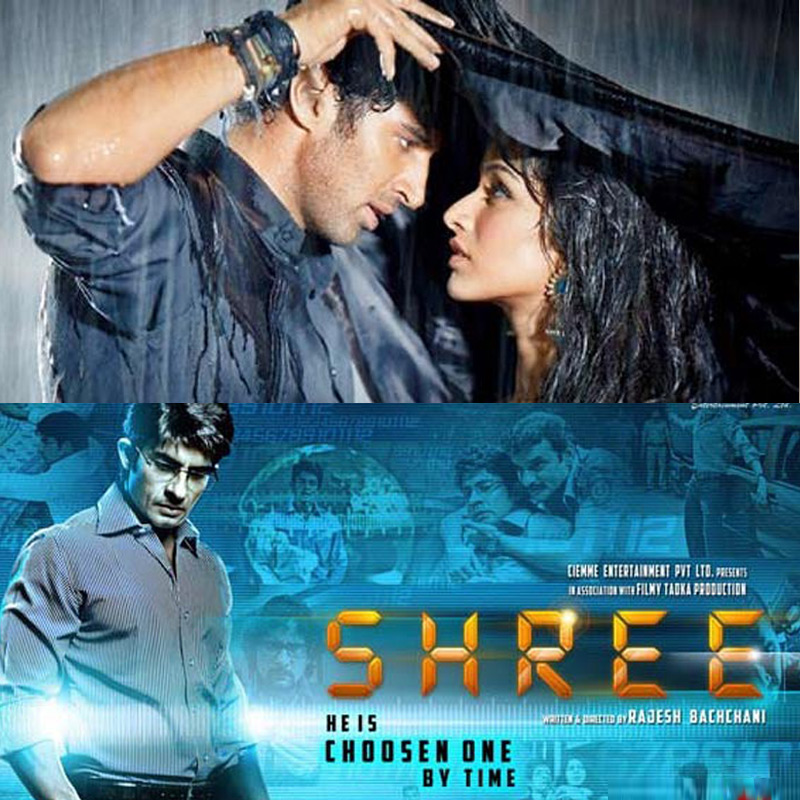
MUMBAI: Aashiqui the original became a legend thanks to it musical score. Aashiqui 2 has nothing to do with the original except to cash in on its title, logo and poster design. While doing this needs little extra imagination, the rest, such as putting a script together and executing the film needs quite a lot. In the original Aashiqui, the hero was a go-getter who faced all the challenges to get his girl. Aashiqui 2 is about a guy who is a loser on all counts.
Aditya Roy Kapoor is a famous singer on the wane; he is in a self destruction mode. He guzzles alcohol non-stop and generally indulges in self pity. He has a dad in the form of a telephonic voice from the US who always promises to stand by him but never comes to the scene. Actually, the writer/director doesn‘t bother to tell you why he is such a loser. He even drops a concert halfway through in Goa. So just when he has almost destroyed his career, he sees a bar singer, Shraddha Kapoor, singing one of his own compositions! Our hero takes instant fancy to her and her voice. He knows he has stumbled across the next Lata Mangeshkar. He decides to promote her career, finding love in the process.
 |
|
Producers: Mukesh Bhatt, Bhushan Kumar, Krishan Kumar. |
Having found romance, one would think that the hero would now have a reason to give up alcohol and live a decent life. In fact after making Shraddha a successful singer, he sinks deeper into alcohol. Now he is a total failure while she is on top. The hero becomes the butt of all jokes and taunts. You can‘t make out whether he is angry or happy with the people‘s behaviour. After all, his expressions never change!

The couple is deeply in love but never happy because Aditya‘s first love-or weakness-is alcohol. Sharaddha can‘t enjoy her stardom because she spends her time keeping him away from the bottle. There comes a stage when Aditya runs out of money and has nothing left. At one point he steals Shraddha‘s purse to buy alcohol. Finally realising that he is a hurdle in Shraddha‘s career, the very career he helped build, the hero gives in and jumps into Vasai Creek! That is the end of a man who made a life out of inflicting pain on himself and those around him.
Aashiqui 2 is a total script of convenience with no care for logic or purpose. It is a forced tragedy where one can‘t empathise with the boy or the girl because there is no real plight in their lives. As the film progresses, it meanders and the scenes get repetitive. The direction is patchy. Music, mostly background songs, has a couple of good numbers. Performance wise, Aditya lacks in expressions while Shraddha is suitably vulnerable as per her character.
With excellent promotion by T Series, Aashiqui 2 has managed to get very good opening collections which will be enough for this low priced film, lack of appreciation not withstanding.
Shree: Badly scripted sci-fi fiasco
 |
|
Producer: Vikram M Shah. |
One often sees money being poured into films by people with various intents but no creative sense. Finally, such money goes down the drain. Shree is one such film. The film is bankrolled by a diamond merchant firm and deals with some sort of sci-fi.
A call centre employee, Hussain Kuwajerwala, is in the 12th day of his new job when he is asked to meet the owner of the company, Rio Kapadia. The boss is surrounded by his secretary, Shivani Tanksale, a scientist and the local police commissioner. Kuwajerwala is presented with Rs 10 lakh to be available for 12 hours two days later with a promise of 10 lakh more at the end of those 12 hours. The offer also includes a car and a four BHK apartment at a posh Mumbai location.
For Kuwajerwala, who has been courting Anjali Patil for eight years and faces her mother‘s taunts on daily basis for not having managed to settle down and marry her daughter, the offer seems to have come just in time. The initially sceptical and reluctant Kuwajerwala accepts it.
On the appointed day, Kuwajerwala lands up at an abandoned bungalow at a secluded sea side. He is needed to give his boss 12 hours starting at 7 am. But, five minutes into the 12 hour period and he is scared, loses confidence and tries to run only to be stopped and drugged by boss‘ henchman, KC Shankar. When Kuwajerwala emerges from his drug-induced trance, he is a fugitive. The police are looking for him for the murder of the police commissioner. There is a chase and there are two Kuwajerwala‘s and multiple conspiracies.
It turns out that Kuwajerwala has been born under circumstances whereby he is gifted with the power to travel in future. The police commissioner thinks this will help to solve crimes which are yet to happen. Others want to use it to wield power. But, having once travelled into the future and seen the conspiracy, the hero manages to foil the dirty designs of the villain.
The story is not at all convincing and narrated without conviction. While Kuwajerwala acts well, Patil is hysteric most of the time. Rest support well.
Shree will go down as an also ran.







Hindi
India’s telecom subscribers cross 1.32 billion in February 2026
Broadband base swells past 1.06 billion as Jio and Airtel tighten grip on the market.
MUMBAI: India’s telecom sector is ringing in steady growth once again adding millions of new connections every month while the race for broadband supremacy continues to heat up like a fiercely contested cricket match. According to the latest data released by the Telecom Regulatory Authority of India (TRAI) on 1 April 2026, the total telephone subscriber base in the country reached 1,321.31 million at the end of February 2026. This marked a net addition of 7.31 million subscribers during the month, translating into a monthly growth rate of 0.56 per cent.
Wireless subscribers (including mobile and Fixed Wireless Access) stood at 1,273.31 million, registering a net addition of 6.97 million and a growth rate of 0.55 per cent. Within this, urban wireless connections grew to 730.75 million (growth 0.70 per cent), while rural wireless subscribers reached 542.56 million (growth 0.35 per cent).
Wireline subscribers, though much smaller in scale, showed slightly faster growth. The total wireline base increased to 47.99 million, with a net addition of 0.34 million and a monthly growth rate of 0.70 per cent. Urban areas continued to dominate wireline connections with a share of 89.41 per cent.
Overall tele-density in India improved to 92.66 per cent. Urban tele-density stood at 150.68 per cent, while rural tele-density edged up to 60.02 per cent.
The broadband subscriber base crossed a significant milestone, reaching 1,059.05 million at the end of February 2026. This reflected a healthy net addition of 6.33 million subscribers and a monthly growth rate of 0.60 per cent from January’s figure of 1,052.72 million.
Segment-wise, mobile wireless access continued to drive the majority of growth with 996.52 million subscribers. Fixed Wireless Access (including 5G FWA) added 16.51 million, while wired broadband stood at 46.02 million.
Reliance Jio Infocomm Ltd. maintained its commanding lead with 519.64 million broadband subscribers. Bharti Airtel Ltd. followed with 364.14 million, Vodafone Idea Ltd. with 129.36 million, Bharat Sanchar Nigam Ltd. with 28.70 million, and Atria Convergence Technologies Ltd. with 2.38 million.
Together, these top five players command a massive 98.60 per cent share of the total broadband market.
In the wireless (mobile) segment, private operators continued to dominate with 92.59 per cent market share, leaving public sector undertakings (BSNL and MTNL) with just 7.41 per cent.
Out of the total 1,257.29 million wireless (mobile) subscribers, 1,177.60 million were active on the peak Visitor Location Register (VLR) date, representing an impressive 93.66 per cent activity rate. Bharti Airtel led in this metric with 99.42 per cent of its subscribers active.
Meanwhile, 14.47 million subscribers submitted requests for Mobile Number Portability (MNP) in February, indicating healthy competition and customer churn across zones.
While urban areas still lead in absolute numbers, rural connectivity is slowly catching up. Rural wireless tele-density stood at 59.46 per cent, compared with the much higher urban figure of 142.32 per cent.
Fixed Wireless Access using 5G technology also showed promising traction, growing to 11.93 million subscribers. Reliance Jio and Bharti Airtel are the primary players driving this segment.
The data paints a picture of a maturing yet still rapidly expanding telecom ecosystem. With total telephone subscribers now well past the 1.32 billion mark and broadband users comfortably above 1.06 billion, India continues to solidify its position as one of the world’s largest and most dynamic digital markets.
From bustling city streets to remote villages, more Indians are staying connected than ever before proving that when it comes to telecom, the country’s appetite for growth shows no signs of hanging up anytime soon.






