Hollywood
A single computer would have taken 450 years to create ‘Godzilla’, say filmmakers

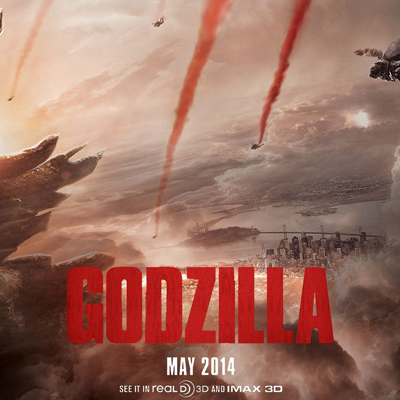
NEW DELHI: Gareth Edwards’ Godzilla, the newest iteration of the famed movie monster, is the tallest version to ever grace the screen coming in at 355 feet with a tail that spans 550 feet.
It took 50,000 polygons to create the 3D model of thrashing purveyor of doom, which should explain the incredible amount of data that he is made of: it would take a single computer 445 years to render the monster.

That means that one computer would have had to start work in 1569 to complete the film in time for its release.
The film has several other impressive statistics that bode well for the upcoming film’s visual effects.
According to The Creators Project, the $160-million blockbuster had 762 visual effects crewmembers working on its 960 shots. Four of those CGI artists were specifically tasked with creating Godzilla’s scales, and it took them six months to do so.
The filmmakers were also keen on making Godzilla’s bark as big as his bite. His roar was recorded through a speaker array blasting 100,000 watts of sound in order to make it feel more real. The sound reverberates over three miles.
The film stars Bryan Cranston in his first leading gig since Breaking Bad’s finale.
The Movie Bit has made a video compiling all the statistics from both the production of the feature, as well as the nitty-gritty measurements of what this monster would look like if it were actually real.
Godzilla may only have 60 teeth, but each canine is about 4-feet-long and 2-feet wide—about the size of a thin (and Hattori Hanzo-sharp) boogie board. It would take 90,000 tons of water to fill the monster to its brim.
The Monster’s Stats:
Height: 355ft (108.2m) Godzilla’s towering height in the 2014 film—the tallest onscreen incarnation ever
Tail: 550ft 4in (167.74m) Total length of Godzilla’s spiked tail
Volume: 89,724 m3 Godzilla’s total volume in the 2014 film
Volume: 90,000 tons Godzilla’s volume if filled with water
Teeth: 1.73ft (53cm) Depth of Godzilla’s canine teeth at their widest point
Teeth: 3.51ft (1.07m) Length from the root to the tips of Godzilla’s canine teeth
Teeth: 60 Teeth in Godzilla’s mouth
Roar: 3 miles (4.83km) Approximate distance Godzilla’s roar reverberates. (100,000W Power of the 12-foot-high, 18-foot-wide speaker array from which the sound designers blasted Godzilla’s roar to record the sound in a “real world” context)
Feet: 58ft (17.66m) Total width of Godzilla’s feet across the widest point
Feet: 60ft (18.18m) Length of Godzilla’s footprint from toe to heel
Fins: 89 Dorsal fins spiking down Godzilla’s back from his head to the tip of his tail


Hollywood
Paramount eyes $24bn Gulf support to fund Warner Bros Discovery merger: Reports
Sovereign funds line up funding as media giants chase streaming scale
NEW YORK: Paramount Skydance is in talks to secure nearly $24 billion in equity commitments from Gulf sovereign wealth funds to support its planned takeover of Warner Bros. Discovery, according to a WSJ report.
The funding push comes as Paramount Skydance advances its proposed $110 billion deal for Warner Bros. Discovery, which carries an equity valuation of $81 billion and is expected to close in the third quarter of 2026.
At the heart of the financing plan are three major Gulf investors. Saudi Arabia’s Public Investment Fund is expected to contribute roughly $10 billion, while the Qatar Investment Authority and Abu Dhabi-based L’imad Holding are likely to make up the remainder.
Crucially, the proposed investments are structured as non-voting stakes. This means the Gulf backers would not have direct control in the combined entity, a move designed to ease regulatory concerns in the United States. Paramount executives reportedly do not expect the deal to trigger scrutiny from bodies such as the Committee on Foreign Investment in the United States or the Federal Communications Commission.
If completed, the merger would bring together a formidable portfolio of entertainment and news assets, including CNN and CBS. The combined entity aims to better compete in a fast-evolving media landscape where streaming platforms are steadily pulling audiences away from traditional television.
The deal reflects a broader shift in global media, where scale is increasingly seen as essential to survive the streaming wars. By pooling content libraries, technology and distribution, Paramount Skydance and Warner Bros. Discovery are betting on size and synergy to drive future growth.
The involvement of deep-pocketed Gulf investors also underscores the growing role of sovereign wealth in shaping global media consolidation, particularly at a time when high-value deals demand equally large financial backing.
With shareholder votes and regulatory milestones still ahead, the proposed tie-up remains one of the most closely watched media deals of the year. If it clears the final hurdles, it could redraw the competitive map of the global entertainment industry.






