News Broadcasting
A forgettable 10 days for the news broadcasting industry

KOLKATA: This past week saw news channels become the breaking news. It all started with the Mumbai police commissioner Param Bir Singh claiming to have uncovered a TRP rigging con. Matters came to a head when BARC decided to hit the pause button on weekly news channel ratings.
Here are the important twists that shook the industry:
The Mumbai Police on 8 October announced they have busted a TRP manipulation racket involving Republic TV and two Marathi channels. Hansa Research CEO Praveen Nijhara said the agency conducted an investigation with BARC which resulted in Hansa Research filing an FIR against an ex-employee who was engaged in some wrongdoing.

However, the Arnab Goswami-led Republic TV denied any allegation of manipulating BARC data and accused the police of “personal vendetta." The channel stated that its name was not mentioned in the FIR for this case at all.
At the same time, the TV viewership measurement body BARC also re-emphasised that it has always remained accurate and faithful. The News Broadcasters Association (NBA) called an emergency meeting of its board to discuss the TRP manipulation case.
There was also a rumour that India Today had been named in the FIR as indulging in TRP gaming. But they issued a clarification: the channel’s name was mentioned but there was no evidence or witnesses to substantiate the allegation.
Soon after, top executives from two major brands said that they would pull out advertisements from channels that promote toxic content. Many other brands came forward in support of the decision, reminding news channels about the need to improve content quality. The NBA also praised the move saying it would help the fight against toxic content.
As the controversy dragged on, BARC board proposed that it’s technical committee (TechComm) would review and augment the current standards of measuring and reporting the data of niche genres, to improve their statistical robustness and to significantly hamper the potential attempts of infiltrating the panel homes. This exercise would cover all Hindi, regional, English news and business news channels with immediate effect.
Therefore, starting with the ‘news genre’, BARC decided to cease publishing the weekly individual ratings for all news channels during the exercise. The process is expected to take around eight-twelve weeks including validation and testing under the supervision of Tech Comm. BARC will continue to release weekly audience estimates for the genre of news by state and language.
Following the announcement, NBA came forward in support of BARC. It is of the view that the suspension is an important step in the right direction. On the other hand, the News Broadcasters Federation (NBF), objected to the decision to pause audience estimates (ratings) of news channels.
Meanwhile, a regulatory intervention could strike the industry soon. The parliamentary standing committee on information technology that met on Thursday to discuss ‘ethical standards in media coverage’ seemed none too happy about the TV viewership measurement system. It opined that the current metric of measuring audience estimates through TRPs is flawed, that the technology it depends on is outdated, and that the system is easily manipulated.






News Broadcasting
CNN-News18 to host Fury in the Gulf conclave on West Asia crisis
Three-hour summit to unpack geopolitical fallout and impact on India
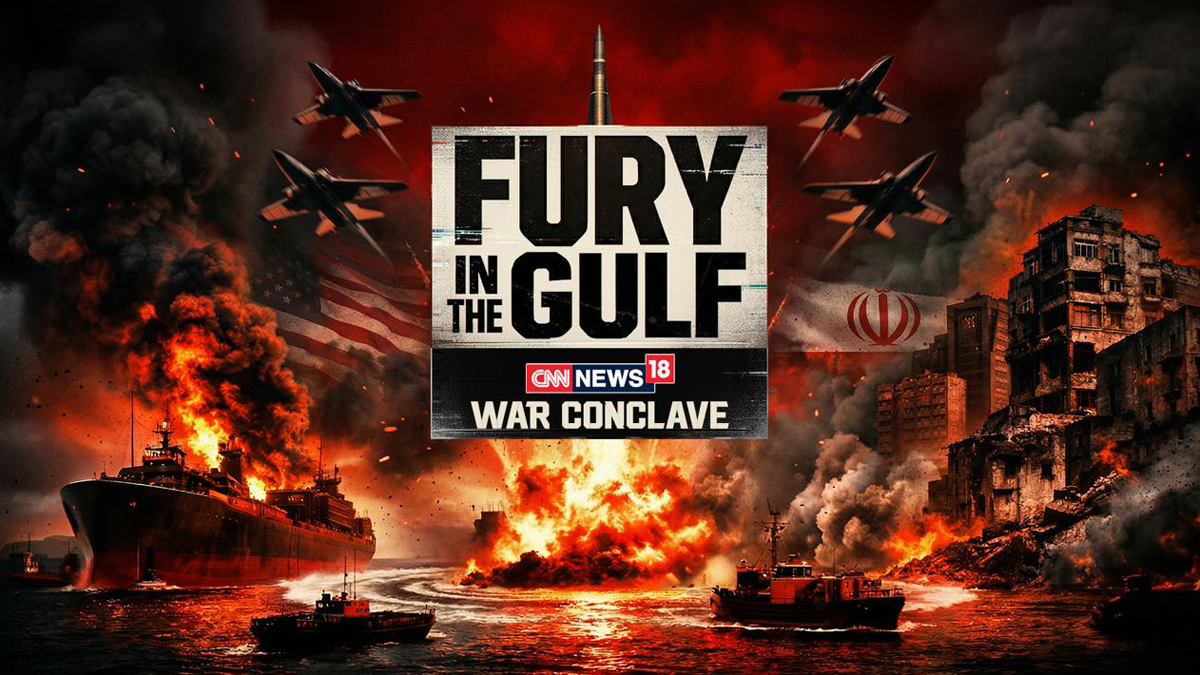
MUMBAI: CNN-News18 is set to host a special three-hour broadcast, Fury in the Gulf – War Conclave, on April 7, aiming to decode the escalating West Asia crisis and its far-reaching implications for India.
Scheduled from 4:00 PM to 7:00 PM, the conclave comes at a time when tensions between Iran and the United States are reshaping global geopolitics and triggering economic uncertainty. With India’s deep energy ties, trade links and large diaspora in the Gulf, the developments carry significant domestic relevance.
Built around the theme ‘Conflict, Consequences, and The Future,’ the programme will feature six curated sessions combining one-on-one interviews and panel discussions. The focus is to cut through the clutter and offer viewers a clearer understanding of the fast-evolving situation.
Key sessions include ‘Diplomacy in Times of War’ featuring Shashi Tharoor, and ‘World After the Iran Conflict’ with voices such as Ram Madhav, Reuven Azar, representatives from the European Union and the Iranian Deputy Envoy. Another session titled ‘Another Dunkirk?’ will bring together K. J. S. Dhillon and Jitin Prasada among others.
CNN-News18 editorial affairs director Rahul Shivshankar said, “In times of war, clarity becomes the most powerful tool. Fury in the Gulf – War Conclave brings together credible voices to address the questions and confusion that arise amid an overwhelming influx of information.”
He added that the initiative is aimed at delivering “facts, perspective, and insight” at a time when misinformation can easily cloud public understanding.
Echoing the sentiment, CNN-News18 CEO– English and business news Smriti Mehra said the conflict marks a defining global moment, with consequences that extend well beyond the region. She noted that the conclave seeks to present the crisis with “depth, nuance and responsibility” so audiences can better grasp its real-world impact.
As geopolitical tensions continue to dominate headlines, the conclave positions itself as an attempt to bring order to the noise, offering viewers a structured, insight-led look at a complex and rapidly shifting global situation.






