Hindi
A Centenary of experimentation through cinema is highlight of FD festival

NEW DELHI: This weekend, Mumbaiikars will see a feast of experimentation through a Retrospective of Indian Cinema and Video over the last one hundred years.
The Retrospective from 28 to 30 June has been curated by Ashish Avikunthak & Pankaj Rishi Kumar and will be screened at the Films Division in Mumbai.
The prints of the films have been acquired from the Directorate of Film Festivals, the Film and Television Institute of India in Pune and the Satyajt Ray FTI in Kolkata, and the National Film Archives of India in Pune.

The retrospective is a celebration of the spirit of experimentation in Indian cinema; from the moment of its mythic birth in 1913 with D G Phalke’s Raja Harishchandra to the innovative and challenging moving images produced and exhibited today. The films brought together chart the transformation of experimentation, from early celluloid spectacle to contemporary digital adroitness. The curatorial impetus of this retrospective is marked by an emphasis on tracing the chronology of experimentation through the history of Indian cinema. The idea of ‘experimentation’ rather than the experimental or avant-garde drives the films put together in this retrospective.
These films challenge modernity by generating a contemplative dialogue with Indian history, tradition, culture and religion. They are not driven by the desire to just produce an aesthetic artifact, but rather to create a discursive field.
It was more than 50 years later after Phalke’s experiments that the first experimentation occurred within the bureaucratic confines of the postcolonial Films Division in the late 1960s. These films challenged the formidable account of the sturdy developmentalist state and shattered its edifying edifice. These were the first cinematic critiques of the nation – forthright, trenchant and angry. S. Sukhdev, Pramod Pati, S.N.S Shastry and K.S. Chari among others, radically altered the possibilities of cinematic representation in India.
 Soon the films funded by Film Finance Corporation (later NFDC) ushered the much-celebrated rise of the Indian New Wave. Mani Kaul’s Uski Roti (1969) and Kumar Shahani’s Maya Darpan (1972) spearheaded profound experimentation in this period. However, the foundation of this continued experimentation was first established in the venerable FTII under the tutelage of Ritwik Ghatak. The section “Experiment in School” is a small curatorial gesture towards the pioneering works produced in its confines along with the later established SRFTI.
This retrospective is conceptualised as a conversation with cinema, cinematic experience and cinematic thought.
Screening Schedule
Day One — 28 June, 2013, Friday
28 June, 2013, Friday: 10.00-12.30 pm
Session 1: Experiments with Gods
A collection of early films made by D.B. Phalke between 1913 and 1935.
Raja Harishchandra (20 mins, 35mm, 1913)
Lanka Dahan (9 mins, 35mm, 1917)
Shree Krishna Janma (6 mins, 35mm, 1918)
Kaliya Mardan (50 mins, 35mm, 1919)
28 June, 2013, Friday: 1.15- 3.45 pm
Session 2: Experiment in the State
The earliest robust experimentation in India begins under the imaginative tutelage of Jean Bhownagary while he headed the Films Division in 1965.
Explorer – Pramod Pati (7 mins, 35mm, 1968)
Claxplosion – Pramod Pati (2 mins, 35mm, 1968)
Trip – Pramod Pati (4 mins, 35mm, 1970)
Koodal – Tyeb Mehta (16 mins, 35mm, 1970)
Abid – Pramod Pati (5 mins, 35mm, 1972)
Child on a Chess Board – Vijay B. Chandra (8 mins, 35mm, 1979)
India ’67 – S. Sukhdev (57 mins, 35mm, 1968)
28 June, 2013, Friday 4.00- 6.45 pm
Session 3: Experiment in the School
FTII became the centre of experimentation soon after it was headed by Ritwik Ghatak. Since then, along with SRFTI, it has continued to be a space where experimentation in cinema occurs on a regular basis.
Bodh Vriksha – Rajan Khosa (27mins, 35mm, 1987)
In Short – Kuntal Bhogilal (18 mins, 35mm, 1996)
Repentance – Rajeev Raj (22 mins, 35mm, 1997)
Chinese Whisper – Raka Dutta (27 mins, 35mm, 2006)
Airawat – Renu Savant (10mins, 35mm, 2011)
Moon Stars Lovers – Jessica Sadana (10 mins, 35mm, 2012)
28 June, 2013, Friday, 7.00- 9.00 pm
Session 4: Feature Film 1- Kanchan Seetha (87 mins, 35mm, Malayalam, 1977)
by G. Aravindan
Ending the first day with Malayali Filmmaker Aravindan’s masterpiece Kanchan Seetha – an invigorating reworking of the Ramayana, which opens up a new discourse on Indian cinema and its interpretation of religion. This film is located here to be in direct conversation with Phalke’s cinema of religiosity.
Day Two
29 June, 2013, Saturday
29 June, 2013, Saturday, 10.00- 12.30 pm
Session 1: Experiment with the Documentary
Documentary has been a formidable cinematic form in India. Although most innovation has occurred in world of the political, it has also has seen serious experimentation.
I am Twenty S.N.S. Sastry (20 mins, 35mm, 1967)
Tales from Planet Kolkata – Ruchir Joshi (38 mins, 16mm, 1993)
Brahma, Vishu, Shiva – R.V. Ramani (19 mins, video, 1999)
Presence – Ekta Mittal & Yashaswini B. R.- Behind the Tin Sheets Project (18 mins, HD, 2012 )
Nayi Kheti – Pallavi Paul (11 mins, HD, 2013)
29 June, 2013, Saturday, 1.15- 3.45 pm
Session 2: Experiments with the Short Film
This section focuses on films that were made outside the institutional framework of the state or the school and can be understood as independent experimentations, especially focusing on the short form.
Nirjan Godhuli – Santosh Gour (10 mins, 16mm, 1993)
Dust – Ashim Ahulwalia (20 mins, Video, 1993)
Atreyee – Shumona Goel (17 mins, Video, 2003)
Straight 8 – Ayisha Abraham (17 mins, Video, 2005)
Bare – Santana Issar (11 mins, Video, 2006)
Jan Villa – Natasha Mendonca (20 mins, HD, 2010)
29 June, 2013, Saturday, 4.00- 6.00 pm
Session 3: Experiments in the Gallery
In the last decade, the Art Gallery has become a vibrant space for exhibiting moving images mostly in the form of video art and installations. This section attempts to grasp with this new space of experimentation. It has been co-curated by Mortimer Chatterjee.
Record/Erase – Nalini Malani (10 mins, Video, 1996 )
Flight Rehearsals – Kiran Subbaiah (7: 26 mins, Video, 2007)
Dance Like Your Dad – Hetain Patel (6:15 mins, Video, 2009)
There is a spider living between us – Tejal Shah (7 mins, Video, 2009)
Man Eats Rock – Nikhil Chopra & Munir Kabani (22:11 mins, Video, 2011)
The First Dance – Hetain Patel (7:44 mins, Video, 2012)
Forerunner – Sahej Rahal (12:16 mins, Video, 2013)
File not Found – Jaret Vadera (1 min, Video, 2013)
29 June, 2013, Saturday, 6.30-8.30 pm
Session 4: Feature Film 2- Satah Se Uthata Aadmi (114 mins, 35mm, Hindi, 1980) by Mani Kaul
Mani Kaul is known mostly for his landmark film Uski Roti. However, the Satah Se Uthata Aadmi is probably his most conceptually rigorous and philosophically penetrating work. Based on the writings on Muktibodh, this film is a deep philosophical articulation on postcolonial modernity.
Day Three
30 June, 2013, Sunday
30 June, 2013, Sunday 10.00- 12.30 pm
Session 1: Experiments with Animation
Co-curated by Nina Sabnani, this section examines experimentation in the world of animation. We shall look at the way in which animation directors have pushed the boundaries and expanded its scope in process, materials, concepts and its functions.
30 June, 2013, Sunday 1.30- 4pm
Session 2: Cinema of Prayoga
The invocation of “prayoga” from Sanskrit etymology is Amrit Gangar’s radical move of rejecting the Western art historical terminology of experimental and avant-garde to explain the specific nature of experimentation in Indian cinema. This section has been co-curated by Amrit Gangar.
And now i feel i don’t know anything – Kabir Mohanty (35 mins, 35mm, 2001)
Egotic World – Vipin Vijay (21 mins, 35mm, 2002)
Kramasha – Amit Dutta (22 mins, 35mm, 2006)
Vakratunda Swaha – Ashish Avikunthak (22 mins, HD, 2010)
21 Chitrakoot – Sambhavi Kaul (9 min, HD, 2012)
30 June, 2013, Sunday 4.15- 6.30 pm
Session 3: Feature Film 2- Kaal Abhirati (120 mins, 35mm Bengali, 1989) by Amitabh Chakraborthy.
This is a significant film of this era that explores the complexities of human existence within the confines of Indian philosophy and discourse. This film, along with Kamal Swaroop’s Om Dar Badar, is the link between experimentations by Mani Kaul and Kumar Shahni and contemporary articulations by the ‘Cinema of Prayoga’ filmmakers.
30 June, 2013, Sunday, 6.45- 8 pm
Session 4: Round Table Discussion
The curators along with filmmakers, discussants and respondents will have a Round Table conversation teasing out and putting on the board the major points/ issues /debates that have been brought out in these three days.




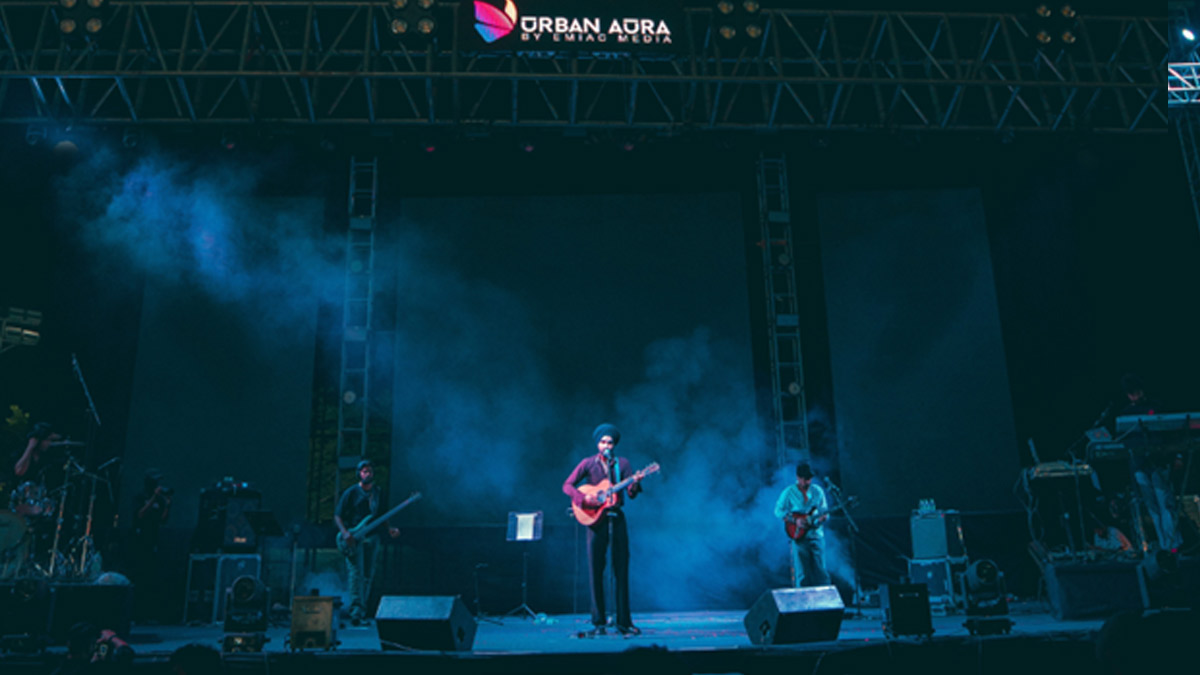
In a music industry that often rewards speed, spectacle, and instant recall, Navjot Ahuja’s journey feels refreshingly different. His story is not built on noise. It is built on patience, discipline, emotional honesty, and a quiet commitment to becoming better with every passing year. After 14 years of struggle, learning, performing, and writing, Navjot stands today as an artist whose success has not changed his centre. If anything, it has only made his purpose clearer.
For Navjot, music has never been about chasing fame alone. It has always been about expression. It is about writing more truthfully, singing more skillfully, understanding himself more deeply, and becoming a kinder human being in the process. That rare clarity is what gives his journey its beauty.
Where It All Began: A Writer Before a Singer
Indian singer and songwriter Navjot Ahuja’s musical journey began in the most familiar of places: school assemblies. But even then, what was growing inside him was not only the desire to sing. It was the need to write.
Long before he saw himself as a performer, he had already discovered the emotional release that writing offered him. For Navjot, words became the first true channel for feeling. Songwriting came before singing because writing was the only way he could let emotions flow through him fully. That inner pull shaped his artistic identity early on.
Like many young musicians, he sharpened his craft by creating renditions of popular songs.
Those experiments became his training ground. But the turning point came in 2012, when he wrote his first original song. That moment did not just mark the beginning of songwriting. It marked the beginning of self-definition.
A Calling He Did Not Chase, But Accepted
What makes the latest Indian singer-songwriter Navjot’s story especially compelling is the way he describes his relationship with music. He does not frame it as a career he aggressively pursued. In his own understanding, music was not something he chose. It was something that chose him.
There was a time when he imagined a very different future for himself. He wanted to become a successful engineer, like many young people shaped by ambition and conventional expectations. But life had a different script waiting for him. During his college years, around 2021, music entered his life professionally and began taking a firmer shape.
That shift was not driven by image-building or industry ambition. It came from acceptance. Navjot embraced the fact that music had claimed him in a way no other path could. That sense of surrender continues to define the artist he is today.
An Artist Guided by Instinct, Not Influence
Unlike many singers who speak openly about idols, icons, and musical role models, Navjot’s creative world is built differently. He does not believe his music comes from imitation or inherited influence. He listens inward.
He has never considered himself shaped by ideals in the traditional sense. In fact, he admits that he does not particularly enjoy listening to songs, especially his own. His decisions as a songwriter and singer come from instinct. He writes what feels right. He trusts what his inner voice tells him. He positions his music according to what he honestly believes in, not what trends demand.
That creative independence gives his work a distinct emotional sincerity. His songs do not feel calculated. They feel alive.
The Long Years of Invisible Struggle
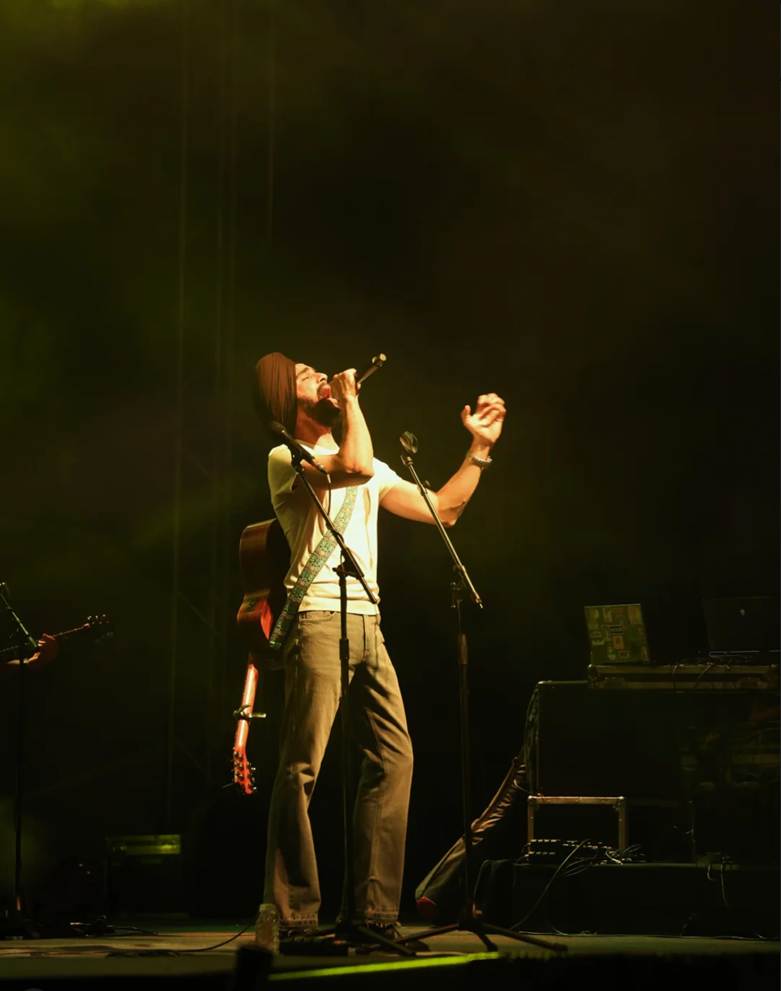
Every artist carries a chapter of struggle, and Navjot’s was long, demanding, and deeply formative. One of the biggest challenges he faced was building continuity as the best new indian singer songwriter in an era where musical collaboration is increasingly fluid.
For emerging singers, especially those trying to build with a band, consistency can be difficult. Instrumentalists today have more opportunities than ever to freelance and perform with multiple artists. While that growth is positive and well deserved, it can make things harder for singers who are still trying to establish a steady team and sound around their work.
For Navjot, one of the most difficult phases came during 2021 and 2022, when he was doing club shows almost every day. It was a period of relentless performance, but not always personal fulfillment. He was largely singing covers because clubs were not open to original songs that audiences did not yet know.
For a new Indian singer and songwriter, that can be a painful compromise. To perform constantly and still not have the freedom to share your own voice requires not just resilience, but restraint.
“Khat” and the Grace of Staying Unchanged
After 14 years of effort, Navjot’s new love song Khat became a defining milestone. Professionally, he acknowledges that the song changed how society viewed him as a musician. It strengthened his place in the public eye and altered his standing in meaningful ways.
Yet personally, he remains unchanged.
That is perhaps the most striking part of his story. Navjot says his routine is still the same. His calm is still the same. His writing process is still the same. He does not want success or failure to interfere with the purity of his art. For him, emotional detachment from public outcomes is essential because the moment an artist becomes too attached to validation, the writing begins to shift.
His joy comes not from numbers, but from the attempt. If he has tried to improve his skill today, if he has written his heart out more honestly than before, then he is at peace.
Growth, Not Glory, Remains the Real Goal
Even now, Navjot is not consumed by labels such as singles artist, performer, or digital success story. His focus remains deeply personal. He wants to sing better. He wants to play instruments better. He wants to understand himself more. And he wants to become a kinder person.
That is what makes Navjot Ahuja’s journey so moving. It is not simply the story of a musician finding recognition. It is the story of an artist who continues to grow inward, even as the world begins to look outward at him. In an age obsessed with applause, Navjot reminds us that the most meaningful success often begins in silence, honesty, and the courage to remain true to oneself.






