News Headline
2020: The year of the government intervention


KOLKATA: 2020 was the year when the government – both the Centre and states – pushed back against the media. Strongly. Whether it was mainline television or print or digital or social media, authorities showed that they could deal a heavy hand against the fourth estate and digital platforms. Everyone would have to comply or get caned.
The year ended with the government bringing digital media under the ministry of information and broadcasting and imposing foreign equity restrictions in such ventures. 26 per cent is the overseas investment limit, the department of promotion of industry & internal trade under the ministry of commerce & industry stated in a clarification in October 2020. Ventures involved in aggregating, writing, distribution, streaming of news or current affairs on websites, apps or other platforms will have to bring down the foreign investment to 26 per cent and get government approvals for the same by October 2021, have an Indian CEO, a majority of Indians on their boards, security clearances for foreign personnel employed or contracted for more than 60 days.
The big news for the year was the ban on all things Chinese following the muscle flexing and murder of Indian armed forces by China on its border at Ladakh with India. More than 267 Chinese apps were shown the door over six months. The biggest of these was the user generated content platform TikTok which had more than 200 – million users in India. PUBG, La – a game which has more than a few million followers amongst India’s uh-uh gamers, was also blocked overnight.

But the natives were not to be denied their favourite entertainment: under the government’s make in India initiative: a slew of local apps were spawned TakaTak, Roposo, Bolo Indya, Chingari. While not many could better the TikTok algorithm, they quickly signed on millions of subscribers hungry for a platform to show case their short form video talent. And at the time of writing FAU-G was slated to be released in India.
The Central government and the industry regulator Telecom Regulatory Authority of India ( TRAI) intervened in the case of the industry monitoring agency Broadcast Audience Research Council (BARC) as well. At the beginning of the lockdown, TRAI issued a consultation paper suggesting an overhaul of the measurement body saying there were concerns over the neutrality and reliability of the existing system. It recommended various measures like equal representation from broadcasters, brands, agencies, increased sample size, independent members on board including technological experts.
Later in the year, as the credibility of the rating agency had come under greater question with the TRP scam unfolding, the ministry of information and broadcasting notified a committee to be headed by Prasar Bharati CEO Shashi Shekhar Vempati to assess the existing rating system for TV channels. The government emphasised there is need to have a fresh look at the guidelines particularly keeping in view the latest TRAI recommendations.
Along with linear TV, the new age streaming platforms also came under the government's watchful eagle eye. Throughout the year, a number of PILs have been filed against a number of online premium shows for allegedly hurting “Indian sensibilities”. Several conservative groups have carried out social media campaigns with #boycott or #censor trends. Amid increasing pressure, OTT platforms were already pushed to form self-regulation codes. But self-censorship did not save the day as the government rejected the code asking to restructure Igniting the censorship fear further, the government notified to bring all online content under MIB.
The latest notification stated that films and audio-visual programmes made available by online content providers, news and current affairs content on online platforms will come under MIB’s purview. Just a few days post announcement, media reports floated that is it preparing to file a petition seeking the transfer of all court cases in India against OTT platforms to the supreme court. The ministry notified the Punjab and Haryana High Court about its move to approach the apex court.
At the same time, social media giant Facebook also faced regulatory pushback this year. After a report on the Wall Street Journal that claimed the platform did not comply with hate speech rules properly, it came under tremendous political scrutiny. While some officials were blamed for having a ruling party bias, union law minister Ravi Shankar Prasad alleged that Facebook employees had abused top ministers on record and their certain ideologies led to an inherent bias.
Facebook India vice president and managing director Ajit Mohan was summoned by a Delhi Assembly panel which was examining Facebook’s role to curb hate speech in connection with the Delhi riots of February 2020. Later, the platform moved to the court to challenge the summons issued by the Delhi government. The parliamentary standing committee on information technology, headed by senior Congress leader Shashi Tharoor also called Facebook officials multiple times to examine if there was any political bias.
At the state level too, governments bared their fangs. While Delhi government got into a tussle with Facebook, the conflict between Maharashtra government and Republic TV editor-in-chief Arnab Goswami also deepened. Goswami was arrested in the Anvay Naik suicide case by Mumbai Police which was widely seen as a politically motivated move. He also moved to Bombay High Court questioning the police’s decision to re-investigate the case. Finally, Goswami was granted bail by the apex court. Even, many other state governments were also criticised for arresting dissent journalists during the pandemic.
Despite numerous protests by certain ecosystem players, the government stayed put on rolling back or making any changes to the NTO 2.0, to which many had complained.





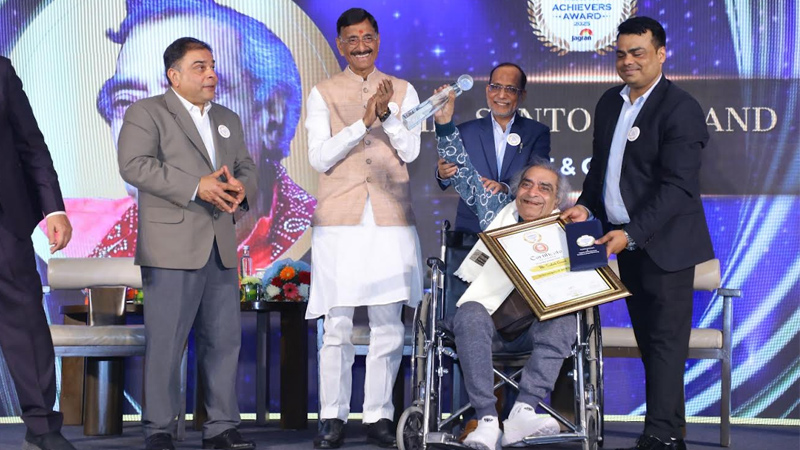
NEW DELHI: Hamdard Laboratories gathered a cross-section of India’s achievers in New Delhi on Friday, handing out the Hakeem Abdul Hameed Excellence Awards to figures who have left their mark across healthcare, education, sport, public service and the arts.
The ceremony, attended by minister of state for defence Sanjay Seth and senior officials from the ministry of Ayush, celebrated individuals whose work blends professional success with a sense of public purpose. It was as much a roll call of achievement as it was a reminder that influence is not measured only in profits or podiums, but in people reached and lives improved.
Among the headline awardees was Alakh Pandey, founder and chief executive of PhysicsWallah, recognised for turning affordable digital learning into a mass movement. On the sporting front, Arjuna Awardee and kabaddi player Sakshi Puniya was honoured for her contribution to the game and for pushing women’s participation onto bigger stages.
The cultural spotlight fell on veteran lyricist and poet Santosh Anand, whose songs have echoed across generations of Hindi cinema. At 97, Anand accepted the honour with characteristic humility, reflecting on a life shaped by perseverance and hope.
Healthcare honours spanned both modern and traditional systems. Manoj N. Nesari was recognised for strengthening Ayurveda’s place in national and global health frameworks. Padma shri Mohammed Abdul Waheed was honoured for his research-backed work in Unani medicine, while padma shri Mohsin Wali received recognition for his long-standing contribution to patient-centred care.
Education and social development also featured prominently. Padma shri Zahir Ishaq Kazi was honoured for decades of work in education, while former Meghalaya superintendent of Police T. C. Chacko was recognised for public service. Goonj founder Anshu Gupta received an award for his dignity-centred rural development initiatives, and the Hunar Shakti Foundation was honoured for empowering women and young girls through skill development.
The Lifetime Achievement Award went to former IAS officer Shailaja Chandra for her long career in public healthcare and governance, particularly in the traditional systems under Ayush.
Speaking at the event, Hamdard chairman Abdul Majeed said the awards were a tribute to those who combine excellence with empathy. “These awardees reflect Hakeem Sahib’s belief that healthcare, education and public service must ultimately serve humanity,” he said.
Minister Seth struck a forward-looking note, saying India’s young population gives the country a unique opportunity to become a global destination for learning, health and wellness by 2047.
The ceremony also featured the trailer launch of Unani Ki Kahaani, an upcoming documentary starring actor Jim Sarbh, set to premiere on Discovery on 11 February.
Instituted in memory of Unani scholar and educationist Hakeem Abdul Hameed, the awards have grown into a national platform that celebrates those building a more inclusive and resilient India. For one evening at least, the spotlight was not just on success, but on service with substance.






