iWorld
2020 and the debate of TV vs digital video

MUMBAI: It’s been two decades since I have been listening, participating and speaking about the great inflection point in digital in India. Every five years with some growth in consumer usage of the internet, adoption of platforms and growing online shopping, the claim used to only add fuel. Further to tons of VC money going into start-ups, every third person used to say “Digital Inflection Point” has truly arrived in India.
So, I am kind of tired of this whole story, but wait… 2020 has been that year when the digital inflection point truly arrived. I say it with total conviction, data points and authority as a media agency head, based on what I am seeing on the ground and how clients have responded to the turning landscape and massive consumer behavior changes happening around us.
VCs invest in ideas for the future and 90 per cent of them fail but the ones that stick, address the growing need when the inflection point arrives, solving a problem and making the business viable because the business has a purpose. Purpose of disseminating information or spreading joy through entertainment or enabling healthcare in remote places or bringing education to people’s homes or even making financial transactions simpler.

This would not be possible without the technology that could back the high-speed internet required for addressing any of the purposes I have mentioned above. India as a country still has affordability issues. So, when the high-speed internet became affordable, consumer intent naturally swayed towards cheaper options, making viewability of content agnostic in nature.
That is the only true reason why I believe that the inflection point has arrived and it’s here to not just stay but grow exponentially. Now how does that translate to comparing digital video to TV?
TV is known as the idiot box and it will continue to be one. Mobile will be known as an idiot brick, but these idiotic products are the only mediums that enable communication with the latter being a two-way mechanism of communication at the highest levels.
Indians have consumed AV since the early fifties through movies, which was later followed by terrestrial TV, then the VCR wave settled in with cable TV from early nineties. Indians are emotional and therefore anything that brings in emotional highs has always worked, which is why entertainment as an industry is so large in India. Naturally, the progression would be towards affordable consumption, and high-speed internet did just that. It enabled consumption of the ever-growing content from emotional to comedy to dramatic to romantic to edgy to sexual to the next level. Add to that social media, where you could be a star with millions of followers generating income for the content you create, made the medium even more adoptable for creators and stickier for the consumers.
We haven’t even spoken about cricket here!
Add to that the pandemic in 2020, every aspect of consumption soared, and India’s favorite pastime now made its entry into the idiot bricks or what we call mobile phones. Everything changed and I am going to quickly explain how the growth of mobile internet actually grew the market and did not take away the share from TV.
I recently met an MD of a very large financial institution with my team and we started talking about how OTT is taking away the share from TV in terms of reach and I begged to differ with him because the data that I am narrating shows that not only has TV grown in size and consumption, but digital video has also in fact created newer audiences, thereby breaking the myth of OTT taking over TV in the future.
India is the second largest television market in the world with 195 Million households of which 80 per cent are paid C&S channels, which makes it a subscription market for TV at around 156 million as per Statista. As per BARC, TV viewership grew by 10 per cent in 2020 over 2019 (consolidated – urban + rural, Jan – Nov). India is looking at a projected revenue generation of $3 billion from TV as an industry through advertising in FY 21.
Despite the growth in C&S, digital advertising is going to overtake TV advertising in FY 21 with a projected revenue of $3.5 billion. As per KPMG, the 20 per cent drop from projections is largely the dismal economic situation due to the Covid 19 pandemic but what that did was to enable the massive adoption of OTT and grew the whole base of paid subscribers which will cross 40 million in FY 21 fueling the growth of digital advertising northwards.
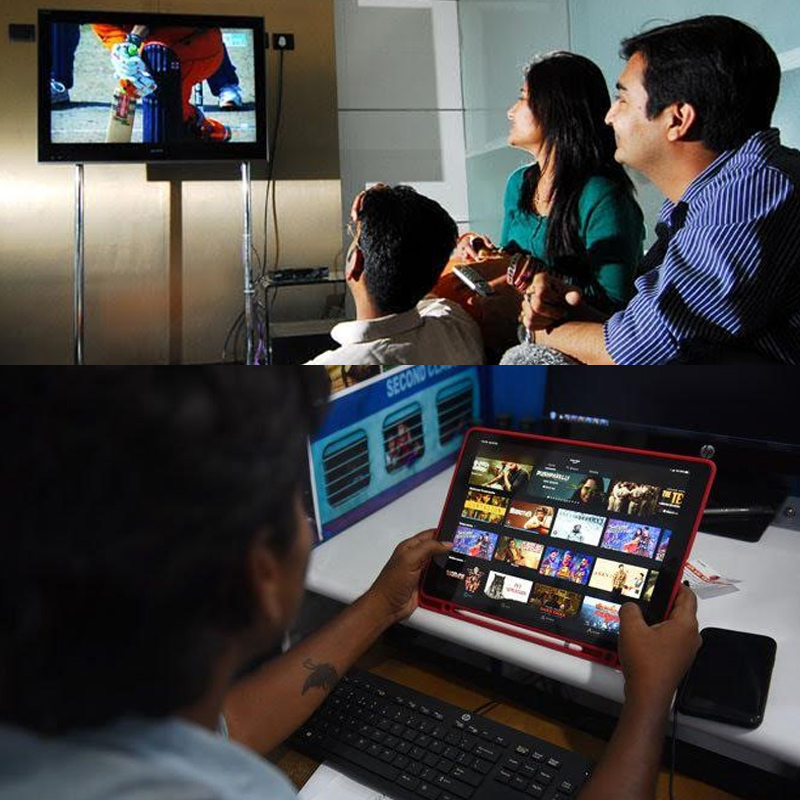
There are standing examples of these claims with the release of movies on OTT and its subsequent adoption, IPL on Hotstar which saw unprecedented growth reaching over 300 million handheld devices and the ever-growing connected TV story, for which Samsung is gearing up to provide solutions on advertising in the near future.
With an average of $10 in subscriptions, we are estimating paid subscription revenue on OTT to be around $400M which clearly indicates that consumers are willing to pay to consume more and more video content. Players to watch out for in 2021 will be YouTube, Hotstar, Instagram Reels, Netflix, Amazon Prime, Zee5, SonyLiv, MX Player, Ullu, Hoichoi and SunNext.
If TikTok makes a comeback then it will see tremendous adoption but there are players like Josh who are taking that space up quickly, so while OTT consumption will continue to grow, social video sharing apps are also now part of the same mix when it comes to content consumption if it has to be classified as digital video.
So, my humble submission therefore is, “inflection point” has truly arrived in 2020 and was accelerated by the pandemic, which is why in FY 21, digital advertising will overtake television advertising and while TV is seeing growth in viewership, it is declining in revenues due to the drop of 20 per cent in advertising spends again due to the pandemic that impacted our economy on the whole. TV and OTT are parts of the same coin as heads and tails are. Hence, while we see OTT adoption is growing at a rapid pace, it will necessarily not replace TV anytime soon. OTT behavior is in silos except when on connected TVs and television viewing is typically family driven, again a big difference in consumer behavior thus making a niche for both these mediums which is why I continue to believe that OTT as disruption has increased the overall size of audience and not taken away share from TV. Therefore, both these mediums will co-exist in India for some time to come, period!
(The author is managing partner at DDB Mudra Group and is responsible for the media business. )







iWorld
Netflix launches Playground app to bring games and interactive play for kids
Interactive games, fresh series and returning favourites aim to blend play and learning
MUMBAI: Netflix is doubling down on kids entertainment with a major expansion of its family-friendly slate, anchored by the launch of Netflix Playground, a new interactive app designed to blend play with storytelling.
Aimed at children aged eight and under, the app allows young viewers to engage with familiar characters from shows like Peppa Pig and Sesame Street through games and activities, all within a safe, ad-free environment. The app is already live in select markets and is set for a wider global rollout later this month.
The move signals Netflix’s push to turn passive viewing into a more immersive experience. Alongside the app, the platform has unveiled a mix of new titles and returning favourites, including fresh episodes of Trash Truck and The Creature Cases, as well as a new preschool series, Young MacDonald. Popular titles such as CoComelon Lane and Ms. Rachel are also set to expand with new seasons and episodes.
Speaking about the strategy, Netflix vice president of animation series and kids and family tv John Derderian said, “We’re building a world where kids can not only watch their favourite stories, they can step inside them and interact with their favourite characters. We’re creating a seamless destination for discovery, learning, and play.”
The expanded offering also leans heavily on convenience for parents, with offline access, curated content, and robust parental controls designed to ensure a safe and tailored viewing experience. Features such as profile locks, content filters, and activity tracking aim to give families greater control while allowing children to explore independently.
The timing is strategic. Kids and preschool content has emerged as one of Netflix’s most-watched categories in recent years, making it a key battleground in the streaming wars. By combining games, education, and entertainment, the platform is looking to deepen engagement and build long-term loyalty among younger audiences.
With interactive play now joining its content arsenal, Netflix is not just streaming stories but inviting kids to step inside them, turning screen time into something a little more hands-on.






