News Broadcasting
2014: Industry hopes high

MUMBAI: A year of risks and several speed breakers has come to an end and the horizons of the New Year are already showing a silver lining. Every member of the media and entertainment industry in the country is expecting magical spells to be cast in 2014. Let’s look at what to anticipate from the next 12 months.
Starting with the Ministry of Information and Broadcasting (MIB) the eagerly awaited forecast is that phase I and II of Digital Addressable System (DAS) are completed without any obstructions or delays. And phases III and IV flow smooth like silk so that India can boast of a digitised environment by the next New Year (2015).

Broadcasters are expected to follow content norms as well as invest more in creating better content. With general elections coming up, channels are set to heat up their mercury levels to prove who is the best in the genre. Prasar Bharati is getting Rs 3,500 crore funding from the MIB which should enable modernisation of the pubcaster with high quality production and better quality shows as well as yield more revenues and profit.
The Telecom Regulatory Authority of India (TRAI) has had a tough time this year dealing with the multi-system operators (MSOs), local cable operators (LCOs), direct-to-home (DTH) players, aggregators and broadcasters. With the year seeing too many conflicts between all the players of the industry, TRAI will surely want that all the stakeholders to find solutions. The regulator will also hope for smooth role out of DAS phase III and IV and gross billing to begin for phase I and II.
The regulator that recently came out with a consultation paper to curb monopoly of MSOs will be looking at curtailing excessive power clout and monopolies in every sector of television – cable TV, content aggregation and broadcasting.
Moreover, TRAI will hope that all that it started in 2013 sees light in 2014. One such initiative is the acceptance of the ad cap regulation by all broadcasters. It would also hope that the quality of service for TV viewers is consistently kept in mind by broadcasters. Last, but not the least, it would also want that the new regulations for DTH licences are passed.
Broadcasters are the happiest of the lot as they see better revenues flowing in the next year as digitisation pans out across India. Channels will be embroiled in acquiring or producing new innovative shows that will give them an edge over their competitors. Generating better TVTs either through new shows or hit movies that will help them dislodge the leader. Broadcasters are seeing much potential in the soon to be launched new rating system Broadcast Audience Research Council (BARC) which is expected to show their performances in true light.
However, nothing is as eagerly awaited as the fate of the ad cap that is currently hanging mid air with the Delhi High Court. Even as some broadcasters are more than happy with the 12 minute advertising air time limit, most of them feel it is a hindrance to their functioning and will hamper their revenues if put to effect before digitisation is complete. At the same time they are also looking forward to strike better deals with their advertisers as well as better syndication for their programmes in the international market providing them a global exposure.
As digitisation sets in, distribution should also be easier and transparent. Even as channels will engage with domestic DTH and cable TV platforms for better carriage and revenue share deals, they will look forward to reaching out to more audiences through international platforms.
Bottomlines will be managed better as broadcasters will control their costs by trimming their staff, scaling up their programming, enhancing distribution and controlled marketing. With several TV channel licenses being stuck with the MIB, new channels are waiting to see the light of the day in 2014.
The cable TV sector which has undergone immense change in 2013, will surely expect great returns in the coming year. One thing which they will be hoping for is internet on cable TV to spread thereby generating VAS revenues. Their long wish list will also include reduction in import duties on STBs, preferably subsidies from the government for promoting digitisation, higher ARPUs from consumers, better synchronisation with other MSOs, fair entertainment and service tax – preferably service tax holidays, fair charges for usage of public utilities for distribution, higher carriage fees from broadcasters, lower content costs from broadcasters and aggregators and longer licensing norms from I&B. The year also witnessed a few announcements by the MSOs for acquiring content for their cable channels. These MSOs will hope that the venture is successful and helps them reap benefits with better revenue flow.
On the DTH front, operators have high hopes that the tag of having the lowest ARPUs in the world will fade away as higher ARPUs will flow in. The dream is that content costs will be lowered which will help them generate better revenue as well as invest in getting innovative technologies for the future of TV and mobile.
Digitisation for DTH players means high net addition of subscribers and lower churn in 2014 as some subscribers will shift from cable TV to the DTH platform. Leading players want to offer better packages to their subscribers with more availability of channel which can only come with more capacity bandwidth that is in the hands of the Indian Space Research Organisation (ISRO).
At the production front, 2013 wasn’t really big on experiments; at least as far as TV shows are concerned. Only a few like the adaptation of the international format – 24, the reality show Connected Hum Tum and Comedy Nights with Kapil made some difference in programming. As we usher in to the New Year, we obviously expect more newness in the shows produced. But for that, the production houses need to get respite from the issues that keep bothering them.
One of the major issues that cripple the production houses is the restrictions by broadcasters on the budget per episode. And then, it is for sure that the production houses in the New Year would wish for a better budget approval from the broadcasters. Another issue is the ever-rising demands of the crew unions, including the technicians and other crew members. The crew members have not just been fighting for a raise in their salary but have demanded many other privileges that have kept the production houses on their toes. Because of this, some production houses prefer working outstation than in Mumbai in order to cut down on costs.
The year 2013 witnessed a really interesting case — there was a huge hoopla when an actor portraying the popular character, Gutthi (from Comedy Nights with Kapil on Colors) decided to pull out of the show over few differences with the production house and the channel. While the actor said the right to the character belonged to him, the production house thought otherwise. By the end of the year, nobody got a clear picture about who really owned the character. However, we hope the New Year doesn’t just bring clarity to this particular case but the industry also works in order bring a system in place about the entire intellectual property rights (IPR).
The wish list for the New Year would never end. But some of the other desires that the production houses perish include better following of discipline by the actors on the set, better creative people with improved ideas that grabs the eyeballs, less interference from broadcasters in the production process and of course, many more new and intriguing shows that not only brings more viewers but good business that would improve the functioning of entire industry.
The expectations are high but they aren’t too farfetched. With time, discussions and a little bit of a push we can see much of it becoming a reality.




News Broadcasting
DNPA names Puneet Gupt chairperson; Anant Goenka steps in as vice chairperson
Leadership reset comes as digital news grapples with AI-led disruption and policy battles
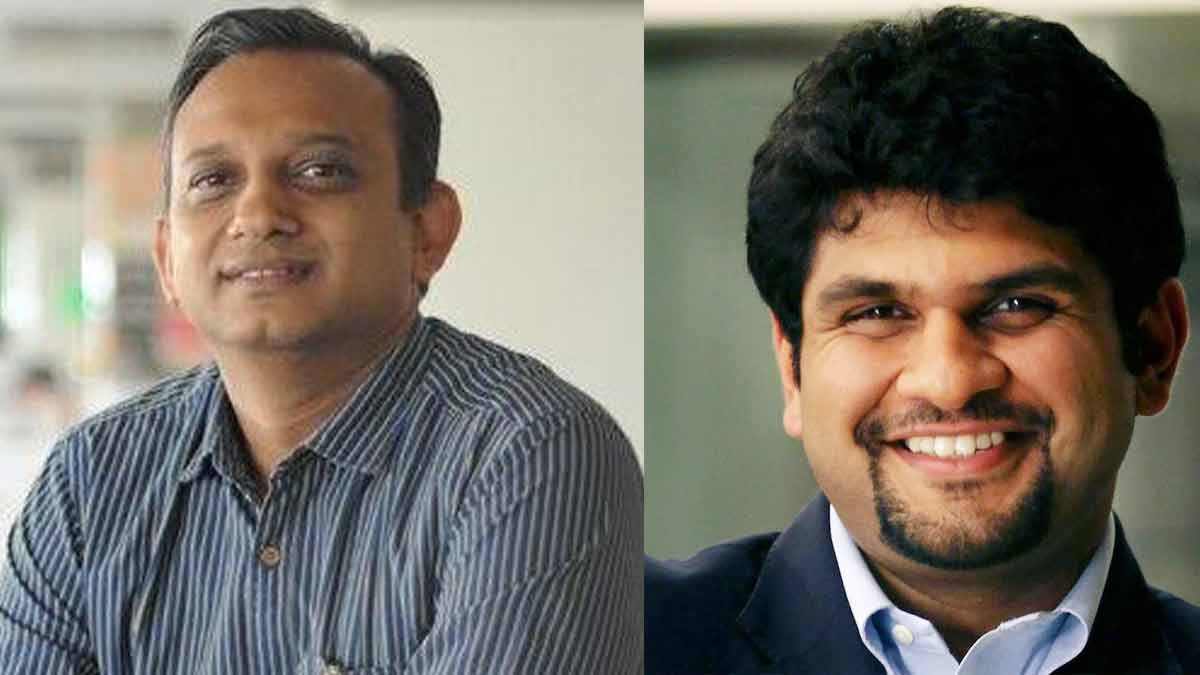
NEW DELHI: India’s digital news lobby has a new pilot at the helm just as the industry stares down its next big disruption. The Digital News Publishers Association (DNPA) has named Puneet Gupt, chief operating officer at Times Internet, as chairperson, succeeding Mariam Mammen Mathew at the end of her two-year term.
Gupt, who previously served as vice chairperson, steps into the top role with deep familiarity of the body’s agenda, ensuring a smooth transition at a time when publishers are recalibrating for an AI-shaped future. Anant Goenka, executive director at The Indian Express Group, has been appointed vice chairperson, while Dhruba Mukherjee continues as treasurer.
“Digital news publishers are navigating one of the most consequential shifts the industry has ever seen, from how content is discovered to how it is valued in an AI-driven world. DNPA’s role as a unified industry voice has never mattered more. My focus will be on ensuring that our members are not just responding to these changes, but actively contributing to the policy and industry frameworks around them,” said Puneet Gupt.
Goenka underscored the need for collective action as the sector evolves. “This is an important moment for DNPA and for the digital news publishing industry in India. There is real value in publishers coming together, sharing perspectives, and building a common understanding of the opportunities and challenges ahead. I look forward to contributing to that effort with DNPA members,” he said.
Outgoing chairperson Mariam Mammen Mathew called it a timely transition. “It has been a privilege to lead DNPA at such a pivotal time for the industry. I am confident that under Puneet’s leadership, DNPA will continue to grow in influence and impact. I wish the new team every success,” she said.
Sujata Gupta, secretary general and chief executive officer at DNPA, framed the shift as a springboard for the next phase. “This transition marks an exciting new chapter for DNPA. We have spent the last few years building the credibility, relationships, and frameworks that allow us to engage meaningfully on the issues that matter most to our members. With Puneet and Anant at the helm, we are well-positioned to translate that foundation into tangible outcomes, on policy, on fair commercial frameworks, and on ensuring that digital news publishing remains a sustainable and vital part of India’s information ecosystem,” she said.
The leadership rejig lands at a moment when digital publishers are battling shifting discovery patterns, platform power and the economics of AI. For DNPA, the message is clear: the next phase will be less about reacting and more about shaping the rules of the game.








