Hindi
Status Check: Indian cinema in FY-2015

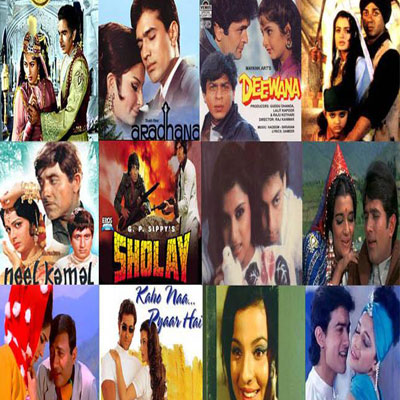
BENGALURU: Calendar year 2014 can be considered to some extent the start of an inflection point for Indian cinema vis-?-vis the discerning and rapidly maturing movie audiences in India. 2015 and 2016, will tell if the change will be tectonic or not. As compared to 2013, there were fewer movies with ‘good content’ in 2014. The revenues generated by the top ten grossing films in 2014 grew just 2.4 per cent over 2013 and 11.3 per cent over 2012. Movie consumption patterns in India have been changing over time.
The Indian film industry is heavily dependent on theatrical releases, which contribute the lion’s share of revenue to the film industry, which was 74 per cent in 2014 and 73.3 per cent projected for 2015 by the FICCI-KPMG Media and Entertainment Industry Report 2015 (FICCI 2015 Report). In 2019, theatrical releases are projected to contribute 71.1 per cent to the revenue as per the report.

Even small budget movies are now being released across more screens than ever before, more prints are distributed digitally, which enable simultaneous release in 3000 to 4500 screens at one go in a blitzkrieg of sorts. This in turn has resulted in shortening of the box office window. The once rare phenomenon of movies grossing Rs 200 crore within the first week of release is now being witnessed.
Also, 2014 could well be termed as the year of introspection and reality check for the Indian film industry. During the year, the gap between box office collection of the top ten films and the contributions from the rest of industry widened further according to the FICCI-2015 Report. While the category ‘A’ films with top league actors continued to perform well at the box office, the same was not true for films, which lacked both strong content and a big actor to attract audiences to the theatres. With rising average ticket prices (ATP) and availability of alternate entertainment platforms, the audience today seems to have become more discerning when it comes to watching films in theatres.
Domestic theatrical revenue was stagnant in 2014 as compared to 2013. In 2014, domestic theatrical revenue grew 9.9 per cent as compared to two years ago in 2012. Cable and Satellite (C&S) rights contributed about 11.7 per cent to the overall revenues mentioned in the FICCI 2015 Report, in 2013, C&S rights contribution was 12.1 per cent. The FICCI 2015 report projects C&S rights revenue will contribute 11.4 per cent in 2015, and 15.5 per cent by 2019 to overall revenue generated by the Indian film industry.
The revenue generated by C&S rights fell 3.3 per cent in 2014 as compared to 2013, as compared to the growth of 20.6 per cent that 2013 witnessed as compared to 2012. C&S revenue in 2014 grew 16.7 per cent when compared to 2012.
Movie content consumption including music (in a theatre and any kind of screen) will probably change for ever, and, probably for the betterment of the ecosystem. The lacklustre performance of two revenue generating segments in 2014 – theatrical and television or cable and satellite rights says it all.
Another barometer would be the performance of the some major exhibitors. Exhibitors have been expanding their footprint across the country either via mergers and acquisitions (M&A) or opening new properties. Entities such as Carnival Cinemas expanded with acquisitions of Reliance’s Big Cinemas, HDIL’s Kulraj Broadway and Star Gaze’s Glitz Cinemas. PVR has opened nine new properties with 50 screens in FY-2015 (year starting 1 April, 2014 and ending 31 March, 2015) and currently operates a network of 467 screens spread over 105 properties in 43 cities across the country. What’s more, PVR plans to continue its aggressive expansion plans and intends to add approximately 60-70 screens in FY-2016. On the other hand, Inox added 38 screens to its existing kitty with the acquisition of Satyam Cinemas.
PVR touts itself as being amongst the top 10 cinema companies in the world with respect to admissions per screen. During the year ended 31 March, 2015, the multiplex chain entertained 5.92 crore patrons in its cinemas, down by one per cent as compared to the previous year owing to disappointing box office performance of the movie content released during the year.
In PVR’s case, the adverse impact of poor content quality to an extent was mitigated by improvement in non-box office revenues.
In the case of Inox Leisure, footfalls in FY-2015 increased 6.5 per cent to 4.11 crore from 3.86 crore in FY-2014. Footfalls increased by 2.4 per cent to 0.84 crore in Q4-2015 from 0.82 crore in Q4-2014, but declined 15.2 per cent as compared to the 0.99 crore in the previous quarter. Occupancy in FY-2015 declined to 25 per cent from 28 per cent in the previous year and declined from 23 per cent in Q4-2014 to 20 per cent in Q4-2015. In FY-2015, Inox gross box office (GBO) increased 12.4 per cent to Rs 670.38 crore (66.1 per cent of TR) as compared to the Rs 596.56 crore (68 per cent of TR) in FY-2014.
However, the first and second quarters of 2016 have seen tremendous results from some movies, with blockbusters that have had box office collections of Rs 300 crore plus. Multiplex houses such as PVR and Inox saw a manifold increase in their profit after tax (PAT) in Q1-2016 as compared to the corresponding year ago quarter or the loss reported by some in the Q4-2015.
So are Indians movie mad?
Considering the 1000+ movies that the Hindi film industry along with its regional counterparts like Telugu, Tamil, Bengali etc churn out, and the way many deify film stars, most people seem to think so. It is also fair to assume that this would be construed as a fact if one were to consider the super successes of movies in the recent past that have grossed between Rs 100 – 300 crore plus at the box office in India.
In addition, also vital to consider are revenues from other streams like international box office, music, television, digital etc. What’s more, companies like Eros International and Yash Raj Films have also begun to explore and exploit the long revenue generating tail.
One must also consider India’s population numbers along with its cultural and language diversity. While many Indians do consume cinema on the big screen, but considering the long revenue tail that smart Indian production houses have begun to exploit, it should come as no surprise that more cinema is consumed on the small screens like the idiot box, mobile or other digital devices rather than theatrically.
A digression – two languages namely Tamil and Telugu movies, along with Bollywood, churn out about two thirds of the movies produced every year. How the splitting of Andhra Pradesh into two separate states affects the fortunes of the Telugu M&E industry remains to be seen.
It is a fact that celebrities from the celluloid screen as well as the cricket field make a huge impact on the average Indian. One has to just look at the mega deals that many actors sign for brand endorsements. For example, Bollywood A lister Aamir Khan charges an eye-popping Rs 5 crore a day as per a report in the Economic Times. He, however, doesn’t sign up for every brand that knocks on his door.
At the same time, there are regions in the country where actors are worshipped, especially in the south Deccan and coastal areas. Many actors have been raised to the level of gods, with temples that deify them. Actors such as the late Dr Rajkumar in Karnataka have iconic status, and even a perceived slight to them or their memory can result in violence, chaos and mayhem. No one has the kind of pull that a person like him or an NTR or an MGR had. Maybe Rajnikanth is the only exception to the rule today, but that superstar is so down to earth and humble that most Indians would love to have many more like him.
MG Ramchandran, NT Rama Rao, Nara Chandra Babu Naidu and Jayalalitha Jayaram have been elected as Chief Ministers of their states on the back of fame earned on the celluloid screen. Bengali filmdom’s young superstar Dev is a member of the Indian Parliament, while Tamil leading actor Vijaykanth has formed his own political party.
However, it must be noted that elevating the actor to the level of ultimate power (in terms of politics) has been limited to the four southern states, and, except for J Jayalalitha, and Chandra Babu Naidu, all the other superstars that attained the mantle of Chief Minister have demised. Yes, a lot of actors from the film and television world have been and will probably continue to get elected to various levels of power at the national, state or local level, but that trend seems to be dying with the deaths of the doyens. The only one that has bucked the trend in the recent past is Smriti Irani, who is currently the Minister of Human Resources Development in the Government of India.
To some extent, a small portion of Indians can be considered more than just movie buffs, but certainly not crazy.
Conclusion
The Indian craze for cinema isn’t any different than that of its oriental brethren. Jackie Chan is an example. For a movie to be a hit in India, say gross Rs 300 crore (super hit) assuming that the ticket price of Rs 100 each, it has to be watched by just three crore pair of eyes, which is just 2.4 per cent of the country’s population (125.2 crore as per 2013 estimates). This hypothesis begs the questions as to how many super hits do we churn out in a year? 10, 20? How many are just ‘average’? And how many flops?
Despite the 1000 or so films that are churned out every year, just about 10-20 per cent of the population watch movies in a theatre. Today, movies have to compete with other modes of entertainment such as cricket and other major sports that are slowly eroding the number of cinema theatrical eyeballs. The FICCI 2015 Report says that only two of the twenty movies that were released during the Indian Premier League (IPL) 2014 performed well at the box office. Release windows have to be tweaked to festival and long school holidays. This results in a number of releases planned for during the second and third quarter (July – December), with Q3 generally being the most prosperous one for the theatrical movie industry players.
Many of the top performing movies have done well on television, as the attached TAM data for the years 2010, 2011, 2012, 2013, 2014 as week 1-27 of 2015 indicates.
Maybe it is the Indian movie makers that are mad, considering the hopeless, poor or timid story lines, the sad efforts at attempting slapstick and other types of comedy, of wildly aping the west with sequels of movies that were non-starters in the first place.
Even today, theatrical revenue is the largest contributor to the revenue from a movie. Many of the major chains are looking at tier I and II cities for organic expansion, besides takeover of the smaller and regional players. The FICCI 2015 Report brings out some startling differences between the US and India. India has just seven screens per ten lakh population as compared to the 125 screens per ten lakh people that the US has, with the geographical distribution of screens more skewed in favour of urban India.
It now remains to be seen how the movies released in the last four months of 2015 fare at the box office. Diwali and Christmas being favourite release windows for filmmakers, some fireworks at the box office are likely to be in store.
Disclaimer: Many of the ideas and opinions expressed expressed in this report are personal views of the author with which Indiantelevision.com does not agree or disagree in part or full.






Hindi
India’s telecom subscribers cross 1.32 billion in February 2026
Broadband base swells past 1.06 billion as Jio and Airtel tighten grip on the market.

MUMBAI: India’s telecom sector is ringing in steady growth once again adding millions of new connections every month while the race for broadband supremacy continues to heat up like a fiercely contested cricket match. According to the latest data released by the Telecom Regulatory Authority of India (TRAI) on 1 April 2026, the total telephone subscriber base in the country reached 1,321.31 million at the end of February 2026. This marked a net addition of 7.31 million subscribers during the month, translating into a monthly growth rate of 0.56 per cent.
Wireless subscribers (including mobile and Fixed Wireless Access) stood at 1,273.31 million, registering a net addition of 6.97 million and a growth rate of 0.55 per cent. Within this, urban wireless connections grew to 730.75 million (growth 0.70 per cent), while rural wireless subscribers reached 542.56 million (growth 0.35 per cent).
Wireline subscribers, though much smaller in scale, showed slightly faster growth. The total wireline base increased to 47.99 million, with a net addition of 0.34 million and a monthly growth rate of 0.70 per cent. Urban areas continued to dominate wireline connections with a share of 89.41 per cent.
Overall tele-density in India improved to 92.66 per cent. Urban tele-density stood at 150.68 per cent, while rural tele-density edged up to 60.02 per cent.
The broadband subscriber base crossed a significant milestone, reaching 1,059.05 million at the end of February 2026. This reflected a healthy net addition of 6.33 million subscribers and a monthly growth rate of 0.60 per cent from January’s figure of 1,052.72 million.
Segment-wise, mobile wireless access continued to drive the majority of growth with 996.52 million subscribers. Fixed Wireless Access (including 5G FWA) added 16.51 million, while wired broadband stood at 46.02 million.
Reliance Jio Infocomm Ltd. maintained its commanding lead with 519.64 million broadband subscribers. Bharti Airtel Ltd. followed with 364.14 million, Vodafone Idea Ltd. with 129.36 million, Bharat Sanchar Nigam Ltd. with 28.70 million, and Atria Convergence Technologies Ltd. with 2.38 million.
Together, these top five players command a massive 98.60 per cent share of the total broadband market.
In the wireless (mobile) segment, private operators continued to dominate with 92.59 per cent market share, leaving public sector undertakings (BSNL and MTNL) with just 7.41 per cent.
Out of the total 1,257.29 million wireless (mobile) subscribers, 1,177.60 million were active on the peak Visitor Location Register (VLR) date, representing an impressive 93.66 per cent activity rate. Bharti Airtel led in this metric with 99.42 per cent of its subscribers active.
Meanwhile, 14.47 million subscribers submitted requests for Mobile Number Portability (MNP) in February, indicating healthy competition and customer churn across zones.
While urban areas still lead in absolute numbers, rural connectivity is slowly catching up. Rural wireless tele-density stood at 59.46 per cent, compared with the much higher urban figure of 142.32 per cent.
Fixed Wireless Access using 5G technology also showed promising traction, growing to 11.93 million subscribers. Reliance Jio and Bharti Airtel are the primary players driving this segment.
The data paints a picture of a maturing yet still rapidly expanding telecom ecosystem. With total telephone subscribers now well past the 1.32 billion mark and broadband users comfortably above 1.06 billion, India continues to solidify its position as one of the world’s largest and most dynamic digital markets.
From bustling city streets to remote villages, more Indians are staying connected than ever before proving that when it comes to telecom, the country’s appetite for growth shows no signs of hanging up anytime soon.






