Hindi
Dil Dhadakne Do: Alas, not the box office registers

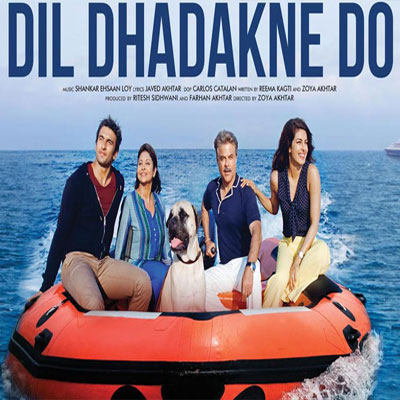
MUMBAI: Dil Dhadakne Do is a sort of Page 3 of a high end Delhi group of Punjabi families; just about every family having a bunch of not very glorious secrets. It is kind of Nukkad (a very popular, classic TV serial that captivated the Doordarshan audience between 1986-88). This serial brought together characters from a chawl settlement together at the street corner and told their stories.
Dil Dhadakne Do brings together a group of some upper-class Delhi Punjabi families together on a cruise ship; only here, even as this friendly group demonstrates bonhomie and love, each one is hiding a dagger behind the back. Bitching and backstabbing is the way of life here. Because, just about every participant in the jamboree represents a dysfunctional family.

Anil Kapoor is a self-made man rolling in millions. His favourite pastime is to tell and retell his success story. His wife, Shefali Shah, like all such rich men’s wives, has little to do except deck up and meet with the wives of other such rich men. These women thrive in bitching about and badmouthing anyone of them who is not around. Anil has pinned all his hopes on his only son, Ranveer Singh, whom he expects to take over as the next boss of his company. He has married his daughter off to Rahul Bose, a Mumbai businessman.
The group has internal jealousies and enmities, all hidden behind a mask of smile. All the women know whose husband is having an affair with whom but are never willing to accept stories in their own backyard.
Imagine what can happen when a horde of such couples come together on a cruise for a fortnight with nowhere to escape.
Despite his ego and posturing, Anil is on the verge of bankruptcy. He can’t repay loans to banks, his products have become substandard. He urgently needs to infuse funds to save his enterprise and, more so, his face in the ‘society.’ However, this does not stop Anil from putting on a show. Though he or Shefali are never seen communicating without rancour, if at all, he decides to celebrate his wedding anniversary on a cruise ship, all expenses paid by him for all his friends.
Anil’s two friends, Parmeet Sethi and Manoj Pahwa, are sworn enemies and the initially discarded Parmeet needs to be added to the list of invitees, feels Shefali. For Parmeet is loaded. His only daughter, Ridhima Sud, has been humiliated when her prospective fiancé failed to attend their engagement ceremony. It was headline news in Delhi Times, it is said (a Times of India subsidiary, Junglee Pictures happens to be the partner in this film venture with Excel Entertainment). Hence, it is tough to find another suitor for her despite Parmeet’s riches. After all, marriage market is not OLX.
But, Anil has a plan. He counts on a barter with Parmeet: Ranveer as a dulha for Ridhima against 49% stake by Parmeet in to Anil’s sinking company to salvage it. But, in matters of heart, business deals don’t figure. While Ranveer has already fallen in ‘love at first sight’ with Anushka Sharma, a contracted singer/dancer on the cruise ship, Ridhima has found her mate in Parmeet’s sworn enemy, Pahwa’s son, Vikrant Massey.
More skeletons come out of the closet as Priyanka declares she could never come to love her husband, Bose. In fact, she still has the hots for Farhan Khan whom her father sent to US to study to keep him away from her. Anil’s business tours were all about his womanising. Farhan is the son of Anil’s manager and not quite a match for Priyanka in Anil’s society. But, to add to the drama, he arrives on the cruise too to grace the occasion and add some life to it.
The young ones prove to be smarter than their elders as they make a pact. Ridhima spends her nights in Vikrant’s cabin while Ranveer spends his with Anushka but Ridhima and Ranveer agree to pretend to be in love. The deal almost materialises as Ranveer’s engagement will be announced with Ridhima against Parmeet’s buying of 49% stake in Anil’s company. To use the social media phrase, ‘it’s complicated’!
Come out of the mess they all do, I mean writers and director with an easy solution that all such films adopt: everybody sees sense suddenly and it is QED!
Dil Dhadakne Do risks filling the screen with numerous characters but you never figure out who is what, especially to Anil and his family or in the story; in a while you stop caring. Except for a concerned few of them, none of the character is defined or explained. The script is loose and the director takes a 1970s art film approach like filming inconsequential scenes endlessly. Also, in an unsuccessful attempt to justify the horde of characters, limelight jumps from one character to another abruptly.
What kind of script have you worked on where a lot of the story is in verbal narration and, not funnily, told by Anil’s family dog (voice of Aamir Khan)! The first half looks warped in a balloon; even if the film moves a bit in the second half, it is partly and haphazardly towards the end. Dialogue is mundane.The editing needs a second go. Music as in songs are no help. Background fails to pace up the proceedings. Visually, the film is good.
Nobody really has a role to make an impact. However, Ranveer and Priyanka emerge the best triers. Anushka’s romantic pairing with Ranveer is a miscast and against public perception. Anil Kapoor’s character is sketched as an illogical one… with his throwing a lavish cruise party while facing bankruptcy to his shouting spree at his grown up children don’t make sense. Shefali is convincing. Farhan is good and so is Vikrant. Rest fill the bill.
Dil Dhadakne Do is an expensive project by all standards with a cast not known to justify such a cost besides being limited in content. Its theatrical take home will be limited to a great extent.
Producers: Ritesh Sidhwani, Farhan Akhtar with Junglee Pictures
Director: Zoya Akhtar
Cast: Anil Kapoor, Priyanka Chopra, Ranveer Singh, Anushka Sharma, Shefali Shah, Farhan Akhtar, Rahul Bose, Ridhima Sud, Parmeet Sethi,Zarina Wahab, Vikrant Massey, Mohan Pahwa, Aamir Khan (as Pluto’s voice)






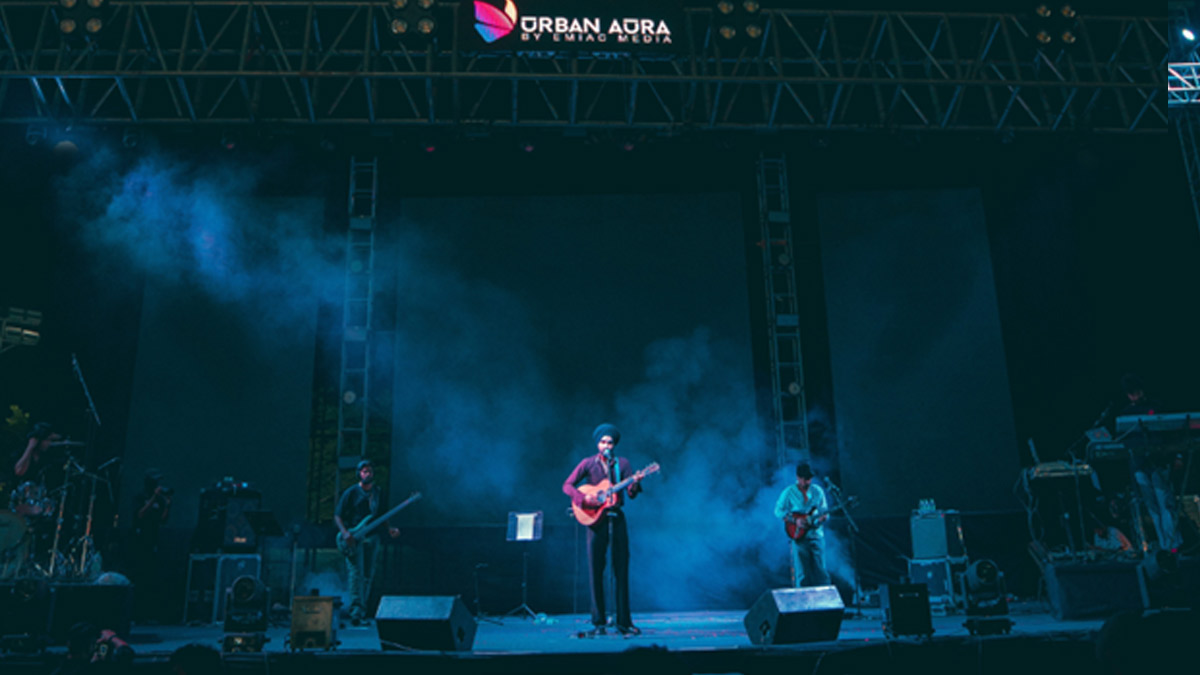
In a music industry that often rewards speed, spectacle, and instant recall, Navjot Ahuja’s journey feels refreshingly different. His story is not built on noise. It is built on patience, discipline, emotional honesty, and a quiet commitment to becoming better with every passing year. After 14 years of struggle, learning, performing, and writing, Navjot stands today as an artist whose success has not changed his centre. If anything, it has only made his purpose clearer.
For Navjot, music has never been about chasing fame alone. It has always been about expression. It is about writing more truthfully, singing more skillfully, understanding himself more deeply, and becoming a kinder human being in the process. That rare clarity is what gives his journey its beauty.
Where It All Began: A Writer Before a Singer
Indian singer and songwriter Navjot Ahuja’s musical journey began in the most familiar of places: school assemblies. But even then, what was growing inside him was not only the desire to sing. It was the need to write.
Long before he saw himself as a performer, he had already discovered the emotional release that writing offered him. For Navjot, words became the first true channel for feeling. Songwriting came before singing because writing was the only way he could let emotions flow through him fully. That inner pull shaped his artistic identity early on.
Like many young musicians, he sharpened his craft by creating renditions of popular songs.
Those experiments became his training ground. But the turning point came in 2012, when he wrote his first original song. That moment did not just mark the beginning of songwriting. It marked the beginning of self-definition.
A Calling He Did Not Chase, But Accepted
What makes the latest Indian singer-songwriter Navjot’s story especially compelling is the way he describes his relationship with music. He does not frame it as a career he aggressively pursued. In his own understanding, music was not something he chose. It was something that chose him.
There was a time when he imagined a very different future for himself. He wanted to become a successful engineer, like many young people shaped by ambition and conventional expectations. But life had a different script waiting for him. During his college years, around 2021, music entered his life professionally and began taking a firmer shape.
That shift was not driven by image-building or industry ambition. It came from acceptance. Navjot embraced the fact that music had claimed him in a way no other path could. That sense of surrender continues to define the artist he is today.
An Artist Guided by Instinct, Not Influence
Unlike many singers who speak openly about idols, icons, and musical role models, Navjot’s creative world is built differently. He does not believe his music comes from imitation or inherited influence. He listens inward.
He has never considered himself shaped by ideals in the traditional sense. In fact, he admits that he does not particularly enjoy listening to songs, especially his own. His decisions as a songwriter and singer come from instinct. He writes what feels right. He trusts what his inner voice tells him. He positions his music according to what he honestly believes in, not what trends demand.
That creative independence gives his work a distinct emotional sincerity. His songs do not feel calculated. They feel alive.
The Long Years of Invisible Struggle
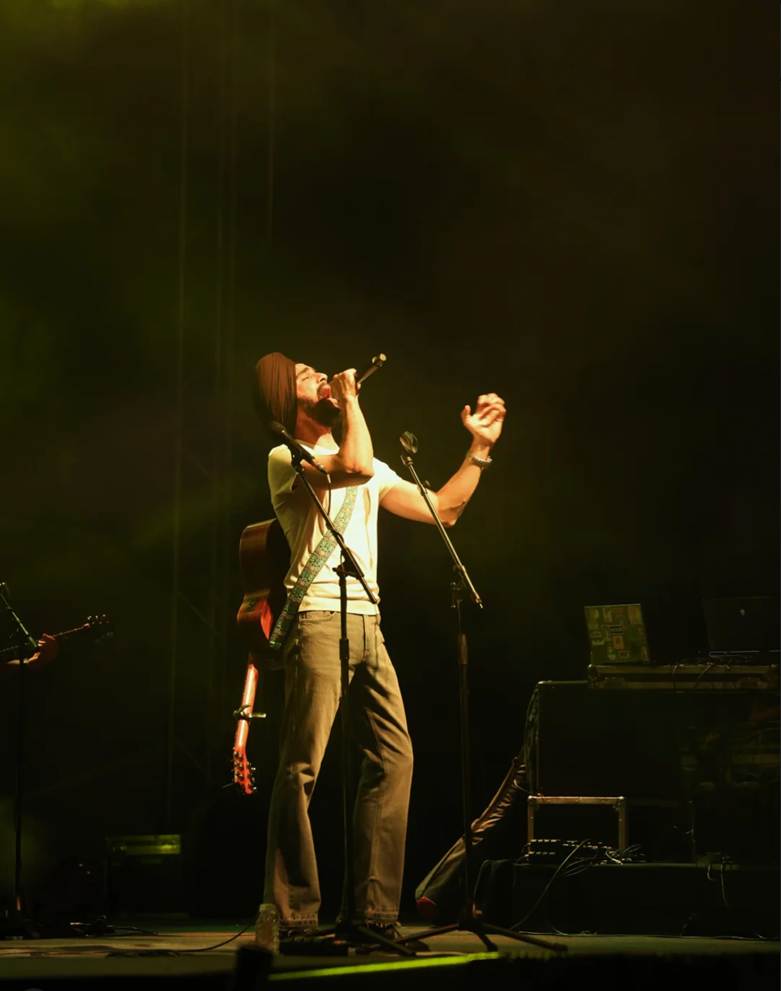
Every artist carries a chapter of struggle, and Navjot’s was long, demanding, and deeply formative. One of the biggest challenges he faced was building continuity as the best new indian singer songwriter in an era where musical collaboration is increasingly fluid.
For emerging singers, especially those trying to build with a band, consistency can be difficult. Instrumentalists today have more opportunities than ever to freelance and perform with multiple artists. While that growth is positive and well deserved, it can make things harder for singers who are still trying to establish a steady team and sound around their work.
For Navjot, one of the most difficult phases came during 2021 and 2022, when he was doing club shows almost every day. It was a period of relentless performance, but not always personal fulfillment. He was largely singing covers because clubs were not open to original songs that audiences did not yet know.
For a new Indian singer and songwriter, that can be a painful compromise. To perform constantly and still not have the freedom to share your own voice requires not just resilience, but restraint.
“Khat” and the Grace of Staying Unchanged
After 14 years of effort, Navjot’s new love song Khat became a defining milestone. Professionally, he acknowledges that the song changed how society viewed him as a musician. It strengthened his place in the public eye and altered his standing in meaningful ways.
Yet personally, he remains unchanged.
That is perhaps the most striking part of his story. Navjot says his routine is still the same. His calm is still the same. His writing process is still the same. He does not want success or failure to interfere with the purity of his art. For him, emotional detachment from public outcomes is essential because the moment an artist becomes too attached to validation, the writing begins to shift.
His joy comes not from numbers, but from the attempt. If he has tried to improve his skill today, if he has written his heart out more honestly than before, then he is at peace.
Growth, Not Glory, Remains the Real Goal
Even now, Navjot is not consumed by labels such as singles artist, performer, or digital success story. His focus remains deeply personal. He wants to sing better. He wants to play instruments better. He wants to understand himself more. And he wants to become a kinder person.
That is what makes Navjot Ahuja’s journey so moving. It is not simply the story of a musician finding recognition. It is the story of an artist who continues to grow inward, even as the world begins to look outward at him. In an age obsessed with applause, Navjot reminds us that the most meaningful success often begins in silence, honesty, and the courage to remain true to oneself.






