Hindi
Adlabs crosses 10,000 shows on 2K digital cinema format

MUMBAI: Adlabs Films Limited, a member of the Reliance Anil Dhirubhai Ambani Group, has crossed the milestone of over 10,000 successful shows in the true 2K Digital Cinema format. The record was achieved with the 5:05 pm screening of Welcome to Sajjanpur on 22 September at Adlabs’ Imax cinema in Wadala, which was Mumbai’s first multiplex to convert entirely to 2K Digital Cinema in April 2008. Adlabs was the first cinema operator in India to start rolling out digital cinema using Hollywood-standard DCI-grade projectors and servers, when it commenced its digital test bed network in April this year. Adlabs Digital Cinema adds that it has also established a world first by becoming the first and only operator in the world to-date to commercially distribute digital cinema films over the optic fiber cable (OFC). Using the network of Reliance Communications, over 2000 digital cinema shows to-date have come from digital copies delivered via OFC on a weekly commercial basis. Films are encoded at Adlabs Digital Cinema Mastering Facility at Film City in Mumbai and sent over a 200Mbps connection to its Content Distribution and Logistics (CDL) Hub at Dhirubhai Ambani Knowledge City (DAKC) in Navi Mumbai, from where they are sent further via dedicated 100Mbps OFC to cinemas as far as Ahmedabad. OFC allows for transportation of digital cinema films that is faster, more reliable and more secure than any other form of delivery. Adlabs Digital Cinema COO Patrick von Sychowski says, “The Adlabs Film City complex – which includes the Digital Cinema Mastering facility – is the first facility in Asia to receive the prestigious international FACT (Federation Against Copyright Theft) accreditation. Using fiber for end to end delivery, we are able to offer unparalleled picture and sound quality and we are proud to have offered that to our patrons for over 10,000 screenings of both Bollywood and Hollywood films.” These screenings have also included regional Indian films as well as Hollywood films shown in BIG Digital 3D format. Adlabs Films CEO Anil Arjun says, “Adlabs is implementing globally recognized Digital Cinema technology standards and processes and is, at the same time, pushing the envelope by introducing distribution technologies such as OFC. We intend to be an end-to-end world class service provider covering mastering to delivery on site; and are looking at significant expansion in this space aimed to cover 500 screens in the initial phase.”

Hindi
Remembering Gyan Sahay, the lens behind film, television and advertising
From a puppet rabbit selling poppadums to Hindi cinema, he framed it all.
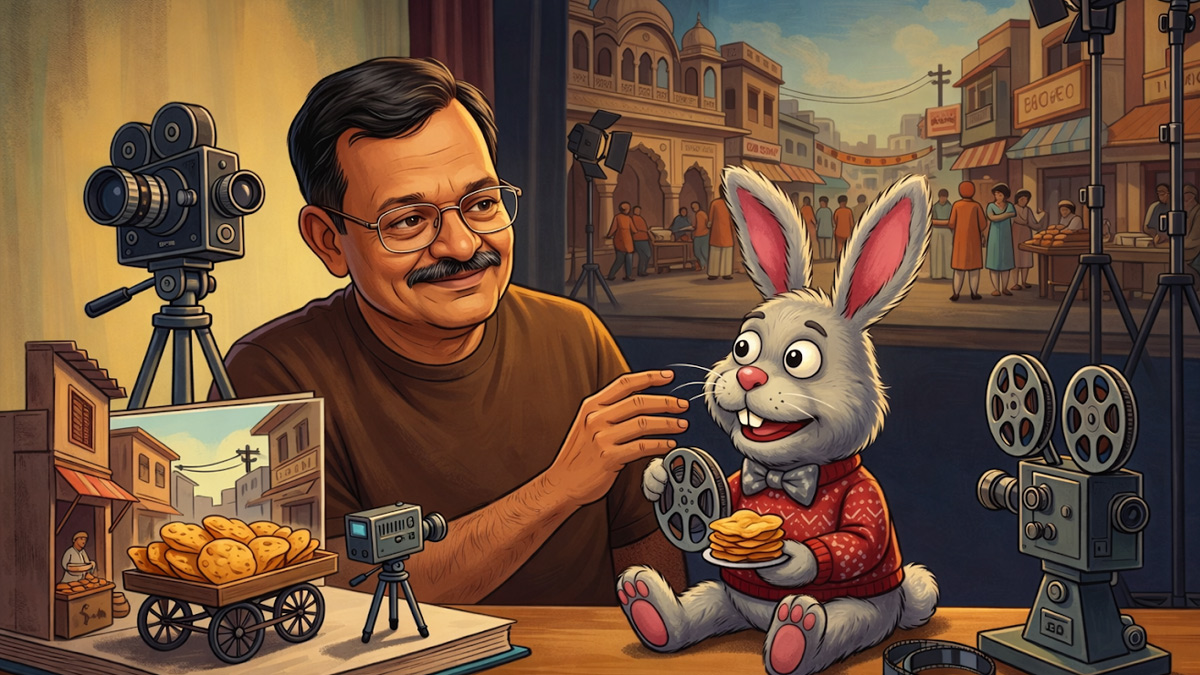
MUMBAI: There are careers, and then there are canvases. Gyan Sahay, the veteran cinematographer, director, and producer who passed away on 10 March 2026 in Mumbai, had one of the latter. Over several decades in the Indian film and television industry, he turned lenses, lights, and the occasional puppet rabbit into something approaching art.
A graduate of the Film and Television Institute of India (FTII) in Pune, Sahay built his reputation as a director of photography across a career that stretched from the early 1970s all the way to the digital age. He was the kind of craftsman who understood that a well-composed shot is not merely a technical achievement but a quiet act of storytelling.
For most Indians of a certain age, however, Sahay will forever be the man behind the rabbit. His direction of the iconic long-running television commercial for Lijjat Papad, featuring its now-legendary puppet bunny, gave the country one of its most cheerfully persistent advertising images. It was the sort of work that sneaks into the national subconscious and takes up permanent residence.

His big-screen credits as cinematographer include Anokhi Pehchan (1972), Pagli (1974), Pas de Deux (1981), and Hum Farishte Nahin (1988). In 1999, he stepped behind a different kind of camera altogether, making his directorial debut with Sar Ankhon Par, a drama that featured Vikas Bhalla and Shruti Ulfat, with a cameo by Shah Rukh Khan for good measure.
On television, Sahay was particularly prized for his command of multi-camera production setups, a skill that made him a go-to technician for large-scale shows and reality programmes. In an industry that has never been especially patient with complexity, he was the calm hand on the rig.
In later life, Sahay turned teacher. He participated regularly in masterclasses and Digi-Talks, often hosted by organisations such as Bharatiya Chitra Sadhna, sharing hard-won wisdom on cinematography, the comedy of timing in a shot, and the sweeping changes brought by the shift from celluloid to digital. He was also said to have been involved in a project concerning a biographical film on Infosys co-founder N.R. Narayana Murthy.
Tributes from the film industry poured in following the news of his passing, with colleagues remembering him as a senior cameraman who served as a rare bridge between two entirely different eras of Indian cinema. That is, perhaps, the finest thing one can say of any craftsman: he kept up, and he brought others along with him.