Brands
Zomato Q4FY23 results – Growth and profitability dilemma continues


Mumbai: Zomato has reported muted revenue growth of 22.6 per cent YoY in the food business this quarter, as MTU’s decline 4.6 per cent QoQ due to 1) initiative of Zomato Gold and 2) shut down in 225 cities; in terms of GOV, the growth was mere 12.2 per cent YoY (MTU growth of 5.7 per cent YoY), due to inflationary pressure impacting overall delivery revenue.
AOV and delivery charges remain flat, as order volume was more driven by new user acquisition and increased frequency; respite for profitability continues on the back of lower discounts, which had the biggest impact for moving contribution margin 70bp higher QoQ to 5.8 per cent in the food segment. The management maintains their guidance of 4-5 per cent of EBITDA as a percentage of GOV in the food business over medium term, however, there may be pressure on revenue growth rates too, to keep AOV under check and drive higher frequency within the existing customer base, rather than spend more on discounts/new customer acquisition.
We believe food GOV growth rates will come closer towards 15-20 per cent over the near term, whereas food revenue growth rates could be towards 20 per cent-22 per cent driven by better take rates.

We continue to believe that initiativesl like ONDC and direct ordering platforms won’t disrupt Zomato’s business model as unit economics are not favourable for restaurants due to lower AOV and higher delivery costs; however, it may keep take rates stable for most chains, restaurants that have a higher AOV vs average (Rs 400); we may also see a scenario of take rates being linked to AOV, as latter will lead to savings (lower take rates) for restaurants.
Quick commerce segment continues to report robust GOV growth (17 per cent QoQ in Q4FY23) with an improved margin profile, but concerns persist on the same due to low scale potential, as launching the offering in more cities could negatively impact AOV and eventually potential unit economics; reduction in losses is a key monitorable for this segment as concerns in the form of higher competitive intensity and discounts persist.
Zomato is currently trading at 39x FY25 EV/EBITDA (core food delivery segment), after factoring a 18 per cent growth in the food GOV, and 3 per cent EBITDA margin as a percentage of GOV; however, including losses of Blinkit (estimated to be in the range of INR 2.75bn in FY25), valuations for Zomato are high at 52x FY25 EV/EBITDA (consolidated business including quick commerce). The stock has already moved up 30 per cent over the last 3M and is trading at fair valuations, offering limited upside in the near term.

Brands
IICT partners with Gativedhi to bring studio production tools to students
New MoU lets students explore AI-driven production pipelines for AVGC-XR
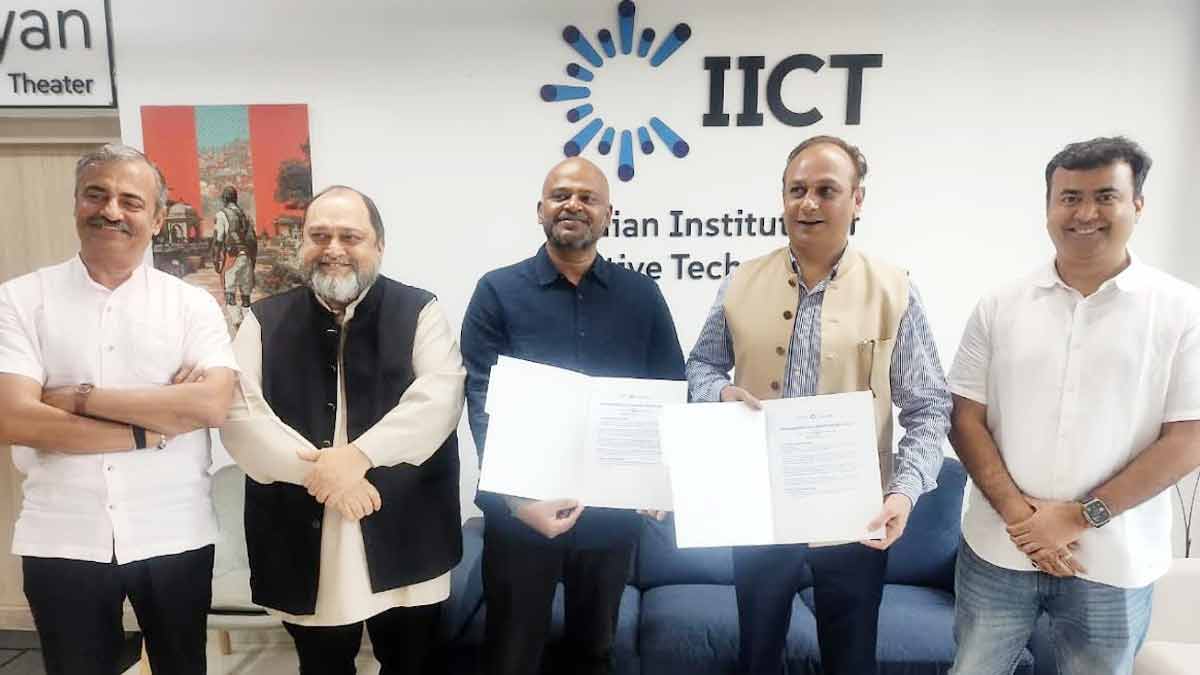
MUMBAI: The Indian Institute of Creative Technologies (IICT) has teamed up with Gativedhi Technologies to give students a front-row seat to modern studio production. The collaboration will integrate Gativedhi’s AI-powered production intelligence platform, Shotrack, into academic programmes, letting students experience the workflow systems used by animation, VFX and gaming studios.
Under the MoU, faculty, students and researchers will get hands-on access to Shotrack through beta programmes, pilot deployments and academic evaluations. This will allow them to explore simulated production pipelines, understand asset management, track tasks and monitor schedules, essentially seeing how complex projects come together behind the scenes.
Shotrack is designed to tackle a key industry challenge: when multiple studios work on the same project, differing internal systems often create bottlenecks, slow approvals and complicate version control. The platform provides a unified production environment, enabling smoother collaboration across distributed teams while generating operational insights and predictive analytics to optimise crew allocation, forecast schedule risks and manage costs.
The collaboration also opens doors to Gativedhi’s wider ecosystem. Upcoming tools include StudioTrack, for studio operations management covering budgeting, recruitment and IT infrastructure, and WorkTrack, which measures workflow efficiency and team productivity across industries.
IICT plans to embed these tools into programmes covering animation pipelines, VFX workflows, gaming production and media project management. Students will also benefit from guest lectures, masterclasses, workshops, internships and research projects that connect academic learning with real-world studio practices.
IICT CEO Vishwas Deoskar, said the partnership provides “An environment where production pipeline tools can be explored, tested and refined while students gain insight into how large-scale productions are organised.”
Gativedhi Technologies founder & CEO Senthil Kumar added, “This collaboration introduces students to real-world studio management tools and helps us improve our platform with academic feedback.”
With Shotrack in classrooms, India’s future animators, VFX artists and gaming producers will get a taste of studio life long before they step into one.