Brands
Zomato progresses a step ahead in inclusivity; announces menstrual leaves

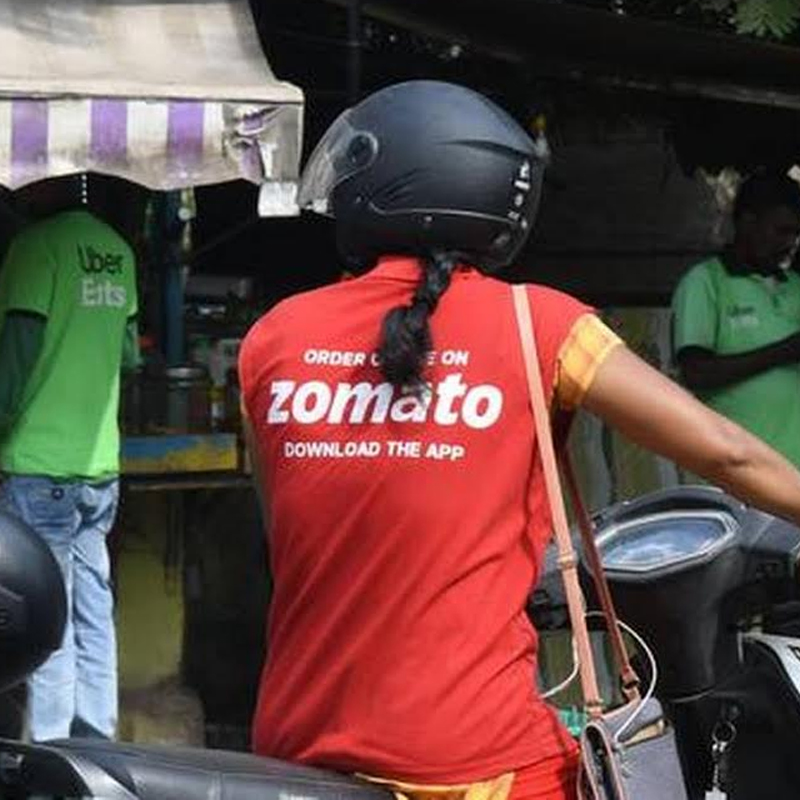
NEW DELHI: “How many times have you had to send a message to your team saying “unwell today – taking the day off” and having to answer concerned questions about your health with a feeble “stomach upset / weakness” when you really wanted to say “on my period, terrible cramps – need a heating pad, some chocolate and a lot of green tea (or something stronger) so I’m taking the day off”?”
This is how Zomato founder and CEO Deepinder Goyal started an interesting letter he sent the employees working at the restaurant aggregator and food-delivery company this Sunday. He was introducing an optional 10-day period leave policy for the women of Zomato, in a progressive step, becoming the third Indian company on-record to take menstrual leaves. Earlier, digital media company Culture Machine and independent digital agency Gozoop had announced such a policy for their female employees, back in 2017.
Zomato is extending this option of taking 10 extra leaves a year during menstruation to its transgender people as well. Any person facing unnecessary harassment or distasteful comments from colleagues for taking a period leave can report them to an internal POSH committee via email.

Goyal wrote, “At Zomato, we want to foster a culture of trust, truth and acceptance. Starting today, all women (including transgender people) at Zomato can avail up to 10 days of period leaves in a year. There shouldn’t be any shame or stigma attached to applying for a period leave. You should feel free to tell people on internal groups or emails that you are on your period leave for the day.”
In its run to inclusivity, Zomato had earlier announced a 26-week paternity leave as well.
Menstrual leaves became an issue of widespread debate in the country when “The Menstruation Benefit Bill” was tabled by Ninong Ering, a member of parliament from Arunachal Pradesh, in 2018, with forces against it citing increased workplace harassment and gender discrimination at the workplace as a reason.
However, several countries have these policies in place for decades. Japan had passed a law allowing women with debilitating periods to take days off in 1947, more than 20 years after Japanese labour unions started demanding it. Indonesia announced two days of menstrual leave per month under its Labour Act in 2013. As of 2015, women in Zambia are legally entitled to a day off each month during periods and one has the right to prosecute the employer if denied.
In South Korea, not only are female employees entitled to menstrual leave but they are also ensured additional pay if they do not take the menstrual leave that they are entitled to.
In India, as mentioned, the discussion is still in its nascent stages, however, and this decision by Zomato has met with mixed reactions on social media.
The number of butt hurt men reacting to @Zomato s period leave by calling it 'unfair' is proof enough the company did the right thing. These are the same people who consider maternity leave as 'unfair' and say women can't cope with work and a baby. No Uterus No opinion please.
— Agamoni Ghosh (@agamoni) August 9, 2020
Granted that men do not have much say on periods and it’s side effects but don’t you find asking for special treatment defeats the whole act of Equal Opportunity, treatment and Pay at the workplace. Asking to declare will invoke another harassment lawsuit. #Catch22
— Harish Viayan (@harish3912) August 9, 2020
Earlier with 26 week Paternity leave and now with 10 day #periodleaves, @Zomato keeps winning our hearts.
Companies make a note – Women have periods, they need a day off. No need to disguise it as just another "sick leave". They deserve this time off. This is just biology. https://t.co/mwotxMmTRO
— Rajiv Bhatt (@rajivbhatt) August 8, 2020
Oh lord. How do we demand equality when we want special treatment every step of the way? https://t.co/6Wyce8u9HY
— Nupur J Sharma (@UnSubtleDesi) August 8, 2020
Great initiative, but are you doing something about the stress you cause to employees, which is leading to anxiety, depression, hormonal imbalances and ultimately irregular periods?
— Neha Sharma (@neha0920) August 8, 2020
This is an extremely dangerous precedent 2 set.Provide equal opportunities in appointments, promotions n pay structure. Providing holidays as period leaves will only work as a deterrence 2 employers in hiring women.I don’t think or support the idea tht women need period leaves.
— Madhubanti Chatterjee (@MadhubantiChat3) August 8, 2020







Brands
Jubilant Foodworks to end Dunkin’ franchise in India
Pizza chain operator will not renew agreement when it expires at end of 2026.

MUMBAI: When the doughnuts stop turning and the coffee goes cold, even a global giant like Dunkin’ can find the Indian market a tough brew to crack. Jubilant Foodworks has decided not to renew its franchise agreement with Dunkin’ when the pact expires on 31 December 2026, according to a Reuters report. The operator, best known for running Domino’s outlets in India, said it would evaluate options for its existing Dunkin’ stores, including a potential sale or transfer of franchise rights, in consultation with the US-based brand.
The decision follows years of underperformance in a market where local tastes and intense competition have made it difficult for international coffee-and-doughnut formats to gain traction. Jubilant, which has increasingly focused on its core pizza business and newer bets like Popeyes, indicated that the exit would not materially affect its financial or operational position.
Dunkin’ accounted for just 0.61 per cent of Jubilant’s revenue in the fiscal year ending 2025 and recorded a loss of approximately Rs 191 million, according to a regulatory filing. The company operated 27 outlets as of December 2025, having shuttered seven stores over the preceding year.
The retreat comes even as Jubilant’s broader business shows signs of momentum. The company reported a 65 per cent rise in quarterly profit for the October to December period, reaching Rs 70.9 crore, up from Rs 42.91 crore a year earlier.
For Jubilant, the exit reflects a sharpening strategic focus. For Dunkin’, it marks another setback in a market that has proven resistant to imported café concepts without significant localisation.
In the cut-throat world of Indian quick-service restaurants, sometimes the sweetest deals are the ones you quietly walk away from leaving more room for the brands that truly rise to the occasion.