MAM
Wunderman Thompson conceptualizes campaign to urge all Bengali daughters to return home & join in the celebrations this Durga Puja

MUMBAI: Durga Puja brings not just a Devi or Ma, but a daughter, back to her home and so did the campaign conceptualised by Wunderman Thompson for The Times of India (TOI). The second round of Phire Esho, TOI’s award winning campaign, celebrated the intense Bengali urge to be back home for Pujo, by raising the heart-warming call, “Ma Aaschen. Tumi Kothae?” (Durga Ma is coming home. Where are you?) Especially calling out to every daughter of Kolkata, the real Devis, without whom, Durga Puja remained incomplete.
The campaign created by Wunderman Thompson is an evocative image of daughters getting off planes, trains and buses – every regular mode of transport, seemingly regular girls, but with Ma Durga’s ten arms forming behind her (with the arms of co-passengers behind her). Hitting the point home that in every daughter, resides the spitting image of Ma Durga, without whom there can be no Puja. This image and the rally cry of “Ma Aaschen. Tumi Kothae?” ran central to the campaign, activated across print, radio, digital and outdoor.
Print advertising rolled out in Kolkata and Outside Kolkata ignited the need to go back home to Kolkata among Bengalis across the country. For those not from Kolkata, it created intrigue as to what the whole deal was about. The ads had influencers and regular folks (Bongs and Non-Bongs alike) sharing on twitter, on blogs on Whatsapp. https://twitter.com/beastoftraal/status/1174152562204803072?s=12

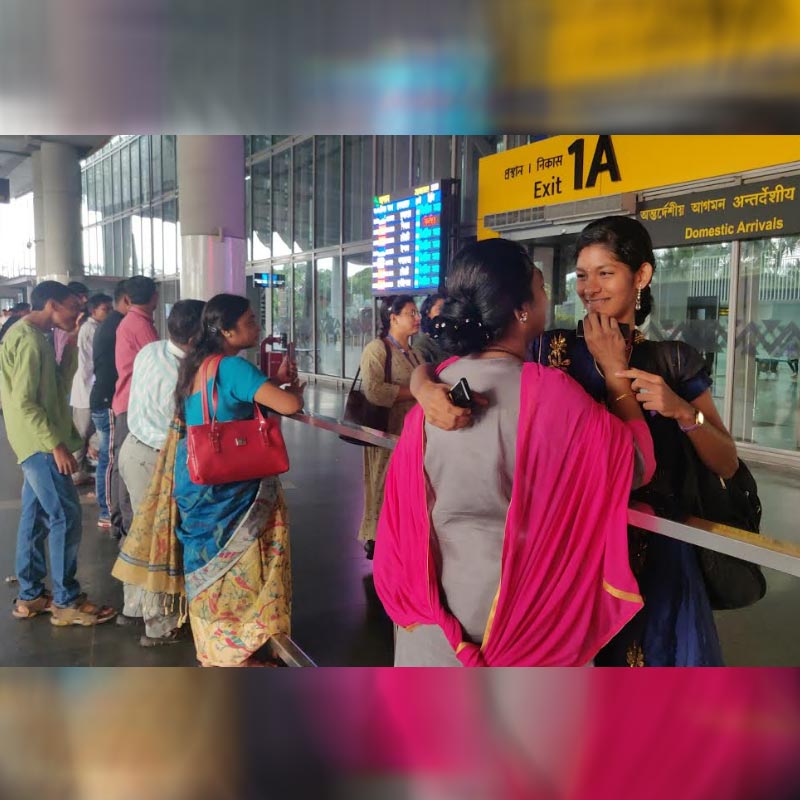
TOI invited readers to write letters to their daughters on phireyeshokolkata.com. Select letters were featured in TOI and were awarded tickets to come home. This enabled the homecoming of 15-year-old Sammohana, who flew home from Chennai to Kolkata for Durga Puja after 11 long years, her first time ever on an aircraft (image attached).
The emotional Phirey Esho film, about the anticipation of a daughter’s homecoming for Pujo, featuring notable dancer Tanusree Shankar,and actors Ritabhari Charaborty and Paoli Dam, drew many a tear and many a repost. The film, directed and edited by Pritha Chakraborty and with a background score by Prabuddha Banerjee, crossed 4.5 million views in less than a week from its launch, reaching more than 15 million people, recorded engagements of over 600000 from women from more than 20 different countries. Notable people from the city, RJ MiR, Anupam Roy, Riddhi Sen, Srijit Mukerji shared the film from their handles.
Every Bengali can smell Pujo coming in the air. A print innovation in The Times of India Kolkata on the morning of 24th September brought this Pujo feeling to every home and doorstep, with a newspaper, scented with Sandalwood with a Kashphool (a wild flower from the soil of Bengal whose blossoming signifies the arrival of Maa Durga) inserted within the sheets.
The heartstrings got no rest, the newspaper of the day further carried a letter from notable writer Shankar, to his daughter, to come home for the Puja.
Thousands of such letters flooded our pages, to complete Ma’s homecoming with the Homecoming of the city’s daughters. Mr. Harshavardhan Neotia of Bengal Ambuja wrote a letter to his sister and famous authors Mani Shankar and Shrishendu Mukhopadhay also penned their letters.
Times of India Brand Director Sanjeev Bhargava spoke about the campaign, saying, “While being India’s favorite newspaper for the best curated and validated news, TOI works hard to create a local connect with its readers in each city it serves. “Maa Aaschen Tumi Kothae, Phire Esho Kolkata” is created for Durga Puja to strengthen our connect with readers, especially women who are an important cohort for us.”
Joy Chauhan, SVP & Managing Partner, Wunderman Thompson said, “Phirey Esho to start with roused emotions in Kolkata by reviving pride in the city. This leg of the campaign revived the love. Not just because it comes from a fantastic insight; all good work does. But because in the context of women movements around the world, it’s a positive reminder of the power of women. Where better to start that movement but in the intellectual capital of India!”
Pinaki Bhattacharya, SVP & National Planning Director, Wunderman Thompson celebrated the campaign and what it created, saying, “Times of India is not just a newspaper; it’s a cultural brand. It’s a brand that has woven itself into the cultural fabric of its readers. The evocative Phirey Esho campaign further draws from the cultural cache of Durga Pujas. It brings alive the yearning of every Bengali – the ones who are in Kolkata want their loved ones to come back home and join in the celebrations and the ones who live away want to return home for the Pujas. And keeping in mind the significance of Durga Pujas- that it is Maa Durga in the daughter’s avatar who is visiting her paternal home- the brand urges all daughters who are living away from home to come back home during the Pujas.”




When you plan to buy medical insurance for your family, the first question is often about savings. You may assume that buying online automatically means paying less, but that is only part of the picture. The real issue is not just whether the premium looks lower, but whether the policy gives you suitable family health insurance without adding avoidable costs later.
Buying online can sometimes appear more budget-friendly because you can compare plans, review features, and complete the process without depending entirely on offline assistance.
Still, a lower visible price does not always mean better value. To understand whether you can truly save more, you need to look at the full buying experience and the policy terms together.
Why Online Purchase Can Look More Economical
When you explore family health insurance online, you usually get access to plan details in a more direct and organised way. This can make the buying journey feel simpler and more transparent.
A few reasons online purchases may seem cost-effective include:
● Easier comparison of policy features
● Direct access to premium details
● The ability to review inclusions and exclusions at your own pace
● Fewer chances of making a rushed decision
● More control over the plan selection process
This does not mean every online option is automatically cheaper. It simply means the online route may help you assess choices more carefully, and that itself can influence how much value you get from the policy you choose.
Saving Money is Not Only About a Lower Premium
A lower premium often catches your attention first, but that should not be the only measure of savings. If you buy medical insurance based only on what looks affordable at the start, you may overlook conditions that matter later.
A family health insurance policy should be judged on overall value, including:
● The scope of cover
● Waiting period terms
● Exclusions
● Room eligibility conditions
● Sub-limits, if any
● Claim-related terms
● Renewal conditions
If the premium is lower but the policy has stricter internal conditions, the apparent saving may not feel meaningful when you actually need hospitalisation support.
So, the better question is not only whether online purchase costs less, but whether it helps you select a plan that remains financially sensible over time.
Comparing Plans Online Can Prevent Overspending
One clear advantage of the online route is that it allows you to compare different options without pressure. This can help you avoid paying for features you may not need or missing features that matter for your family.
Before you buy medical insurance online, look closely at:
● Who can be covered under the plan
● How the sum insured works for the family
● Whether day care procedures are included
● How pre-existing illness rules are explained
● Whether add-ons are optional or built in
● How clearly the policy wording is presented
This level of comparison can support better decision-making. In many cases, savings come not only from the premium itself but from choosing a policy with fewer surprises.
Online Discounts Should be Viewed Carefully
Online discounts can make a plan look attractive, but they should always be read alongside the policy details. A discount may reduce the upfront cost, yet the true worth of the policy depends on what it covers and how it responds during a claim.
When reviewing discounted online plans, check whether the policy has:
● Treatment-specific limits
● Room rent restrictions
● Co-payment clauses
● Disease-wise waiting periods
● Claim deductions linked to the hospital category
● Limited cover for selected benefits
These points are important because a policy that looks cheaper at purchase may involve more out-of-pocket spending later. That is why discount-led buying should be replaced with detail-led buying.
Final Thoughts
Yes, buying online can sometimes help you save more when choosing family health insurance, but only if you look beyond the headline price. The online route may give you better visibility, easier comparison, and more time to review the policy terms.
That can support smarter choices and may reduce the chances of paying for a plan that does not suit your family well.
If you want to buy medical insurance online, treat savings as more than a discount. The real advantage lies in choosing family health insurance that balances affordability, clarity, and meaningful coverage for your household.