AD Agencies
WPP learns to live without Martin Sorrell

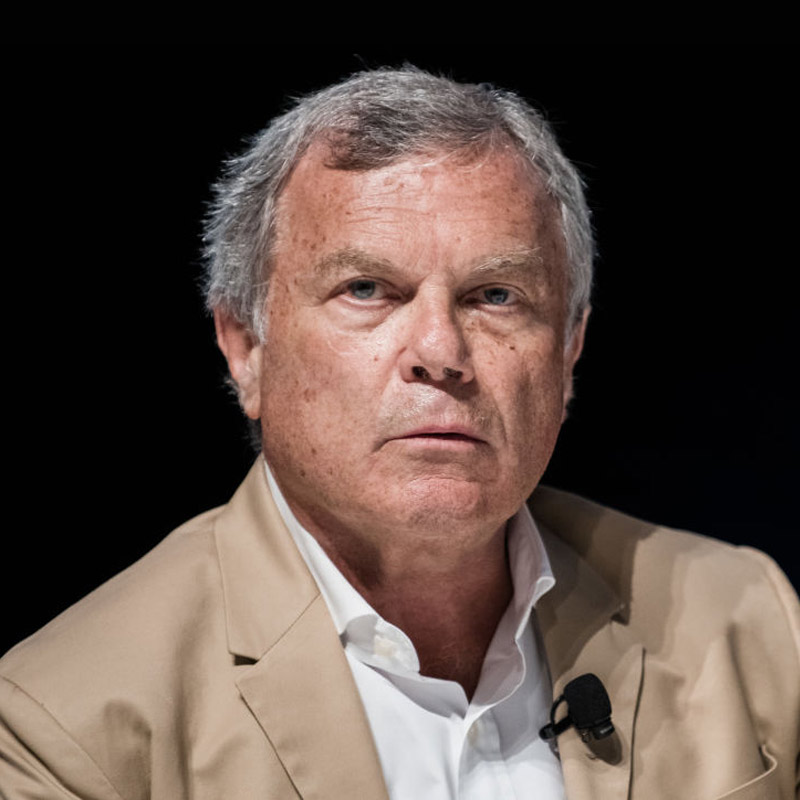
MUMBAI: British multinational advertising and public relations company WPP has decided to review its policies and codes of conduct and how these can be improved upon. The agency’s chief operating officer Mark Read in a staff memo said that the review will be conducted by leadership teams throughout the group.
He did not respond to allegations in reports in the Financial Times and the Wall Street Journal which stated that its former CEO Martin Sorrell resigned in the midst of investigations of having paid company money (some 300 pounds) for services to a sex worker in a Mayfair brothel. Additionally, there were allegations in the reports that Sir Martin had a bullying nature towards junior employees and was curt with them.
Instead Read stated in the memo that “Although we can’t comment on specific allegations, I feel we should remind ourselves of and reinforce the kind of values we want and need to have within every part of our business: values of fairness, tolerance, kindness and respect.”

He added: “It should hardly need saying that all WPP working environments must be places where people feel safe and supported. They must also be places where people are able to raise concerns if they want to, and where those concerns are dealt with when they need to be.”
The memo also mentioned about WPP’s helpline, Right to Speak. Read mentioned that the service was available for everyone across the group that allows them to raise issues without fear of reprisal. The Right to Speak service is independently operated and protects the identity of anyone who would rather not speak directly to their respective line manager or senior official about their concerns.
The company also had its annual general meeting with its shareholders on Wednesday, during the course of which a section of shareholders protested against the appointment of WPP chairman Roberto Quarta, the handling of the Sorrell exit and the payouts being planned for him in the form of share awards, as well as the fact that he was not asked to sign a non-compete agreement when he departed from the agency last month, amidst controversy.
WPP chairman Roberto Quarta said that there was no basis to cancel Sorrell’s share awards as the company did not have any proof of misconduct. “The contract required Martin to be treated as having retired unless a definition of gross misconduct would be satisfied, which it could not, and on which the board had clear legal advice.”
As far as the non-compete clause and the payout were concerned, Quarta stated that the conditions of Sir Martin’s employment contract predated the current board. This despite, it managed to get him to take cuts in pay and benefits at a time when the agency had put up a stellar performance in 2015.
Quarta has also started an investigation within the organisation on how information about allegations against Sorrell leaked into the media.
Read who is tipped to take over CEO was quoted by the BBC as saying that “Martin was a hard-working and hard-driving chief executive. I don’t recognise the bullying nature of some of the allegations.”
Sorrell has denied the allegations which have appeared in the media but decline to say anything more.
Read meanwhile said he has spent time with group agencies and clients over the last eight weeks, reassuring them of WPP’s health today and going forward. Disclosed he in the note: “There is tremendous positivity and confidence about the future of the business. Let’s stay focused on that, and continuing to build a company we are all proud of. We all want WPP and its agencies to continue to be home to the world’s best talent, which means creating a positive, supportive and inclusive culture in every office. More importantly, it’s the right thing to do.”







AD Agencies
Tribes and Omnicom Media win Gold for HSBC Living Hexagon at ET Awards
Kinetic OOH installation turns HSBC’s iconic logo into a living landmark

MUMBAI: Tribes Communication and Omnicom Media have secured a Gold win at the ET Design & Creativity Awards for their innovative out-of-home installation, The Living Hexagon, created for HSBC.
Awarded in the Most Creative Traditional OOH category, the project reimagines one of the world’s most recognisable banking symbols into a dynamic, ever-evolving structure. Designed for HSBC’s International Financial Services Centre presence, the installation was conceived to do more than simply grab attention. It aimed to seamlessly blend into the fast-growing ecosystem of GIFT City.
At the heart of the idea is HSBC’s iconic hexagon, typically associated with precision and consistency. Tribes transformed this static identity into a kinetic structure that responds to natural elements such as wind and light, creating a sense of continuous motion. The result is a visual experience that shifts throughout the day, echoing themes of adaptability and momentum.
Constructed using modular triangular units arranged along a precise geometric axis, the installation moves in synchrony, giving the illusion of a fluid, living form. While the structure evolves with its surroundings, it retains the unmistakable identity of the HSBC brand, striking a balance between innovation and familiarity.
Strategically placed at a key entry point into GIFT City, the installation functions as both a landmark and a statement. It reflects the pace and dynamism of global finance while embedding the brand into the city’s architectural narrative.
With this win, Tribes Communication and Omnicom Media underline the growing role of experiential and design-led thinking in traditional media, proving that even the most established brand assets can find new life when reimagined with creativity and context.






