MAM
WPP financials steady in H1 2012


MUMBAI: London headquartered global media communications network WPP plc has reported a 5.5 per cent growth in revenues for the half year ended 30 June 2012. The revenues in the first half were ?4.927 billion, up from ?4.713 billion a year earlier.
WPP‘s profit before interest and tax was ?570 million, which is a 10 per cent increase over ?518 million a year earlier.
The first half of the year saw an estimated ?2.475 billion come in from new business while the total billing for H1 2012 was up by 1.2 per cent at ? 21.651 billion.

Asia Pacific, Latin America, Africa, Middle East and Central and Eastern Europe remained the strongest region, with revenues up 8.5 per cent from ?1.33 billion in the first half of H1 to ? 1.446 billion this year. Brazil, Russia, India and China were significant contributors to this figure. The region accounted for 29.1 per cent of the group‘s half yearly revenue.
Advertising and media investment management (AMIM) contributed to 41.1 per cent of the group‘s revenue at ? 2.044 billion followed by branding and identity, healthcare and specialist communications (BI, HC and SC) at ? 1.278 billion (25.3 per cent).
The revenue for the second quarter stood at ? 2.58 billion, which is 3.6 per cent higher than ? 2.49 billion for the first half of 2011. The APAC, Lat Am, Africa, Middle East and Western and Central Europe region together pitched in for 29.6 per cent of the group‘s total revenue in Q2 FY13 growing from ? 720 million in the second quarter of 2011 to ? 765 million in the corresponding quarter this year (up by 6.2 per cent).
In Q2 FY13, AMIM contributed ? 1.071 billion (41.5 per cent) to the group‘s revenue followed by BI, HC and SC 25.3 per cent).
In a statement released along with the results, WPP said, “The focus in 2012 will be revenue growth from leading position in faster growing geographic markets and digital, “horizontality”, premier parent company creative position, new business strength and strategically targeted acquisitions. We will also maintain continued emphasis on balancing revenue growth with headcount increases and improvement in staff costs/revenue ratio to enhance operating margins.”
WPP said July 2012 revenues were up over 3 per cent like-for-like and showed a similar pattern to the second quarter, although the UK, Western Continental Europe, Africa & the Middle East and Latin America were ahead of the second quarter growth rates with the USA and Asia Pacific below. Cumulative like-for-like revenue growth for the first seven months of 2012 is now 3.5 per cent.
The group‘s second quarter revised forecasts, having been reviewed at the parent company level in the first half of August, indicate very similar levels of like-for-like revenue growth for the year.
According to the revised forecast, a slight reduction in like-for-like revenue growth from the first quarter revised forecast, with first and second half more balanced and headline operating margin target, as previously, of 14.8 per cent, up 0.5 margin points.
In line with WPP‘s strategic focus on new markets, new media and consumer insight, the group completed 40 transactions in the first half of 2012 — 20 acquisitions and investments were in new markets (of which 14 were in new media), 13 in consumer insight, including data analytics and the application of technology, with the balance of 7 driven by individual client or agency needs.







Brands
Parle-G celebrates Bihu with music-led campaign rooted in culture
Two-part films blend nostalgia and storytelling to capture Assam’s festive soul
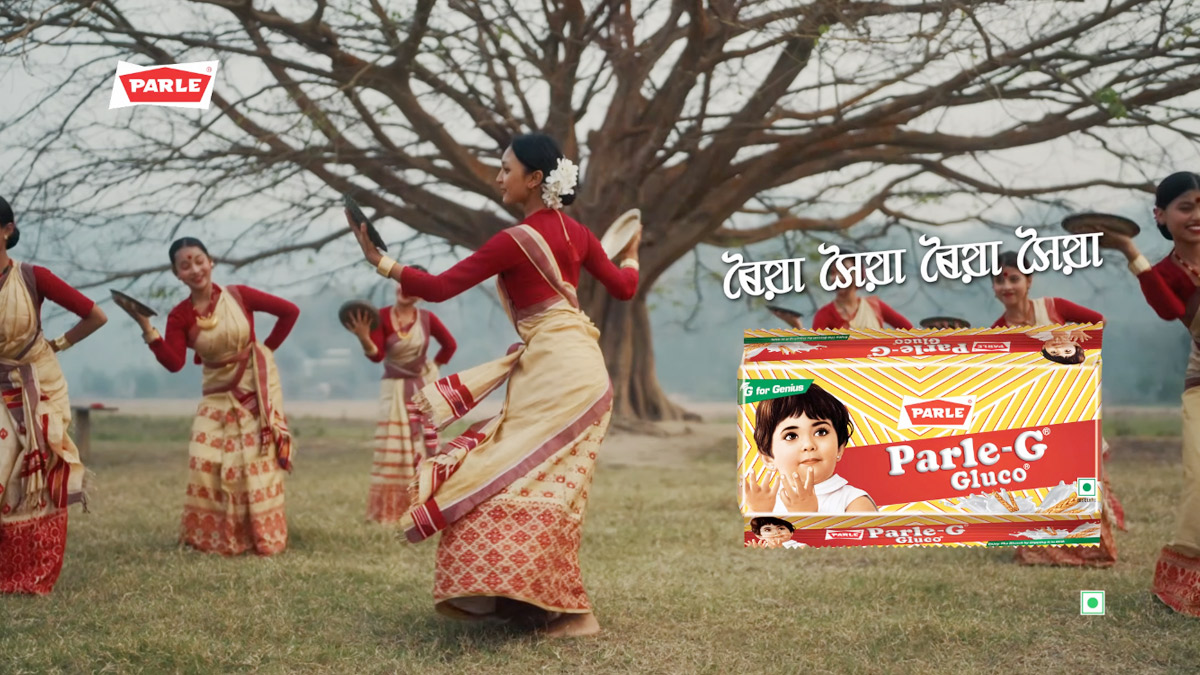
MUMBAI: Parle-G has turned to music, memory and meaning in its latest campaign celebrating Bihu, offering a culturally rooted tribute that goes beyond typical festive advertising.
Created by Thought Blurb Communications, the two-part campaign builds on the brand’s long-standing thought of finding joy in others’ happiness. It begins with a music-led prequel and culminates in a narrative-driven film that explores the emotional essence of the festival.
The campaign opened with a two-and-a-half-minute Bihu music video featuring Partha Hazarika, with music composed by Nilotpal Bora and vocals by Dikshu. Rather than positioning itself as a conventional brand piece, the video leaned into authenticity, capturing the vibrancy and rhythm of Bihu. Viewers also drew emotional parallels to Zubeen Garg, whose absence lent the film a nostalgic undertone. The response was swift, with over 12 million combined views across YouTube and Instagram within a week.
Building on this momentum, the main film tells the story of Ahir, a musician struggling to compose a Bihu song within the confines of a studio. His journey takes him into the open landscapes of Assam and eventually to the banks of the Brahmaputra, where a boatman helps him rediscover the true spirit of Bihu. The narrative underscores a simple idea that the festival cannot be manufactured in isolation, it must be experienced in nature, community and shared joy.
Speaking about the campaign, Parle Products vice president Mayank Shah said the initiative aims to celebrate not just the festival but the emotion behind it. He noted that Bihu reflects the idea that joy multiplies when shared, a theme that sits at the heart of the story.
From the agency side, Thought Blurb Communications chief creative officer Vinod Kunj said the team sought to tap into Assam’s cultural pulse, acknowledging the emotional void left by the absence of Zubeen Garg while celebrating the enduring spirit of the festival.
Adding to this, Thought Blurb Communications national creative director Renu Somani Karwa said the campaign draws from deeply human stories, where small acts of generosity become powerful expressions of connection.
Meanwhile, Thought Blurb Communications executive creative director Auryndom Bose highlighted the importance of nature in shaping Bihu’s identity, noting that the film attempts to capture how music and movement emerge organically from the landscape itself.
With this campaign, Parle-G leans into cultural storytelling with a lighter brand footprint and a stronger emotional core. By placing music and community at the centre, it offers a reminder that some stories are best told not in studios, but in the shared rhythms of real life