AD Agencies
WPP boss Mark Read to sign off at year-end after 30-year ad-venture

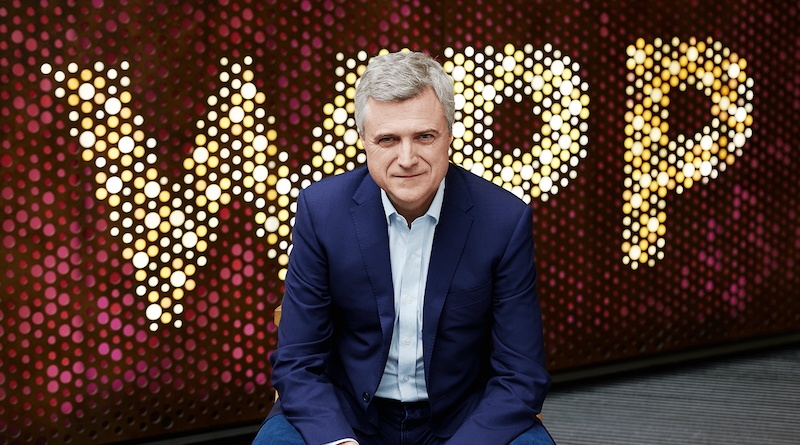
MUMBAI: WPP plc has just hit ‘next’ on its leadership playlist. The British ad giant announced that long-time chief executive officer Mark Read will hang up his boots and step down from the board on 31 December 2025, marking the end of a 30-year run—including a high-octane seven-year stint steering the ship as CEO. The search for his successor is already underway.
WPP chair Philip Jansen, heaped praise on Read’s legacy, hailing him as a transformational force. “On behalf of the Board, I would like to thank Mark for his contributions not only as CEO but throughout his more than 30 years of leadership and service to the Company. During that time Mark has played a central role in transforming the Company into a world leader in modern marketing services, with deep AI, data and technology capabilities, global presence and unrivalled creative talent, setting WPP up well for longer-term success,” said Jansen.” We are pleased that Mark will continue to lead WPP as CEO until the end of the year, remaining focused on the execution of the Company’s growth strategy and supporting a smooth transition to his successor, once appointed.”
In a heartfelt sign-off, Read said leading WPP had been “an immense privilege.” When he took the reins in 2018, his mission was to simplify the business, power up its creative engines, and plug it into cutting-edge tech. By most accounts, he’s delivered.

Said Read: “WPP is an incredible company with over 100,000 talented and creative people, wonderful clients and partners, and an unmatched presence around the world. It has been an immense privilege to serve as its CEO for the past seven years.
“When I took on this role our mission was to build a simpler, stronger business, and put structure and new energy behind our creativity and performance, powered by world-leading technology. I am proud that our teams across the business have delivered that exceptionally well. Our clients today rate us more highly than ever before, we now work with four of the world’s five most valuable companies, and our revenues with our biggest clients have grown consistently.
“Our business starts with creativity, and I was delighted for our teams that last year we were once again named Creative Company of the Year at Cannes Lions. We have also positioned WPP at the forefront of the industry with our investments in AI and, with the full launch of WPP Open this year, we are now leading the way as AI transforms marketing. We have an exceptional leadership team and a secure financial position that allows us to face the future confidently and capture the opportunities ahead.
“After seven years in the role, and with the foundations in place for WPP’s continued success, I feel it is the right time to hand over the leadership of this amazing company. I am excited to explore the next chapter in my life and can only thank all the brilliant people I have been lucky enough to work with over the last 30 years, and who have made possible the enormous progress we have achieved together. I would also like to thank Phil and the rest of the Board for their steadfast support for me and the wider executive team, and I look forward to supporting them in the transition to my successor in the coming months.”
WPP now works with four of the world’s five most valuable companies, and its largest clients are spending more than ever. He also gave a nod to WPP Open, the firm’s AI-powered platform, calling it a game-changer that’s keeping WPP ahead of the curve as artificial intelligence rewrites the rules of marketing.
“I feel it is the right time to hand over the leadership of this amazing company,” said Read. “We’ve built the foundations for future success, and I look forward to exploring the next chapter in my life.”
WPP, which employs over 100,000 people across the globe, is now on the hunt for a new commander-in-chief to build on Read’s digital-first, AI-fuelled momentum.
The Mad Men era is long gone—WPP 2.0 is ready for its next act.







AD Agencies
Tribes and Omnicom Media win Gold for HSBC Living Hexagon at ET Awards
Kinetic OOH installation turns HSBC’s iconic logo into a living landmark

MUMBAI: Tribes Communication and Omnicom Media have secured a Gold win at the ET Design & Creativity Awards for their innovative out-of-home installation, The Living Hexagon, created for HSBC.
Awarded in the Most Creative Traditional OOH category, the project reimagines one of the world’s most recognisable banking symbols into a dynamic, ever-evolving structure. Designed for HSBC’s International Financial Services Centre presence, the installation was conceived to do more than simply grab attention. It aimed to seamlessly blend into the fast-growing ecosystem of GIFT City.
At the heart of the idea is HSBC’s iconic hexagon, typically associated with precision and consistency. Tribes transformed this static identity into a kinetic structure that responds to natural elements such as wind and light, creating a sense of continuous motion. The result is a visual experience that shifts throughout the day, echoing themes of adaptability and momentum.
Constructed using modular triangular units arranged along a precise geometric axis, the installation moves in synchrony, giving the illusion of a fluid, living form. While the structure evolves with its surroundings, it retains the unmistakable identity of the HSBC brand, striking a balance between innovation and familiarity.
Strategically placed at a key entry point into GIFT City, the installation functions as both a landmark and a statement. It reflects the pace and dynamism of global finance while embedding the brand into the city’s architectural narrative.
With this win, Tribes Communication and Omnicom Media underline the growing role of experiential and design-led thinking in traditional media, proving that even the most established brand assets can find new life when reimagined with creativity and context.






