MAM
Will OOH industry see a revival during Durga Puja?


KOLKATA: Even with Dashami a week away, the city of Kolkata lacks lustre. The usual crowd of revellers who throng the streets, flitting from one pujo marquee to another, is significantly smaller. There are fewer lights, fewer billboards, and fewer hoardings. Although, the number of pandals has not reduced but the anticipated footfall is expected to go down especially with the latest Calcutta high court order. All of them are strictly adhering to the West Bengal government’s guidelines to check community transmission of Covid2019.
During Puja, these pandals turn into a hub of outdoor and on-ground activities. Brands try to leverage every corner of the pandals to create a visual impact and making their presence felt starting from the overhead gates to pillars, stage, stalls, and other parts of the pandals. Several brands release new campaigns, initiatives and products during this time and leverage the massive footfall at the pandals for sampling of its products.
Clearly, business isn’t booming for out-of-home (OOH) industry in the market as it traditionally does during the festive season.

Vibgyor managing director Ankur Kalra says brands are spending very cautiously for out-of-home activities, even during Durga Puja. Although they have started spending some amount on TV and digital but on-ground reality is different this year. According to him, all of the brands have deferred their marketing spends to 2021. He has noticed a 75 per cent reduction from all the reputed brands in on-ground activities especially.
Ad spends on on-ground activities are moving to virtual modes. Since there are fears of crowd gatherings despite restrictions, one bad incident could lead to a PR disaster, adds Kalra. In overall OOH, if the brands were spending Rs 100, the spending has gone down to less than Rs 40 this year.
R W Promotions owner Venkatesh Srinivasan echoes Kalra’s bent of mind, saying as brands want to maintain safety standards, they have several questions in mind such as: which are the containment zones, which parts of the city are safe for activations. However, he is more sanguine of a revival. His view is that spends on outdoor are slowly coming back and should go up more during Durga Puja since the government is also supporting celebrations with safety standards.
He goes on to add that outdoor activations are key, despite digital campaigns. In his view, many people are still not comfortable seeing a product in digital ads and buying it later.
Moreover, coming off the downturn of the last seven months, the market is considerably more enthusiastic right now with the onset of festive season. FMCGs and automobiles are currently the top spenders in outdoor campaigns, followed by consumer durables and mobile manufacturers. Other than that, beauty brands are spending but very less. Overall, marketing spends could take a 50-60 per cent dip in terms of outdoor and 70-80 per cent in on-ground activation.
Another executive who is extremely gung-ho about the revival of the outdoors is Laqshya media group CEO Atul Shrivastava. Says he: "The spirit of Calcuttans during Durga Puja is indomitable. The festive spirit started late, but with the government’s go-ahead for puja pandals, everyone has become quite enthused. Keeping in mind the precautionary measures, people are out on the roads and market areas are seeing a healthy flow of customers. As per data generated through Sharp, Laqshya’s in-house measurement tool, traffic in Kolkata is currently 89-92 per cent of normal times. So, we see that situations are coming back to normal, aided by the festive season."
According to him, most brands have come up with communications catering to the sentiments of Notun Pujo. He adds that no brand wants to miss the opportunity to advertise during Durga Pujo in Kolkata. Even in the current situation, many brands in the jewellery, textiles, retail, garments, footwear, automobile sectors are spending their pent-up OOH budgets. FMCG brands are also advertising, especially for sanitising products. In addition to that, OTT platforms and entertainment channels have stepped into OOH media to promote new shows and programs. Although clients are not spending 100 per cent as compared to last year, current spends stand at 60-65 per cent.
While Shrivastava speaks about entertainment brands, the biggest Bengali OTT platform Hoichoi has undertaken an outdoor campaign this year too. The brand’s campaign for Durga Puja speaks of situations which everyone is facing daily due to the ongoing pandemic and how Hoichoi can make them feel better with its vast offering of personalized entertainment, Hoichoi co-founder Vishnu Mohta shares.
The entire campaign has been replicated on the out-of-home format also. The streaming platform has erected temporary banners all over the city during pujo days. A mix of 600 banners and 100 big facades have been used for this promotional activity.
However, just three days ahead of the festival, the Calcutta High Court passed a verdict declaring Durga Puja pandals to be no-entry zones for visitors. Only organisers will be allowed inside the pandals, limiting the number to 25 for big pandals and 15 for the smaller ones. The order can negatively impact the brands that were supposed to finalise outdoor spends this week.
For larger pujo committees which rely largely on corporate sponsorships, this slump in ad spend is a worrisome turn of events. Ekdalia Evergreen, which is among the top draws every year, has seen nearly a 50 per cent drop in sponsors, club secretary Gautam Mukherjee says. Usually, 60 per cent of the expenditure is covered by sponsorships every year but the number has gone down to 10 per cent this year.
Another mid-budget puja committee, Telengabagan, has witnessed the same trend. Amrit Shaw, a puja committee member, says that the usual sponsors have also backed out leading to more than 50 per cent decline in sponsorships. Among the few brands which have come on-bard, he names Coca Cola, ITC, Kwality Walls.
While there is derring-do spirit amongst some players, others seem worried. Hopefully, goddess Durga, will come to their and West Bengal's rescue and smile benevolently on her worshipping followers. And there will be no looking back thereafter.







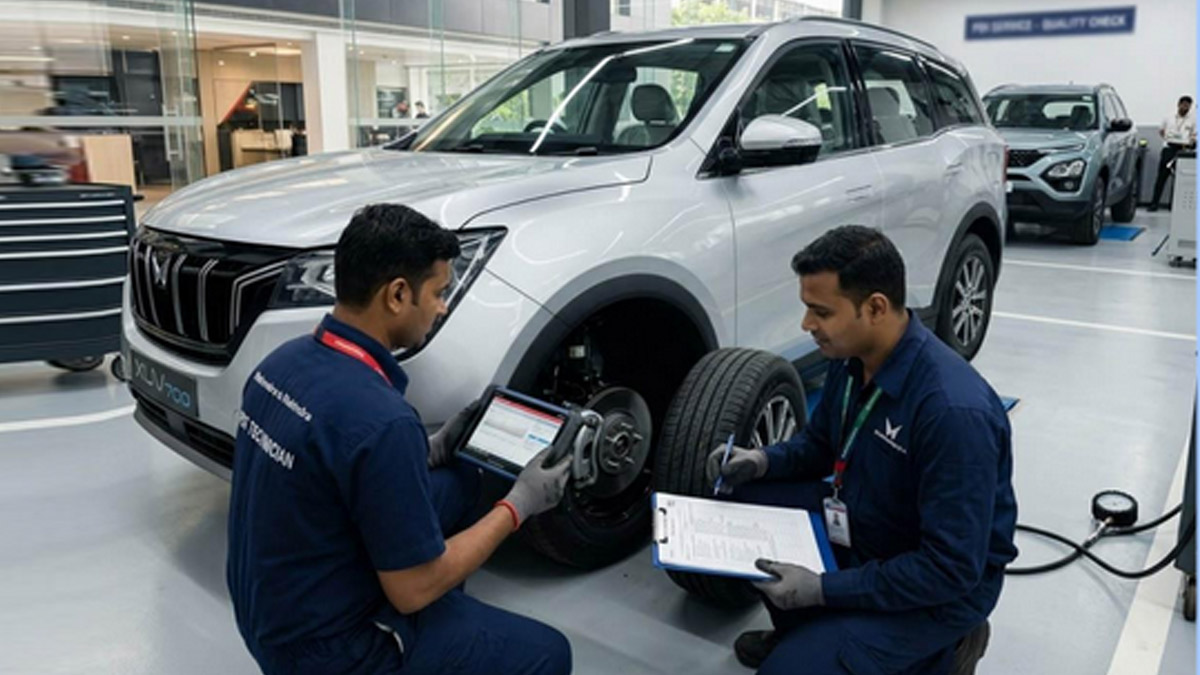
You have spent weeks researching, test driven a few options, finalised the colour and variant, and are now days away from taking delivery of your new car. It feels like the hard part is over. But there is one step that most buyers skip entirely, and it is the one that protects everything else. Understanding what PDI meaning covers and why it matters could save you from discovering a Rs 20,000 to Rs 80,000 problem after you have already signed the papers.
PDI stands for Pre-Delivery Inspection. It is a structured check that happens before your car is handed over to you. A proper PDI car service covers everything from paint quality and panel alignment to electrical systems, fluid levels and tyre pressure. Dealers are supposed to conduct this before delivery, but the depth of the check varies widely. And if the buyer does not know what to look for, problems slip through.
What Does a PDI Actually Cover?
A thorough PDI checks the car across four broad categories:
| Category | What Gets Checked | Common Issues Found |
| Exterior | Paint quality, panel gaps, glass, lights, tyres | Paint chips, uneven panel alignment, scratched glass |
| Interior | Seat upholstery, dashboard, AC, infotainment, switches | Loose trims, non-functional buttons, squeaks and rattles |
| Mechanical | Engine bay, fluids, battery, brakes, steering | Low fluid levels, minor leaks, battery not fully charged |
| Electrical | All lights, windows, central locking, sensors | Malfunctioning sensors, flickering displays, USB ports |
Each of these categories can hide issues that are minor at delivery but expensive if left unaddressed. A small paint chip near a door edge, for example, can lead to rust in a humid city like Mumbai or Chennai within 12 to 18 months.
What It Can Cost You to Skip the PDI
Here is a realistic look at what buyers have discovered after delivery that a proper PDI would have caught before:
• Paint defects requiring respraying: Rs 8,000 to Rs 25,000 depending on the panel
• Misaligned panels or doors that need workshop adjustment: Rs 3,000 to Rs 8,000
• Non-functional infotainment unit needing replacement: Rs 15,000 to Rs 40,000
• Scratched windshield that needs full replacement: Rs 6,000 to Rs 18,000
• AC not cooling properly due to low refrigerant: Rs 2,000 to Rs 5,000
• Tyre with a slow puncture from storage damage: Rs 3,000 to Rs 6,000
The total exposure from a single missed PDI can range from Rs 5,000 for minor issues to Rs 80,000 or more if multiple problems are found post-delivery. More importantly, proving that a defect existed before delivery becomes significantly harder once you have taken the keys.
Why Dealer PDIs Are Not Always Enough
Most dealerships do conduct a pre-delivery check on their own, but the process is not always as rigorous as it should be. There are a few reasons for this:
High Delivery Volumes
During festive season or at the end of a financial year, dealerships handle a surge in deliveries. When a service team is processing 15 to 20 cars a day, the depth of each check inevitably suffers.
Incentive Misalignment
Dealership staff are often incentivised on delivery speed and customer satisfaction scores. Finding a defect and sending a car back for rework delays delivery and affects scores. The incentive to look harder is not always present.
Buyer Unawareness
Most buyers arrive at delivery excited and in a hurry to leave. Without knowing what to look for, they miss things that a trained eye would catch immediately. Dealers know this, and the pressure to be thorough is lower when buyers are not asking questions.
What You Should Check Yourself at Delivery
Even if the dealer has completed their PDI, spend 20 to 30 minutes doing your own check at delivery. Here is a quick reference:
Check How to Do It Time Required Walk around in daylight Check all panels for scratches, chips and dents 5 minutes Open every door Check seals, check for rattles, test all windows 3 minutes Check interior thoroughly Test every button, switch and screen 5 minutes Start the car Look for warning lights, check AC, check all lights 5 minutes Check the boot Look for spare tyre, tools, jack and damage 2 minutes Inspect tyres Check pressure and look for sidewall damage 3 minutes
The Bottom Line
A PDI is not a formality. It is the last line of defence between you and a problem that the manufacturer or dealer should have fixed before you paid for the car.
Take the time to understand what the check involves, ask your dealer for confirmation that it has been completed, and do your own walkthrough at delivery. Twenty minutes of attention at this stage can save you weeks of workshop visits and tens of thousands of rupees down the line.