Brands
Why regional outreach is the way to go for brands this festive season?


Mumbai: Historically, in India, during the three to four months of the festive season that stretches from August, starting with Raksha Bandhan, up until New Year’s eve in December, the marketing and advertising spending see their peak. This year, with the country nearly coming out of the pandemic hangover, the industry is buoyant and all set to launch an advertising blitzkrieg ahead of the celebrations. Brands are not only increasing their spending but are also aiming for deeper penetration and better engagement with their core consumers during this time. And towards this end, they are going beyond the metros to reach tier two and tier three towns to directly speak to them in a language they can relate to.
Recently, Publicis Groupe-owned Leo Burnett India announced the launch of LB regional—a specialised division to help brands create localised content by understanding region-wise insights. The division that currently focuses on five languages—Tamil, Telugu, Malayalam, Punjabi, and Bengali—will have a team of creatives and writers who are experts in each of them to make content relatable and relevant. According to Leo Burnett India, the strategy and thinking are backed by an in-depth quantitative survey undertaken by the agency, spanning 10 states.
“There is a growing demand for local, vernacular and Indianized content, which if done right, presents a big opportunity for brands to grow their audiences,” said Leo Burnett South Asia CEO & BBH India chairman Dheeraj Sinha, speaking about the launch of the division. “We have already created local level interventions for some brands and have seen great results in going region-up rather than national-down in our thinking and creation,” he added.

Opportunities galore in regional markets
The busy festive season serves as the perfect opportunity to tap into the regional market and cater to the needs of the customers. Speaking to a regional audience around a time that holds value to them helps brands grow their outreach. Digital reach and penetration have opened the doors for brands to reach out to a far bigger audience pool beyond metros. The growing popularity of online shopping in tier two and three towns of India too have made the top players sit up and explore avenues to further expand their consumer base into the country’s interiors, in time for the celebrations.
Earlier last month, Parle Products launched three TVCs in Bengali to consolidate its position in the Bengal market. The new campaign, according to Parle, is in line with its belief in regional marketing, speaking in the voice of the local populace, using deeply relatable subjects, and in a tone that is immediately understood. Before that, in 2021, Parle launched three ads to celebrate their anniversary, and they were all in Marathi, targeting a specific audience.
“In a nation as vast as ours, each region has its voice, values, and ideals,” said Parle Products senior category head Mayank Shah, weighing in on this subject. “A generic message addressed to the entire country may not always take root. Speaking to each consumer in his language, in idioms he understands, and in surroundings that he is familiar with, is a far better option.”
It’s a known fact that a majority of consumer families are inclined to spend more during the festive season than during normal times, making it a no-brainer for brands to be in favour of investing greatly during this time of the year. This year’s festive ad spends are expected to range between 20-30 per cent of total annual spend for most product categories, with FMCG, e-commerce, lifestyle, and home improvement expected to be the top spenders.
The festive season is the most cluttered time of the year for advertisers, and the need to measure ROI beyond just brand visibility is imperative for overall campaign efficacy, says BBH India VP strategy Radhika Burman. “Hyperlocal campaigns help brands reach out to captive audiences with high purchase intent and leverage these leads to push for conversions at a more affordable cost. Tools like Google My Business, geo-fencing, retargeted SMS/emailers, and push notifications help brands stay ahead of the curve.”
Influencer marketing is gaining popularity
Micro-influencer marketing is also changing the rules of brand outreach. “Going into the festive season, brands will try to break the clutter and maximise campaign efficacy by choosing regionally relevant content creators who create vernacular content that is seen as more authentic and credible. Across categories, brands are using platforms like TakaTak and Moj to leverage these micro-creator communities and reach out to younger consumers in a real, relevant and authentic way,” adds Burman.
Reaching out to the right audience and brand connect remains a challenge for marketers. Often, marketing campaigns miss cultural nuances and appropriately generalised stereotypes of different communities. Region-specific marketing helps break this cycle and enables brands to think up appropriate content for each region.
With influencer marketing on the rise, it has only helped brands further to be able to reach out to a more local and regional audience, which was not possible through conventional marketing. “This is quite evident from the fact that social media spends have surpassed TV media spends and are only going upwards here on,” opines DIZO digital marketing lead Sugandha Varshney.
Furthermore, she says, “Brands have also started adopting more targeted campaigns instead of broadcast-to-all and hence it is boiling down to finding out and working upon the behaviours, demographics, and psychographics of the targeted market segment paired with the trends, attitudes, and perceptions of the customers towards the brand and the purchasing patterns of the consumers.”
She adds that now either they target themselves or tie up with influencers or partner with other distribution networks who have already amassed relevant audiences for them to reach their targeted customers in a more connected fashion.
Brands adopts hyper-local marketing strategies
Brands have been actively including the vernacular aspect in a bid to reach out to the right audience set, corroborates Puretech Digital senior vice president-digital marketing, Kamaljit Saini. On the marketing strategies being adopted by brands to go hyper-local, he says, “Especially on connected TV or digital content publication mediums which allow to segment the audience based on consumption pattern and preferences far better than traditional TV approach, brands are consciously being vernacular in disseminating the message.”
Be it in traditional TV commercials, connected TV ads, or content/commercial messaging on YouTube, Facebook, Instagram, etc., sharing the information in the language the audience understands has given brand adoption a boost. While this has helped in reaching out to audiences beyond the tier one and tier two circles, Saini believes brands can go one step ahead by not just incorporating vernacular adaptations but also being more regional. For instance, he says, simply dubbing the message in a regional language is not enough to create the connection.
“Considering the overall persona of your audience at large, bringing in the cultural and human aspects is also critical for a much stronger brand connection.” The way personalisation in connecting with the audience is taking shape, in no time we will see information dissemination with a more precise regional and cultural mix, he adds.
According to White Rivers Media creative director – design Bhushan Kadam, instead of just connecting with audiences pan-India in languages like Hindi or English, brands have started paying attention and money to campaigns that talk to people across areas by creating region-specific vernacular content and campaigns. “Investments in such vernacular campaigns have roughly increased by 20–30 per cent in the past few years.” When advertising for a festival specific to a particular region, regional campaigns pave the way for connections and conversations in a language that the people understand. It is an easy and effective way to build trust and brand recognition in regional or local parts of the country.
However, Kadam believes the use of smartphones or access to the internet is still a challenge in small towns or rural parts of the country. But one thing that is still a big hit in these areas is television, he says. “Thus, creating TV ads for specific regions instead of just social media content makes sense for brands. It increases visibility by catering through a medium that is accessible there-TV. Advertisers are increasingly customising localised ads for regional markets because if spoken to customers in a language they understand, it’s a hit!”
As for the ROI from investing in regional marketing so far this year, results are encouraging through the impact of localisation in one’s marketing mix. “We have seen encouraging numbers for early adopters. ROI is a direct function of how competitive the market is. Since the market is still opening up beyond metros, I’m sure brands who are early adopters and consciously taking steps towards localisation, will see greater ROIs than later comers,” says Saini.
Optiminastic Media’s business development manager Aditya Pandey agrees and says, “ROI is one of the paramount metrics that a marketer relies on. The reason there has been a great shift of ad spending from national-level campaigns to regional says it all. Agencies and brands are working together to create regional content and integrate their brands organically.”
The kind of outpour from the audience during the recent festivals like Eid and Raksha Bandhan have clearly shown how advertising during this season has increased sales volume and consumer loyalty, he adds.
Today, 70 per cent of our total population lives in rural areas, with a substantial portion living in tier two, tier three, and tier four cities. They are the audience that makes or breaks a brand. Brands and marketers have understood the strength of regional audiences and how they can change the dynamics of a brand’s products and services.
Increasing ad spends among brands
“Brands have increased their marketing spend from 10 to 20 per cent and concentrated on regional audiences. 64 per cent of the rural population has access to connectivity and is spoilt for choice of content and offerings from the brand, says Pandey. According to Google, India will have 745 million internet users, with only 199 million of them speaking English. The rest of the consumer base is a big chunk where brands have shifted to advertise, Pandey adds.
With the introduction of region-specific advertising, brands are consciously working towards targeting the various stratas of society as well as breaking the ideological and language barriers. Brands have understood the power of local reach and how making them happy would get them maximum reach and engagement. Taking cue, brands are not leaving any stones unturned to rope in regional content creators to engage with their consumers for relatability and promote new and old products alike.
Ad films, social media posts, region-specific contests, campaigns, etc. are the various means that brands are using to reach out to regional audiences that comprise 70 per cent of India’s population. For instance, this Independence Day, we saw Prajakta Kohli, a social media influencer, in an ‘all Marathi’ reel with a subtle brand integration for Pepsi. “She has millions of followers on her social media handles and her YouTube channel, and that’s the reason Pepsi chose her for their brand,” says Pandey.
“On the other hand, Diljit Dosanjh may not have been the main face behind Coca-Cola, but if you visit Punjab, you’ll see a lot of shops with his hoardings. And, as expected, the sales of the soft drink brand soared post-this association. That’s the power of regional marketing with the right stars,” he adds.
Similarly, Parle leveraged the festive season by collaborating with Bombay Sweet Shop to create the special Geniusly Sweet Collection for Raksha Bandhan. Bhopal witnessed the highest sales during this time as they brought in sales worth Rs 20 crores in a week, according to Pandey.
Marketers expect and anticipate a major uptick in consumer demand this holiday season as the country comes out of the pandemic. Most industry experts agree that with sales targets and industry benchmarks seeing consistent growth, it’s safe to assume that in the upcoming festive season, offline and online sales will exceed the numbers from last year.






Brands
Samsung certifies 1,000 Maharashtra students in AI and coding
The South Korean electronics giant marks its first large-scale skilling push in the state, with women making up nearly half the national programme’s enrolment
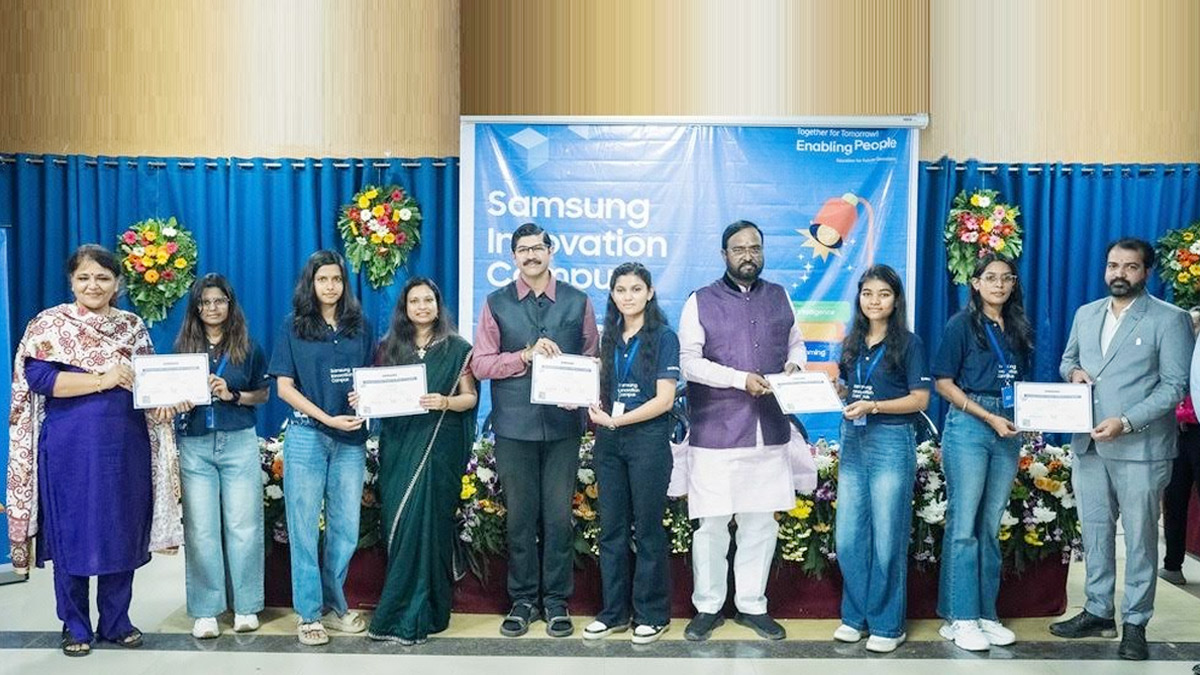
PUNE: Samsung has put 1,000 students in Maharashtra through a certified training programme in artificial intelligence and coding, the largest such drive the South Korean electronics company has run in the state and a signal that corporate India’s skilling ambitions are moving well beyond the boardroom brochure.
The certifications were awarded under Samsung Innovation Campus (SIC), the company’s flagship corporate social responsibility programme, which launched in India in 2022 with the stated aim of democratising access to future-technology education. The 1,000 graduates were drawn from four institutions: 127 from Savitribai Phule Pune University, 373 from Pimpri Chinchwad University, 250 from D.Y. Patil University’s Ramrao Adik Institute of Technology and 250 from Anjuman-I-Islam’s Kalsekar Technical Campus. All completed training in either AI or coding and programming, the two disciplines Samsung has identified as the critical pillars of the digital economy.
The programme does not stop at technical training. Soft-skills development and career-readiness modules are baked into the curriculum, a deliberate attempt to close the gap between what universities teach and what employers actually want.
“India’s digital growth story will ultimately be shaped by the quality of its talent pipeline,” said Shubham Mukherjee, head of CSR and corporate communications at Samsung Southwest Asia. “As technologies like AI move from the periphery to the core of industries, skilling must evolve from basic training to building real-world capability. This milestone in Maharashtra reflects how industry and academia can come together to create a future-ready workforce that is both globally competitive and locally relevant.”
The Maharashtra drive sits within a rapidly scaling national effort. Samsung Innovation Campus trained 20,000 young people across India in 2025, hitting its stated target for the year. Women account for 48 per cent of national enrolments, a figure the company cites as evidence of its push for an inclusive technology ecosystem. The programme is implemented in partnership with the Electronics Sector Skills Council of India and the Telecom Sector Skill Council.
Samsung, which is marking 30 years in India this year, runs SIC alongside two other initiatives, Samsung Solve for Tomorrow and Samsung DOST, as part of a broader effort to build what it calls a generation of innovators with both the technical depth and the problem-solving mindset to thrive in a fast-moving digital world.
A thousand certified students is a tidy headline. Whether they find jobs that match their new skills is the harder question, and the one that will ultimately determine whether corporate skilling programmes like this one are genuine pipelines or well-photographed gestures.






