MAM
Why Business Must Survive In Real Name- Economy?

The name identity of a business will now be the only measure on how a name works in a micro-multi-national-formation in a maze of countries and cultures. Economical powers are defined by their cyber-presence and simultaneous accessibilities in targeted countries. Here, big cumbersome visuals are replaced by fluid URLs thus creating a new name-economy.
E-commerce, recently hatched by Internet and Websites is now a fully matured mammoth and has connected with a few big punches in the first round of fights between old and new economy. What was just a simple information page on the Net is now in majority of cases, a powerful web-portal-come-real-money-making-gatekeeper to the entire organization. This fight also created a thick forest of strange and weird brand new online name identities, jamming and clashing with each other, causing massive confusion among names of corporate organizations, institutions, products and services of all types and all sizes. As the tidal wave of our net-savvy cultures becomes a global phenomenon, organizations are now faced with critical issues of re-branding and re-naming to stay in this new race for better name identity and global visibility.
Local or Global-Cyber-Branding

At this very second, organizational names are skating at bullet speed on this digitally formatted flat new earth, without borders, passports, or time zones. No delays, no barriers, no major costs, just access. Across the street or across the continent it is basically the same format.
Today, it’s all about an organization’s names and their high visibility on global e-commerce, instant accessibility on the net, quick search-ability on the Web, distinct memorability of names by an overly strained populace, easy type-ability by tired fingers, and pleasant vocalization of such names and web experiences by the customers all over the world.
The name identity of a business will now be the only true measure on how a name works in a micro-multi-national-formation in a maze of countries and cultures. Economical powers are defined by their cyber-presence and simultaneous accessibilities in targeted countries. Here, big cumbersome visuals are replaced by fluid URLs thus creating a new name-economy accessible only through online name identities.
In contrast to the old fashioned big branding with flashy logos, colors, stripes, and fancy fonts, it’s now all about short, simple, highly effective, globally trademakable names with matching dotcom URL’s. It is all about a real alpha-structure of a name and its direct functionality on search engines rather a logo design. Good names have a direct impact on corporate persona and positively affect customers, members, media and influence public opinions at large. It’s time to explore the real power of names, new laws of marketing and learn how to play this sophisticated name game on this, one single digitally flat earth. Discover the fine art of global business naming.
All the good names have gone..really?
Organizations, believing that all the star-quality names were taken, and had no choice but to accept a silly, weird domain names to fit the websites. A myth by branding firms was established about a serious shortage of business names. If there never was a shortage it was only in the naming expertise. Basically, names must be sober and respectable, related to the cause, clearly available and globally protectable with an identical and matching dotcom.
Chasing new customers for new products and services in new markets with new brand names is the new game. This borderless marketing provides unlimited access to new customers as long as they can see you and find you on the net. Good names climb to the top on search engines and appear pertinent therefore quickly inviting readers to open your site. So name properly, there is a huge difference between a massive branding exercise and a highly specialized naming expertise. What types of names will hurt your marketing big time?
Three Types of Names
1. Long geographic names. This seriously hurts international marketing. The same long names get initialized, causing massive confusion with strange companies worldwide, and are impossible to find on the net.
2. Words on a string. All kinds of names for all kinds of reasons are neck laced, combined strategically or accidentally like M&A sometimes making no connections at all. Customers hate them, yet corporations prolong the agony.
3. Initials. The entire global business sector has the strangest and most unusual collection of initials. Initials were simply collected and appended as a proof of their long history while somehow the customer is living in today’s time and with no regards to the previous century. Acronyms often emulate different personalities causing confusion.
Right now, only a very small percentage of business name brands can pass the acid test of global suitability and registrability as majority have serious faults. It is imperative that executive be fully aware of such faults so they can formulate their long-term corporate communications strategy. Sometimes, different departments are blamed for lack of results and no one dares to question the name or its peculiar structure with negative hidden messages it may be broadcasting. The facts should be on the table, no matter how bad. The name-economy is here to stay and today to identify or search or access a company or a product on e-commerce there is no other device known to us except a name. What’s your brand name?






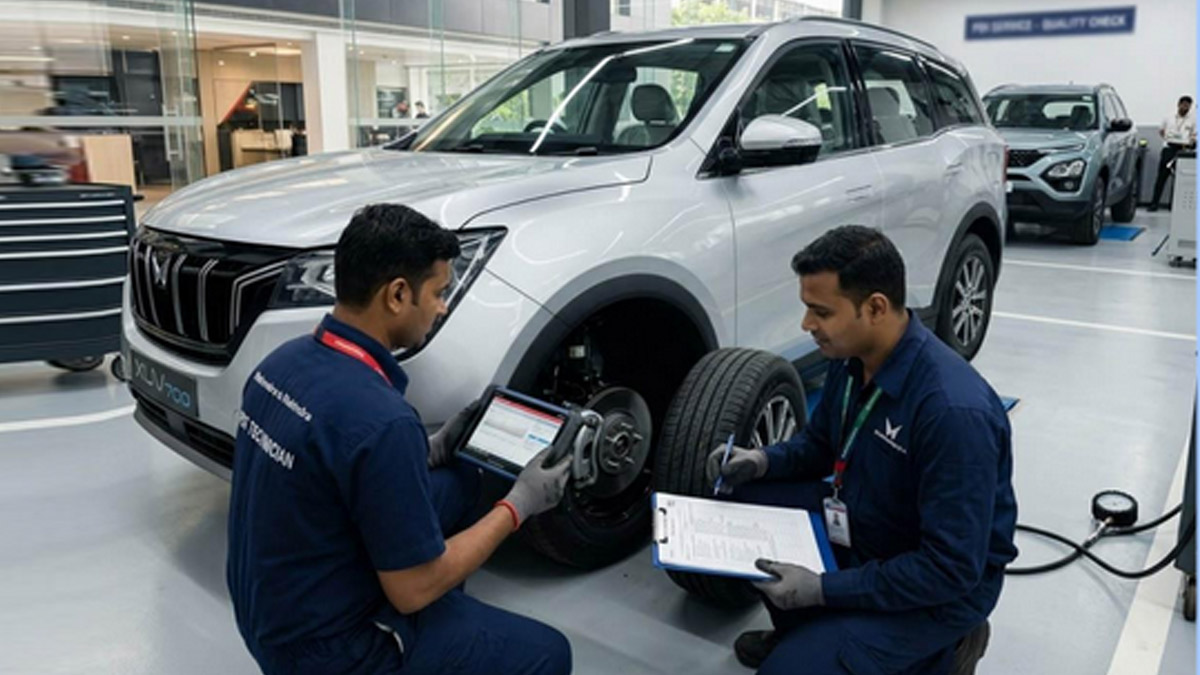
You have spent weeks researching, test driven a few options, finalised the colour and variant, and are now days away from taking delivery of your new car. It feels like the hard part is over. But there is one step that most buyers skip entirely, and it is the one that protects everything else. Understanding what PDI meaning covers and why it matters could save you from discovering a Rs 20,000 to Rs 80,000 problem after you have already signed the papers.
PDI stands for Pre-Delivery Inspection. It is a structured check that happens before your car is handed over to you. A proper PDI car service covers everything from paint quality and panel alignment to electrical systems, fluid levels and tyre pressure. Dealers are supposed to conduct this before delivery, but the depth of the check varies widely. And if the buyer does not know what to look for, problems slip through.
What Does a PDI Actually Cover?
A thorough PDI checks the car across four broad categories:
| Category | What Gets Checked | Common Issues Found |
| Exterior | Paint quality, panel gaps, glass, lights, tyres | Paint chips, uneven panel alignment, scratched glass |
| Interior | Seat upholstery, dashboard, AC, infotainment, switches | Loose trims, non-functional buttons, squeaks and rattles |
| Mechanical | Engine bay, fluids, battery, brakes, steering | Low fluid levels, minor leaks, battery not fully charged |
| Electrical | All lights, windows, central locking, sensors | Malfunctioning sensors, flickering displays, USB ports |
Each of these categories can hide issues that are minor at delivery but expensive if left unaddressed. A small paint chip near a door edge, for example, can lead to rust in a humid city like Mumbai or Chennai within 12 to 18 months.
What It Can Cost You to Skip the PDI
Here is a realistic look at what buyers have discovered after delivery that a proper PDI would have caught before:
• Paint defects requiring respraying: Rs 8,000 to Rs 25,000 depending on the panel
• Misaligned panels or doors that need workshop adjustment: Rs 3,000 to Rs 8,000
• Non-functional infotainment unit needing replacement: Rs 15,000 to Rs 40,000
• Scratched windshield that needs full replacement: Rs 6,000 to Rs 18,000
• AC not cooling properly due to low refrigerant: Rs 2,000 to Rs 5,000
• Tyre with a slow puncture from storage damage: Rs 3,000 to Rs 6,000
The total exposure from a single missed PDI can range from Rs 5,000 for minor issues to Rs 80,000 or more if multiple problems are found post-delivery. More importantly, proving that a defect existed before delivery becomes significantly harder once you have taken the keys.
Why Dealer PDIs Are Not Always Enough
Most dealerships do conduct a pre-delivery check on their own, but the process is not always as rigorous as it should be. There are a few reasons for this:
High Delivery Volumes
During festive season or at the end of a financial year, dealerships handle a surge in deliveries. When a service team is processing 15 to 20 cars a day, the depth of each check inevitably suffers.
Incentive Misalignment
Dealership staff are often incentivised on delivery speed and customer satisfaction scores. Finding a defect and sending a car back for rework delays delivery and affects scores. The incentive to look harder is not always present.
Buyer Unawareness
Most buyers arrive at delivery excited and in a hurry to leave. Without knowing what to look for, they miss things that a trained eye would catch immediately. Dealers know this, and the pressure to be thorough is lower when buyers are not asking questions.
What You Should Check Yourself at Delivery
Even if the dealer has completed their PDI, spend 20 to 30 minutes doing your own check at delivery. Here is a quick reference:
Check How to Do It Time Required Walk around in daylight Check all panels for scratches, chips and dents 5 minutes Open every door Check seals, check for rattles, test all windows 3 minutes Check interior thoroughly Test every button, switch and screen 5 minutes Start the car Look for warning lights, check AC, check all lights 5 minutes Check the boot Look for spare tyre, tools, jack and damage 2 minutes Inspect tyres Check pressure and look for sidewall damage 3 minutes
The Bottom Line
A PDI is not a formality. It is the last line of defence between you and a problem that the manufacturer or dealer should have fixed before you paid for the car.
Take the time to understand what the check involves, ask your dealer for confirmation that it has been completed, and do your own walkthrough at delivery. Twenty minutes of attention at this stage can save you weeks of workshop visits and tens of thousands of rupees down the line.