Brands
“We have tried to create a brand with a universal appeal:” MDPH’s Ankit Agrawal

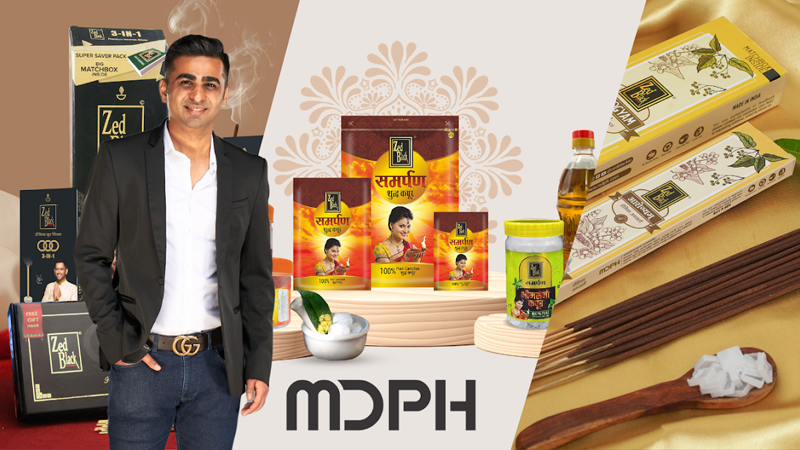
Mumbai: Immersed in the rich tapestry of cultures, incense sticks and perfumery have woven themselves into the sensory experiences of diverse civilisations. From ancient rituals to modern practices, the fragrant allure of incense has played a pivotal role in spiritual ceremonies and daily life worldwide.
Mysore Deep Perfumery House (MDPH), a beacon of innovation, embarked on a transformative journey in 1992, infusing the world of agarbattis with creativity and quality. Evolving from Purab Paschim Uttar Dakshin to the iconic Zed Black in 2000, this perfumery powerhouse not only embraces cultural diversity but also stands as a symbol of aromatic craftsmanship, eco-conscious practices, and captivating fragrances that transcend time and borders.
Indian Television in conversation with Mysore Deep Perfumery House director Ankit Agrawal gained insights on the brand’s genesis, USP, incorporation of eco-friendly practices, and much more…

Edited Excerpts:
On Mysore Deep Perfumery House’s launch, the journey till now, and Zed Black Agarbatti differentiating itself from other brands
In the bustling city of Indore, a humble garage harbored the seeds of a groundbreaking success story. In 1992, Mr Prakash Agrawal took a bold step, channeling his entrepreneurial spirit into the world of agarbattis. Armed with a loan of Rs 5 lakh and a determination to excel, he laid the foundation of Mysore Deep Perfumery House (MDPH), a name now synonymous with innovation and quality in the agarbatti industry. Mr Prakash Agrawal’s entrepreneurial journey took a remarkable turn when he chose to challenge conventional wisdom and in the thriving Indian agarbatti market of the 90s, Agrawal saw an opportunity and seized it. He launched his own brand Purab Paschim Uttar Dakshin, thus breaking the stronghold of established agarbatti hubs like Bengaluru and Mysuru. He fine-tuned his offerings to suit local preferences, slowly but surely building a loyal customer base. The game-changer, however, was the introduction of Zed Black in 2000 and the brand rapidly climbed the ranks, setting new standards for the industry and capturing the imagination of consumers across India.
One of the main differentiating factors of Zed Black from other agarbatti brands is that we have not used any divine images or spiritual symbols on our packaging. We have tried to create a brand with a universal appeal.
On the role that fragrance plays in spirituality and religious practices in your opinion and Zed Black’s contribution to this aspect
Incense sticks, with their fragrant whisps of smoke, have woven themselves into the rich tapestry of cultures worldwide, creating sensory experiences that transcend borders and time. From ancient rituals to contemporary practices, these aromatic wonders have played a pivotal role in shaping cultural expressions, spiritual ceremonies, and daily life across diverse civilizations. Since ancient times, Incense Sticks have been an integral part of cultures in many Asian countries like India, China, Japan, Lagos, Korea, Vietnam, Thailand, Cambodia and more.
Recently, incense has experienced a resurgence in popularity, with people around the world incorporating it into their daily lives. As the world has become more interconnected, the use of incense has transcended cultural boundaries. Whether it’s the heady scent of sandalwood in an Indian temple or as a delectable ambience enhancer, incense has become a shared language of the senses, fostering a sense of unity in diversity and remain a testament to the enduring and universal nature of humanity’s quest for connection, tranquility, and the divine.
On strategies that Zed Black undertakes to stand out during the festive seasons; some specific marketing initiatives or noteworthy campaigns that proved particularly successful for Zed Black Agarbatti and the key factors that contributed to its success
Zed Black has over the years undertaken several initiatives to stand out not just in the festive season but also throughout the year. A major noteworthy campaign was the announcement of former India captain MS Dhoni as the brand ambassador for Zed Black. This was a coup of sorts as this was the first time we were able to use the image of brand ambassador on the packaging. When dhoop was not considered as a high-end product, we roped in Bollywood star Hritik Roshan to be the ambassador of Manthan Dhoop. These 2 signings helped to carve a place for Zed Black in the highly competitive Indian agarbatti market.
We also tied up with IPL Team Delhi Capitals as one of the key sponsors for the team. Zed Black also tied up for the recent Ind vs South Africa Series. These global sporting events helped get more eyeballs on our brand which has led to more global expansion.
On ZedBlack Agarbatti incorporating eco-friendly practices in its day-to-day operations as well as in production and packaging
MDPH understands the need to be eco-conscious, so we are in the process of converting our manufacturing facilities to run on solar power. Our new facility in Rampipliya in Madhya Pradesh is running on Solar power. As a brand, we make a dedicated effort to reduce the carbon footprint and to provide a sustainable product.
On different traditions influencing market trends for Zed Black Agarbatti and are there any new and unique fragrances that you’re planning to introduce
Zed Black has embraced the cultural diversity of our great country. We have come up with several fragrances which are sold in specific parts of the country i.e. – Arij which is sold in Orissa or Pineapple fragrance which is sold in Kerala and Assam.
We as a brand work closely with our on-ground sales team to understand the consumers mindset and introduce fragrances that will appeal to them. We have introduced bamboo-less Parfum Series Dhoop Sticks, fragrances like Yellow Champa, Attar Phool, Rose, and ever-popular Chandan are part of various segments like incense sticks, dhoop cones and more. Sambrani Dhoop which gives a feel of having a mini havan at home are popular amongst the masses.
We have introduced Samarpan series which is into puja essentials under which we have camphor, puja oil, chandan tika and more. Beyond agarbatti and related products, the brand has ventured into edible oil, tea, hand sanitizers, confectionery, and more.
On ZedBlack Agarbatti, ensuring customer expectations are met during festivals without compromising on product quality and brand reputation amid heightened consumer demand
For this festive season, Zed Black has launched Zed Black Exclusive Series boasts of premium handmade products like Golden Myst 4in1, Sandalwood and Patchouli range which are exotic hand-rolled flora batti. The Zed Black Luxe series is the latest innovation from the house of MDPH, which is bamboo-less and long-lasting. offering a fragrance that would linger around and create a blissful ambience for a longer period. Launched in traditional Chandan, Gulab, Loban & Mogra fragrances, these are a perfect gifting solution if you are looking for an eco-friendly option. Our product range can be used in any festival, be it Navratri, Diwali or Chhath Puja.
On ZedBlack Agarbatti leveraging social media platforms to effectively connect with and engage its target audience
Zed Black and MDPH have leveraged social media by creating visually appealing content showcasing the product, sharing behind-the-scenes glimpses of TVC shoots, running promotions, and encouraging user-generated content. We keep our followers engaged through polls, Q&A sessions, and responding promptly to comments. We also boost visibility by utilizing relevant hashtags, collaborating with influencers, and hosting giveaways amongst other activities.
On ZedBlack Agarbatti seamlessly integrating brick-and-mortar and e-commerce channels to enhance the overall shopping experience for customers
Indian retail industry has seen tremendous change, especially in consumer behaviour and preferences. This is also the same in the case of the retail landscape for incense products, commonly known as agarbattis, which has undergone a transformative journey in recent years, marked by the contrast between online and brick-and-mortar sales.
The rise of e-commerce and the allure of online shopping has not diminished the popularity of the physical presence of traditional stores which remains deeply ingrained in the fabric of Indian retail, indicating that the brick-and-mortar concept is here to stay. The ability to touch, feel, smell and experience products like incense sticks firsthand remains an integral part of the Indian shopping tradition and this fosters trust and confidence in the purchase decision of the consumer. Many brick-and-mortar stores in India are not resisting technological advancements; instead, they are adapting and integrating digital elements to enhance the overall shopping experience. Many traditional retailers have embraced e-commerce, offering omnichannel solutions that combine the convenience of online browsing with the tangible experience of in-store shopping.
On expansion plans for the current fiscal year (FY24) and for the future and the target revenue the company has set for itself
MDPH has seen exponential growth over the past few years. Our net sales have increased multifold since the previous fiscal. We have seen a consistent jump and double-digit growth since the last five years and now the company has seen 15 per cent quarter-on-quarter growth in revenue this fiscal as well. After making a mark with incense sticks and puja category, with our foray into F&B, confectionery, we are expecting a turnover of Rs 1000 cr by FY27.
Besides Agarbatti and related products, we have expanded into the confectionary and candy business. We have set up a new plant and added new machines to increase production and have set up five to six production lines and expanding to more two to three production lines to increase the production of Din Din variants like lollipops, jellies, and candies.




Brands
Samsung certifies 1,000 Maharashtra students in AI and coding
The South Korean electronics giant marks its first large-scale skilling push in the state, with women making up nearly half the national programme’s enrolment
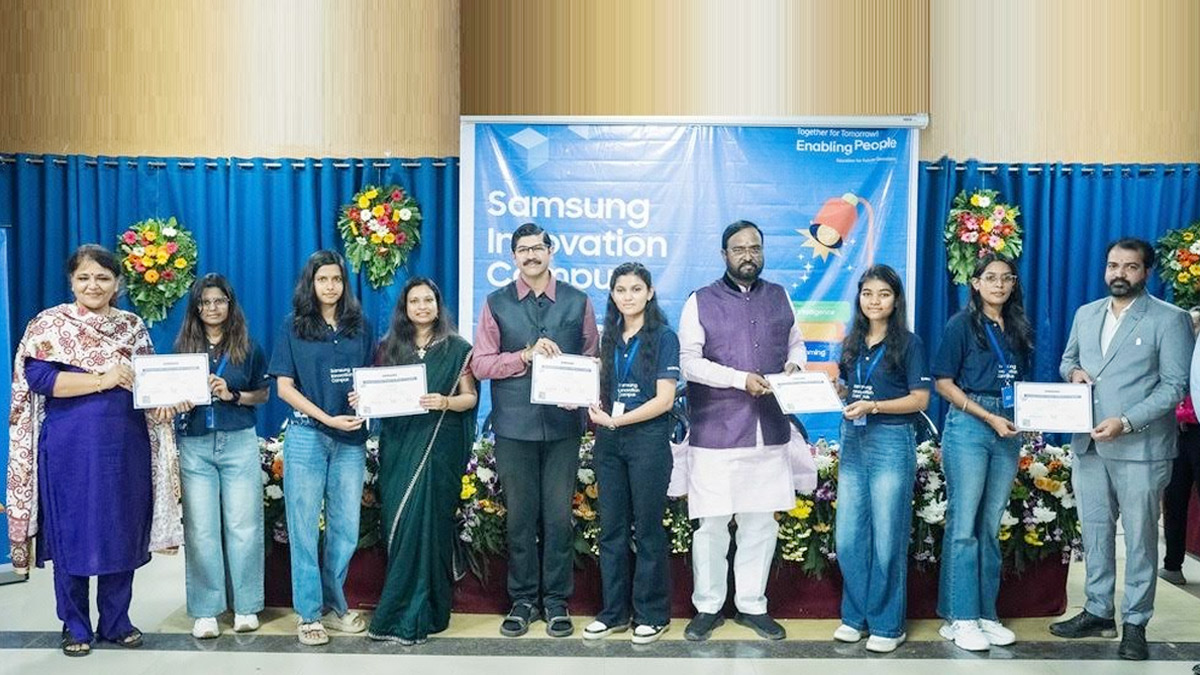
PUNE: Samsung has put 1,000 students in Maharashtra through a certified training programme in artificial intelligence and coding, the largest such drive the South Korean electronics company has run in the state and a signal that corporate India’s skilling ambitions are moving well beyond the boardroom brochure.
The certifications were awarded under Samsung Innovation Campus (SIC), the company’s flagship corporate social responsibility programme, which launched in India in 2022 with the stated aim of democratising access to future-technology education. The 1,000 graduates were drawn from four institutions: 127 from Savitribai Phule Pune University, 373 from Pimpri Chinchwad University, 250 from D.Y. Patil University’s Ramrao Adik Institute of Technology and 250 from Anjuman-I-Islam’s Kalsekar Technical Campus. All completed training in either AI or coding and programming, the two disciplines Samsung has identified as the critical pillars of the digital economy.
The programme does not stop at technical training. Soft-skills development and career-readiness modules are baked into the curriculum, a deliberate attempt to close the gap between what universities teach and what employers actually want.
“India’s digital growth story will ultimately be shaped by the quality of its talent pipeline,” said Shubham Mukherjee, head of CSR and corporate communications at Samsung Southwest Asia. “As technologies like AI move from the periphery to the core of industries, skilling must evolve from basic training to building real-world capability. This milestone in Maharashtra reflects how industry and academia can come together to create a future-ready workforce that is both globally competitive and locally relevant.”
The Maharashtra drive sits within a rapidly scaling national effort. Samsung Innovation Campus trained 20,000 young people across India in 2025, hitting its stated target for the year. Women account for 48 per cent of national enrolments, a figure the company cites as evidence of its push for an inclusive technology ecosystem. The programme is implemented in partnership with the Electronics Sector Skills Council of India and the Telecom Sector Skill Council.
Samsung, which is marking 30 years in India this year, runs SIC alongside two other initiatives, Samsung Solve for Tomorrow and Samsung DOST, as part of a broader effort to build what it calls a generation of innovators with both the technical depth and the problem-solving mindset to thrive in a fast-moving digital world.
A thousand certified students is a tidy headline. Whether they find jobs that match their new skills is the harder question, and the one that will ultimately determine whether corporate skilling programmes like this one are genuine pipelines or well-photographed gestures.






