Digital
VBS 2024: Perspectives on the advertising economy & the role of video


Mumbai: India is in the grips of seisnic changes regarding video and broadband consumption. Pay TV cord-cutting is rampant even as free TV subscriptions are on the rise and OTT buy-ins are churning with the signs up for certain platforms stagnating even as others are seeing rapid increases and some are seeing cataclysmic drops. Aggregators of OTTs are popping up on the horizon promising cheap bundles along with value-added services for cable TV and DTH. There’s a rush to set up free advertising-supported TV channels by TV set manufacturers and smart TV device makers. There’s the Jio factor where it seeks to convert most pay TV customers to free streaming of video content by offering free access to consumers at no cost. The consumer continues to demand bandwidth higher than ever imagined even as prices drop. Margins are under pressure as every player goes one-up on each other to acquire and retain customers.
The video and broadband distribution landscape has not been as vibrant as it is now.. How long will this pot-boiling continue? What will the magic potion of video and broadband look and taste like? And what’s the end game? Indiantelevision.com has held the 20th edition of Video and Broadband Summit better known as VBS at Sahara Star Hotel, Mumbai.
The session chair for this panel was EssenceMediacom India managing partner Deepak Sonpar along with the panelists: Colgate-Palmolive (India) Ltd director – integrated brand experience lead Priyanka Khaneja Gandhi, ICICI Lombard head- marketing, corporate communications & CSR Sheena Kapoor, and Carat India VP- West Amita Srivastava.

Sonpar kicked off the session by asking Srivastava of what is the latest ongoing trend which she is witnessing currently in the landscape.
She said, “ I will be talking about the advertising landscape right now by saying the first thing over here is that there is so much fragmentation right now that it’s an era of choices for the consumers. TV continues to be a very important medium for everybody. But digital is something which has been jumping and leaping its way to the top largely because of the exponential growth of the internet. Mobile smartphones, have given us this option of targeting our audiences. Mobile content is something which is growing very strongly, in fact, a lot of websites now need to be mobile compliant.”
She also briefly touched upon programmatic advertising because from an advertisers perspective, it is content which is speaking well from the agency perspective, programmatic becomes really important because that helps us deliver efficiencies the best find which is possible to reach out to the kind of audiences which they are looking at.
She also talked about native advertising, “While we have a lot of content, which is going on, which is a little brash in terms of you’re exposing our brand and talking very specifically about random use pointers, there are some brands which prefer the approach of slightly more seamless integration. And I think they are the ones who are going into this middle of advertising space and utilizing it very well to speak to their audiences.”
Sonpar then turned towards Kapoor on the question of notable changes in the new age programmatic and artificial intelligence to which she replied, “ In terms of trends overall and how it is changing, when we are talking about proliferation and disintegration of devices because earlier we used to sit around with the family in front of the idiot box when there was certain program where everybody in the household were consuming and therefore was forced to consume the advertising that was being played.”
She continues, “Today in the same household there are multiple devices not only TV but mobile, laptops etc. The other change is everybody is heading towards content. I will consume what I want to consume, any genre that I like, which makes the task for brands a lot tougher because a) You’re talking about buying the same kind of attention span to the consumers and 2) Social media and the influencers space. “
She also talked on her recent campain which was completely Gen AI driven and also talked on how personalization is also the new ongoing trend.
Sonpar then asked Gandhi on how brands have impacted the video content and marketing strategy to which she said, “Let me break it into three parts. One is the narrative of video storytelling, what you want to tell the consumers and when we talked to urban audiences with benefits which are premium, all the way down to rural audiences and then we look at states. Second part is the multiplicity of format and video. The bigger challenge is how you tell a story and what story you tell in a 30-60 second format. The third part of video creation is also you looking at the consumer journey and as a brand what’s the funnel that you really target.
At the end, Sonpar summed up briefly the key talk points of the session to the audience, “Three words to take away are that the world is getting more and more impatient. We need to plan for smaller, shorter content. Second is brands need to tie up a bit of trust which is the influencers which the people like us look up to. The essence of all innovation and new content is between the attention and engagement which would be the third point. Anything that drives attention and engagement will work and that we need to chase.”






Introduction
In the modern digital landscape, businesses are constantly seeking innovative ways to reach their audience, build relationships, and drive conversions. Two of the most powerful tools in digital marketing today are email automation and YouTube marketing. These strategies not only help brands engage with their audience but also provide measurable results that can significantly impact business growth. Platforms like ExamCollection offer valuable insights and resources for mastering these techniques. In this article, we will explore how email automation and YouTube marketing can transform your digital strategy and help you achieve long-term success.
The Power of Email Marketing Automation
Email marketing remains one of the most effective channels for communication and conversion. However, manually managing email campaigns can be time-consuming and inefficient. This is where marketing automation comes into play. Automation tools allow businesses to send personalized messages based on user behavior, preferences, and engagement patterns. This not only improves efficiency but also enhances the customer experience.
Benefits of Marketing Automation
Marketing automation provides several advantages, including increased productivity, improved targeting, and better customer retention. By automating repetitive tasks, businesses can focus on strategy and creativity. Additionally, automation enables marketers to segment their audience and deliver highly relevant content, which leads to higher open rates and conversions. It also provides valuable analytics that help optimize campaigns for better performance.
How to Master Email Automation
To master email automation, businesses need to understand their audience and create targeted campaigns. This involves setting up workflows, designing engaging email templates, and analyzing performance metrics. Tools like CRM systems and automation platforms can help streamline the process. Learning from expert guides and resources can significantly improve your skills and results.
The Rise of YouTube Marketing
YouTube has become one of the most influential platforms for digital marketing. With billions of users worldwide, it offers businesses an فرصة to reach a massive audience. Video content is highly engaging and can convey messages more effectively than text or images. As a result, many brands are investing in YouTube marketing to build their online presence and connect with their audience.
Key Strategies for YouTube Success
Successful YouTube marketing requires a well-planned strategy. This includes creating high-quality content, optimizing videos for search, and engaging with viewers. Consistency is also crucial, as regular uploads help build a loyal audience. Additionally, using analytics tools can help track performance and identify areas for improvement.
Explore more: https://www.examcollection.com/blog/master-youtube-marketing-with-these-10-powerful-steps/
Combining Email and YouTube Marketing
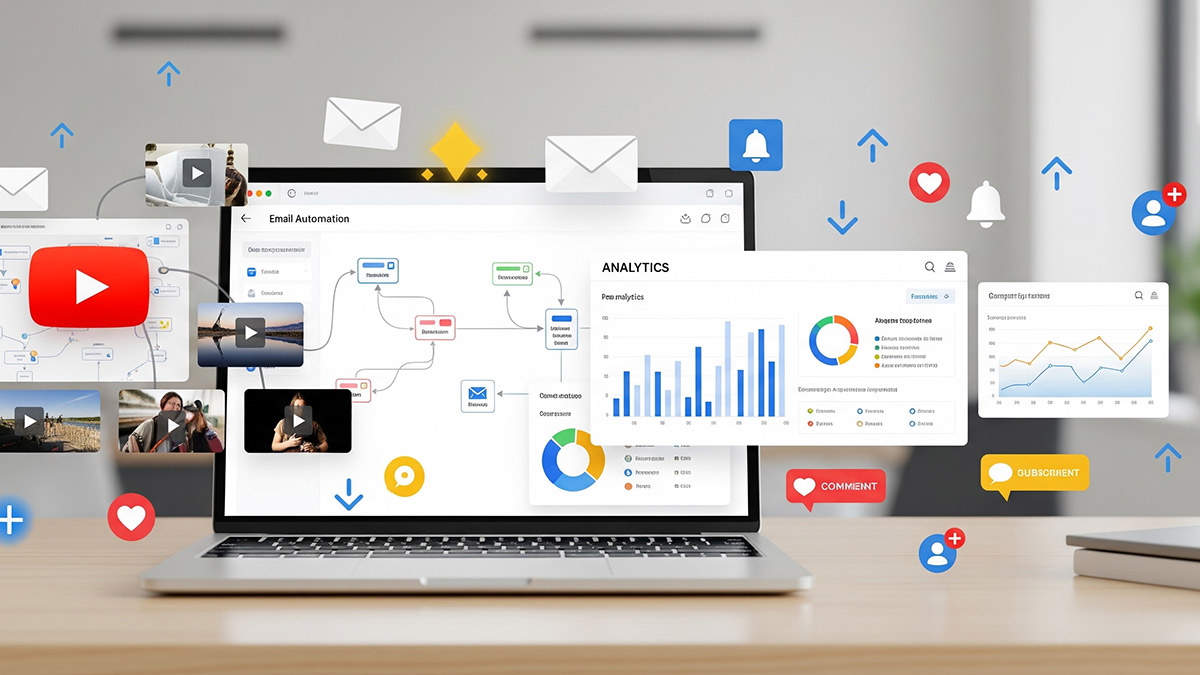
Integrating email automation with YouTube marketing can create a powerful synergy. For example, businesses can use email campaigns to promote new videos, share exclusive content, and drive traffic to their YouTube channel. Similarly, YouTube videos can encourage viewers to subscribe to email lists, creating a continuous cycle of engagement. This integrated approach can significantly enhance marketing effectiveness.
The Role of Data and Analytics
Data plays a crucial role in both email and YouTube marketing. By analyzing user behavior and engagement metrics, businesses can make informed decisions and optimize their strategies. Metrics such as open rates, click-through rates, watch time, and subscriber growth provide valuable insights into campaign performance. Using these insights, marketers can refine their approach and achieve better results.
Challenges and How to Overcome Them
While email automation and YouTube marketing offer numerous benefits, they also come with challenges. These include content creation, audience engagement, and staying updated with changing algorithms. To overcome these challenges, businesses need to invest in continuous learning and adapt to new trends. Leveraging reliable resources and expert guidance can make a significant difference.
Future Trends in Digital Marketing
The future of digital marketing is likely to be shaped by advancements in artificial intelligence, personalization, and interactive content. Automation tools will become more sophisticated, enabling even more personalized experiences. Video content will continue to dominate, with platforms like YouTube playing a central role in marketing strategies. Businesses that stay ahead of these trends will have a competitive advantage.
FAQ
1. What is email marketing automation?
Email marketing automation involves using software to send targeted and personalized emails based on user behavior and preferences.
2. Why is YouTube important for marketing?
YouTube provides a platform to reach a large audience and engage users through video content.
3. Can small businesses benefit from these strategies?
Yes, both email automation and YouTube marketing are highly scalable and suitable for businesses of all sizes.
4. How can I improve my email open rates?
By creating compelling subject lines, segmenting your audience, and delivering relevant content.
5. What tools are used for YouTube marketing?
Tools like video editing software, analytics platforms, and SEO tools are commonly used.
Conclusion
Digital marketing is evolving rapidly, and businesses must adapt to stay competitive. Email automation and YouTube marketing are two powerful strategies that can drive significant growth when implemented effectively. Email automation allows businesses to deliver personalized and timely messages, improving customer engagement and retention. On the other hand, YouTube marketing provides a platform to connect with a vast audience through engaging video content. By combining these strategies, businesses can create a comprehensive marketing approach that maximizes reach and impact. Platforms like ExamCollection offer valuable resources that help marketers understand and implement these techniques effectively. The integration of data and analytics further enhances the effectiveness of these strategies, enabling businesses to make informed decisions and optimize their campaigns. However, success in digital marketing requires continuous learning, creativity, and adaptability. As technology continues to advance, new opportunities and challenges will emerge. Businesses that stay updated with the latest trends and leverage the right tools will be well-positioned for success. Ultimately, mastering email automation and YouTube marketing can lead to increased brand visibility, higher engagement, and improved conversion rates. By investing time and effort into these strategies, businesses can achieve sustainable growth and long-term success in the competitive digital landscape.






