Digital
Urban Indians turn more unhappy in July 2023: Ipsos IndiaBus Happiness Monitor


Mumbai: The July wave of the Ipsos IndiaBus Happiness Monitor shows overall happiness levels have seen a 3 per cent dip in July 2023, over the previous month – so after a slight dip in June 2023, urban Indians have become more unhappy in July 2023.
Further, happiness levels have dipped across all parameters that contribute to happiness. Whether health, economic conditions, family, friends’ circle, neighbours, situation in the country and situation in the world etc., barring work and colleagues/ business associates, both these areas have seen a surge, as executives have started going back to work and interacting with colleagues in person.
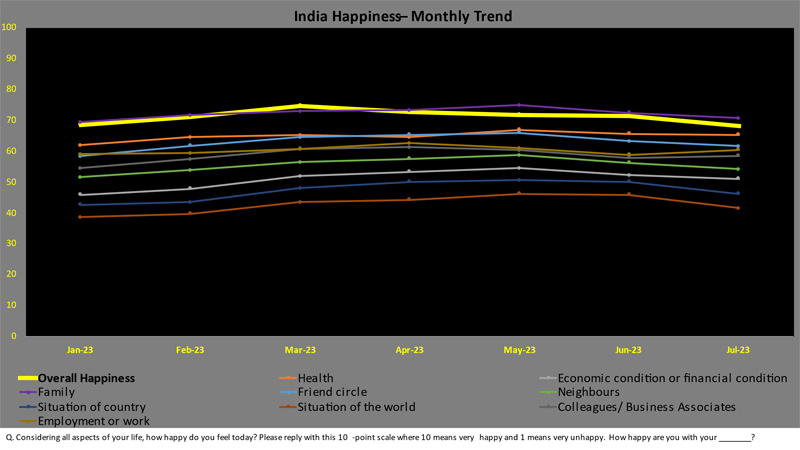
Interestingly, factors inducing maximum happiness in the pecking order were family (71 per cent), health (65 per cent), friends’ circle (62 per cent), work or employment (61 per cent), colleagues/ business associates (59 per cent), neighbours (54 per cent), economic conditions (51 per cent), situation of the country (46 per cent) and situation of the world (42 per cent).

Summarizing the findings of the July Happiness wave, Ipsos India group service line leader, public affairs and corporate reputation Parijat Chakraborty said, “Urban Indians may seem less happy over the previous month and also around personal relationships, personal health, social fabric, but they are seemingly happier at the workplace and around colleagues. Dependence around relationships to provide happiness has somewhat lowered and work is compensating and a healthy work environment is satiating and happiness inducing. They also spend their large part of the day at the workplace. At the same time, citizens are absolutely clear about what matters most to them. Family, health, friends’ circle, neighbours are most happiness inducing and take precedence over the rest. Happiness Monitor keeps tabs on what makes citizens happy. Because happy citizens equal happy nation which is good for the overall wellbeing of how the nation is doing.”






